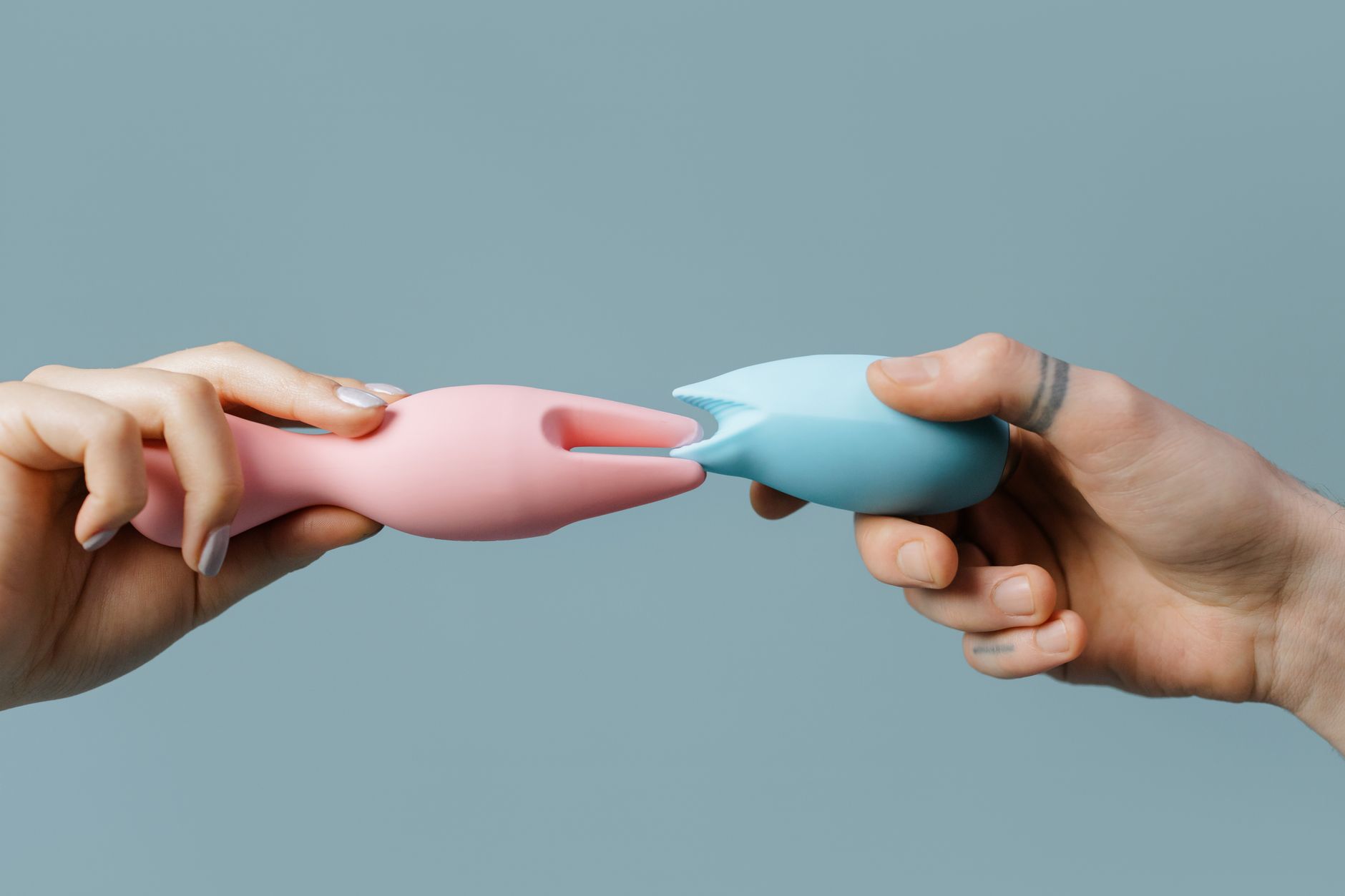
Here's the thing about new relationships and toys
You've probably had the thought: should I tell them? Should I show them? Should I wait until they ask? The silence around this question makes it feel way bigger than it actually is. But here's what I've learned from years of working with couples navigating early intimacy. Bringing a lemon clitoral vibrator into a new relationship isn't awkward if you frame it as information, not confession.
Most people worry that introducing a toy signals something is wrong. It doesn't. What it actually signals is that you know what works for your body and you trust them enough to share that knowledge. That's intimacy before sex even enters the room.
Why new partners need different communication than long-term ones
When you've been with someone for years, you have permission to be messy and tentative. "Hey, I want to try something" lands differently at year five than it does at week three. Early in a relationship, the stakes feel higher because you're still building trust and figuring out compatibility.
The key difference is context. Long-term partners already know you're a full person with a body and history. New partners are still forming their image of who you are. Introducing a lemon vibrator too fast can feel like you're handing them information before they're ready to receive it. Too slow, and you risk building a false version of yourself that becomes harder to correct later.
Timing matters, but it's not about waiting for the "right moment." It's about waiting for emotional safety, which usually happens somewhere between the third and tenth time you're intimate together. You'll feel it when you're ready.
The conversation that actually works
Forget the big reveal. The best approach is casual and matter-of-fact. Context is everything.
Let's say you're about to get intimate and your toy is sitting on your nightstand. You could say: "I have a lemon vibrator I like to use. Can I show you?" Full stop. No apology, no explanation, no justification. If they ask why, you answer simply: "It helps me orgasm more reliably. I enjoy it more this way." That's it. Your pleasure is not a problem that needs solving.
If you want to introduce the idea before you're in the bedroom, try: "I've been thinking about our sex life, and I want to make sure we're both having fun. I have a toy I've used for a while. Would you be interested in exploring that together sometime?" This frames it as collaborative and curious, not as a demand.
The words matter less than the energy. If you say it apologetically or hesitantly, they'll catch that uncertainty and mirror it back. If you say it confidently, as something you simply know about yourself, they're more likely to meet you there.
What to do if they freeze up (and why it might not mean what you think)
Not every new partner will immediately celebrate the idea of a toy. Some will need time. Some will have their own insecurities or hang-ups that have nothing to do with you.
If your new partner seems uncomfortable or withdrawn, resist the urge to backtrack immediately. Give them a beat. Say: "I know this might be unexpected. We don't have to do anything with it. I just wanted you to know it's part of how I experience pleasure." Then pause. You're not convincing them. You're giving them information and space to process.
What often happens is that initial hesitation transforms into curiosity once they realize the toy isn't a replacement for them. It's an addition. Many new partners, especially those who care about your experience, eventually want to understand how it works and why it matters. Some will even get genuinely invested in helping you feel good.
If someone remains resistant or judgmental about your body and your pleasure, that's useful information about compatibility. You're learning who you're with.
How to actually use it together (without awkwardness)
Once you've had the conversation and they're open to trying it, the execution matters. Here's what changes when there's another person in the room.
First, manage the learning curve. A lemon vibrator like the Lem works through air-suction, not vibration, so it might be completely new to them. Show them how it feels on your own hand first. Let them hold it. Demystify it. Then use it on yourself while they're watching. This does two things: they see that you're not self-conscious, and they get to observe what actually turns you on. That's intimate in a completely different way than hiding it would be.
Second, give clear direction. "I like it on setting two" or "a bit lower" or "slower" aren't complicated asks, but new partners often don't know what pressure to apply or where exactly to position things. Communicate like you're guiding them through anything else physical. Your pleasure isn't mysterious; it just needs direction.
Third, check in emotionally after. Not because anything went wrong, but because vulnerability requires follow-up. A simple "I felt really good and I trust you" goes a long way. You're reinforcing that this was a positive bonding experience, not something you're ashamed of.
Why your pleasure matters in a new relationship
Here's what I see in my practice constantly. People (especially women and femme people) suppress their own pleasure early in relationships because they're afraid of being "too much" or seeming difficult. Then they spend the next two years resenting their partner for not knowing what they need.
Introducing a tool like a lemon clitoral vibrator isn't being difficult. It's being honest. The right new partner will actually be relieved. Most people want their partners to enjoy sex. They just don't have a roadmap for what that looks like. Giving them one is a gift, not a burden.
You deserve pleasure that doesn't depend on luck or hope. You deserve a partner who wants to help you feel good. And you deserve to know early whether someone is capable of that kind of generosity. A lemon vibrator is actually a pretty elegant test of whether your new partner cares about your experience.
If they do, everything gets easier from there. If they don't, you've learned something essential about compatibility before you've invested months of time pretending.
When to reconsider the conversation
Sometimes new relationships aren't actually safe for vulnerability. If your new partner has shown controlling behavior, dismissed your needs, or made you feel small about your body, introducing a toy isn't the move. A healthy relationship foundation has to exist first.
Likewise, if you're feeling pressured by them to perform sexually in ways that don't feel right, or if they're not respecting your boundaries around timing or intensity, that's a separate conversation to have before toys enter the picture. Tools amplify what's already there. They don't fix broken communication.
But if the relationship feels generally safe and you just haven't found the words yet, here's your permission to start. The awkwardness almost always dissolves once you actually say the thing.
The longer conversation: what this means for your relationship
Bringing a lemon vibrator into a new relationship is often the first real conversation about pleasure being a shared priority. If your new partner gets curious about how it works, what settings you prefer, or when you want to use it, that's them signaling: "I care about your experience."
Honor that. Tell them what you want. Let them learn your body. And if they stay interested and engaged, they're showing you exactly who they are as a partner in real time. That's the whole point of early relationships. You're auditioning for long-term compatibility, and pleasure is part of that audition.
You deserve a partner who wants to know you fully. A lemon clitoral vibrator is just the beginning of that conversation. The courage to have it is the interesting part.
FAQ: New partners and lemon vibrators
How early is too early to mention you have a toy?
Wait until you've been intimate at least a few times. Three to four encounters gives you enough shared experience that they'll understand this is part of your baseline, not a reaction to anything they're doing. Too early and it feels like information overload. Too late and you might feel resentful about hiding it.
What if they want to use it on me but I'm not ready?
That's completely valid. You can say: "I want to get comfortable with it myself first, and then we can explore it together." There's no timeline. Pleasure works better when there's zero pressure. If they respect that boundary, great. If they push, that's data.
Should I show them how I use it in private versus with them present?
Start with them present, if you're comfortable. Hiding it and then suddenly revealing it can feel deceptive. Being open from the beginning normalizes it and makes it collaborative instead of secretive. That shifts the entire energy.
What if they think a lemon vibrator means I don't enjoy sex with them?
That's their insecurity, not reality. You can say directly: "This helps me orgasm more reliably. That doesn't mean I don't enjoy you. It means I'm giving myself the best chance to feel good, and that makes me more present with you." If they can't hear that, their confidence issue is bigger than your toy.
Is using a lemon sucker during partnered sex better than solo?
Neither is better. They're different. Solo use is about learning your body. Partnered use is collaborative and can create deeper intimacy. Both matter. You might find you prefer one context over the other, and that's information about what turns you on.
How do I handle it if they get curious about trying one themselves?
Let them. If your new partner wants to explore their own pleasure with a lemon clitoral vibrator or any other tool, that's their body and their choice. Supporting that mirrors the support you're asking for. It also usually deepens the conversation from "her pleasure" to "our pleasure," which shifts everything.
The takeaway
Introducing a lemon vibrator to a new partner feels risky until you realize you're actually offering them a roadmap to intimacy. That's not scary. That's generous. The right person will see it that way immediately. Everyone else is giving you information about who they are. Trust that signal.