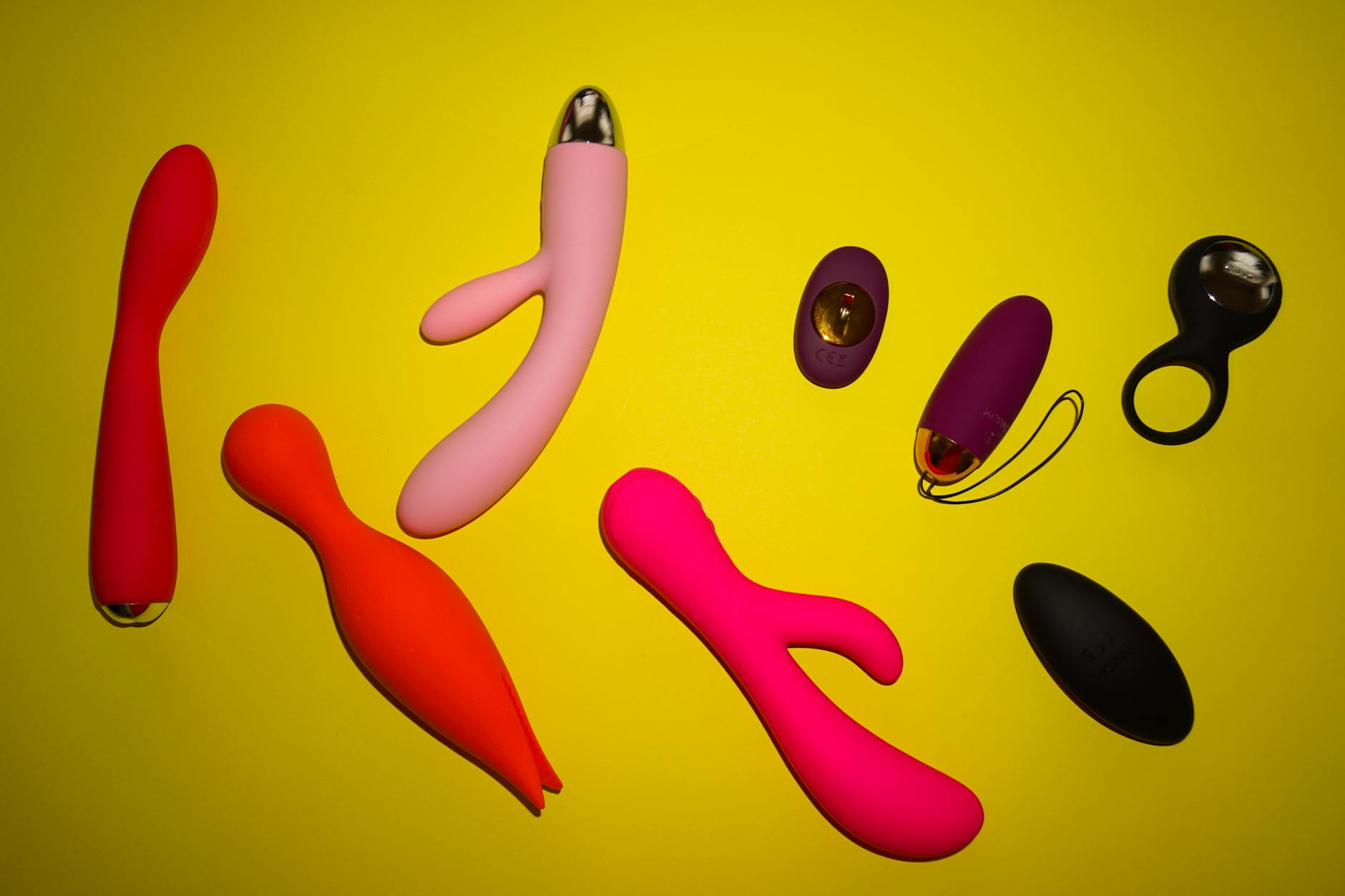
Let's name the problem first
You've got a lemon vibrator. You use it. And somewhere between minute two and minute five, something flattens. The sensation that started electric goes dull. Your clitoris stops responding the way it did at the beginning. You chase the feeling by pressing harder, flipping to a stronger pattern, speeding up. And suddenly you're working so hard that the pleasure itself feels like work.
This is desensitization. It's not a personal failure. It's neurology. And it's completely fixable.
Here's what's happening: sustained vibration at the same intensity and pattern numbs nerve endings. It's the same reason a constant background noise stops registering in your brain. Your nervous system is built to notice change, not constancy. When the lem vibrator stays at one frequency for too long, your clitoris basically stops listening.
The solution isn't to buy a stronger vibrator or to question whether you're "normal." It's to build orgasms the way you'd build a good meal. Layers. Rhythm. Pauses. Surprise.
Why constant intensity backfires
Clitoral sensation works through a combination of pressure, movement, and nerve activation. When you hold a lemon clitoral vibrator at pattern 5 for six minutes straight, two things happen simultaneously.
First, the pressure stays constant, so your nerve endings adapt. They're literally becoming less responsive to that specific stimulus. Second, you're not actually building arousal. You're maintaining it. Arousal works like a wave. It has peaks and valleys. When you flatten it into a plateau by never varying the intensity, you lose the opportunity for genuine climax. What you get instead is a kind of stuck pleasure. Present but shallow.
The best orgasms with a lemon sexual toy come from variation. Starting low, building gradually, pulling back, rebuilding higher. Changing patterns. Using pauses. This forces your nervous system to keep paying attention.
The three-phase intensity framework
I recommend structuring your session into three distinct phases, and I'll break down how to use your lemon sucker in each.
Phase One: Exploration (5-10 minutes). Start at patterns 1 or 2. This sounds counterintuitive when you're used to jumping straight to your favorite setting, but trust the process. Let your clitoris wake up. Notice what patterns create feeling versus numbness. Some people find that the pulse patterns (3, 4, 6 on most lem vibrators) work better than steady vibration because the on-off rhythm keeps nerves responsive. Others prefer steady but low. Test here. Don't chase the orgasm yet.
Phase Two: Building (8-15 minutes). Once you know your responsive patterns, stay at a medium intensity for this phase but change patterns every 90 seconds to 2 minutes. If you start with pattern 3, move to pattern 5 after two minutes, then back to pattern 2. The variation forces your nervous system to keep adapting. You're building arousal through change, not through increasing intensity. This is where most people skip ahead and lose the magic.
Phase Three: Resolution (5-10 minutes). Only now, when you're genuinely close to orgasm, do you find a pattern and intensity that works and hold it. But even here, many people benefit from small pauses. Build, pause for 10 seconds, build again. The pauses reset your nerve sensitivity and create deeper release.
Pattern switching as a desensitization hack
One of the most underused features of the lem vibrator is the diversity of its patterns. Most lemon clitoral vibrators have six to eight pattern options, and most people settle on one favorite and never rotate.
Here's what I see clinically: people who stay loyal to one pattern often report weaker orgasms over time. People who consciously rotate patterns report sustained intensity. Your clitoris doesn't get bored, but your nerve endings do. By switching, you're essentially hitting different clusters of nerve fibers, which means the sensation stays fresh.
Start building a pattern rotation that feels good. Maybe it's pattern 2, then 4, then 6, cycling. Maybe it's the gentle pulse followed by the steady hum followed by the escalating pulse. Experiment without pressure. The goal is novelty, not perfection.
Lubrication changes everything
Let's talk about something that affects desensitization but almost nobody mentions: lube. A lemon sexual toy works best with the right slip. If you're using no lube or too little, friction increases, and your clitoris numbs faster because the sensation becomes too blunt.
Add water-based lubricant (silicone-based damages the lem's silicone surface). A good glide changes how the vibration transmits through tissue. Instead of a harsh buzzing that overwhelms nerves, you get a deeper vibration that feels more textured. It also reduces the friction that causes that specific kind of numbness that comes from the toy directly abusing tissue rather than stimulating it.
Reapply lube during longer sessions. It genuinely matters.
The role of pressure and angle
Desensitization also happens because of how you're holding the toy. Many people grip the lemon vibrator hard against their clitoris, essentially numbing it through pressure alone. The vibration becomes secondary to the pressure.
Try this: hold the lem vibrator more loosely. Let it make contact with your clitoris but without pressing. Experiment with angle. Some people find that tilting the vibrator slightly so it hits the side of the clitoris rather than dead center keeps sensation sharper. Some find that smaller, faster circles feel better than staying stationary.
Small movements matter here. Your clitoris is roughly the size of a pea. Moving the vibrator gently across the area instead of staying in one spot spreads the stimulation and prevents local numbing. If you're new to clitoral vibrators, the basic techniques covered in our beginner guide might help.
Building breaks into your session
One of the most powerful anti-numbing strategies is the strategic pause. Not stopping entirely, but backing off completely for 15 to 30 seconds every few minutes.
During these breaks, you can remove the toy entirely, take a few deep breaths, notice how your body feels. Then restart. The break lets your nerve endings reset. When you come back with the toy, the sensation feels new again, even if nothing about the toy has changed. Many people find their most intense orgasms happen in the minute or two right after restarting after a pause. That's because you've reset the desensitization clock.
You can also use breaks to switch from external clitoral stimulation to internal stimulation if you enjoy penetration, or to shift focus to another erogenous zone. The goal is novelty for your nervous system.
Why your partner's involvement changes the equation
If you're using a lemon clitoral vibrator with a partner, there's an additional layer to prevent numbness. Alternating who controls the toy, who applies pressure, and who decides intensity creates exactly the kind of variation your body craves. You can't anticipate what's coming next, which keeps your nervous system engaged.
Even simpler: your partner can hold the toy while you stay still, versus you holding it while they're close. Different pressure, different angle, different sensation. The psychological element of not controlling the toy also sometimes creates deeper arousal because you're not managing the experience. If you're navigating toy use with a partner, our guide on using a lemon vibrator when your partner wants to participate has more nuance.
The timing reset if you're hitting a wall
If you're regularly experiencing numbness with your lemon sucker even after adjusting technique, it might be a timing issue. Some people find that 15-minute sessions are their maximum before desensitization sets in. Others can go 25 minutes without issue. Know your personal window.
If you're hitting the numbness wall consistently around minute 10, stop at minute 9. Take a real break. Come back tomorrow. Your clitoris will thank you. Pleasure isn't a sprint. Stopping before you're numb is actually the more advanced move. It teaches your body that intensity is available when you return, which paradoxically makes orgasms easier to access, not harder.
When it's not desensitization
Sometimes what feels like numbness is actually just the orgasm building slowly. Not all climaxes feel explosive. Some build as a deep, slow feeling that creeps up on you. If you're used to quick, intense orgasms, a slow-building one might feel flat even though it's working perfectly. The distinction: if you remove the toy and the sensation drops away, it was numbness. If you remove it and you still feel arousal, pressure, or building sensation, the orgasm was just working differently.
People also ask
Q: Does using a lemon vibrator too often cause permanent numbness?
No. Desensitization with a lem vibrator is temporary and reversible. If you're experiencing persistent numbness, it's usually because the same technique is being used the same way every single session. Change your approach, rotate patterns, introduce pauses, and sensation returns within a few sessions. Your nerve endings aren't damaged. They're just adapting to predictability.
Q: Why do pulse patterns feel better than steady vibration for avoiding numbness?
Pulse patterns create rhythmic changes in stimulation that keep your nervous system engaged. Steady vibration, especially at high intensity for long periods, is like a flat tone that your brain learns to filter out. The on-off-on-off rhythm of pulse modes mirrors how arousal naturally builds, so your body recognizes it as a progression rather than static sensation.
Q: Can lube reduce the intensity I feel from my lemon clitoral vibrator?
Water-based lubricant might feel slightly smoother, but it doesn't reduce intensity. What it does is distribute vibration more evenly across tissue, which often feels more intense because it's more efficient. You're not losing sensation. You're gaining deeper, more textured sensation instead of the surface-level buzz.
Q: How long should I rest between sessions to avoid desensitization?
There's no magic number, but most people find that 24 to 48 hours between longer sessions (15+ minutes) keeps sensation fresh. Shorter sessions (5-10 minutes) can happen daily without issue. If you're using a lemon sexual toy every day and experiencing numbness, try limiting to 5-minute sessions on consecutive days and 15-minute sessions with a day off in between.
Q: Does desensitization mean I need a stronger vibrator?
Almost never. A stronger lemon vibrator would actually accelerate numbness because you'd be applying even more intensity to tissue that's already struggling to stay responsive. The fix is variation, not escalation. The lem vibrator you have is likely perfect. The technique is what needs adjusting.
Q: Is there a specific pattern on the lem vibrator that's best for avoiding numbness?
No universal pattern works for everyone. Some people respond best to gentler, pulsing patterns (typically 3 or 4 on most lemon clitoral vibrators). Others prefer steady vibration but at lower intensities. The key is changing patterns during a session, not staying loyal to one. Experiment with rotating every 90 seconds during your building phase.
The bigger picture
Desensitization isn't a flaw in how you're wired. It's how your nervous system protects you from overstimulation. Learning to work with that system instead of fighting it transforms the experience. A lemon vibrator is a tool. The technique is what builds the pleasure.
Start with lower intensity. Rotate patterns. Add pauses. Use lubrication. Notice pressure. Stop before you're numb. If you're hitting walls that adjustment doesn't solve, we're here to talk through what else might be happening. Reach out if you want to explore this further.