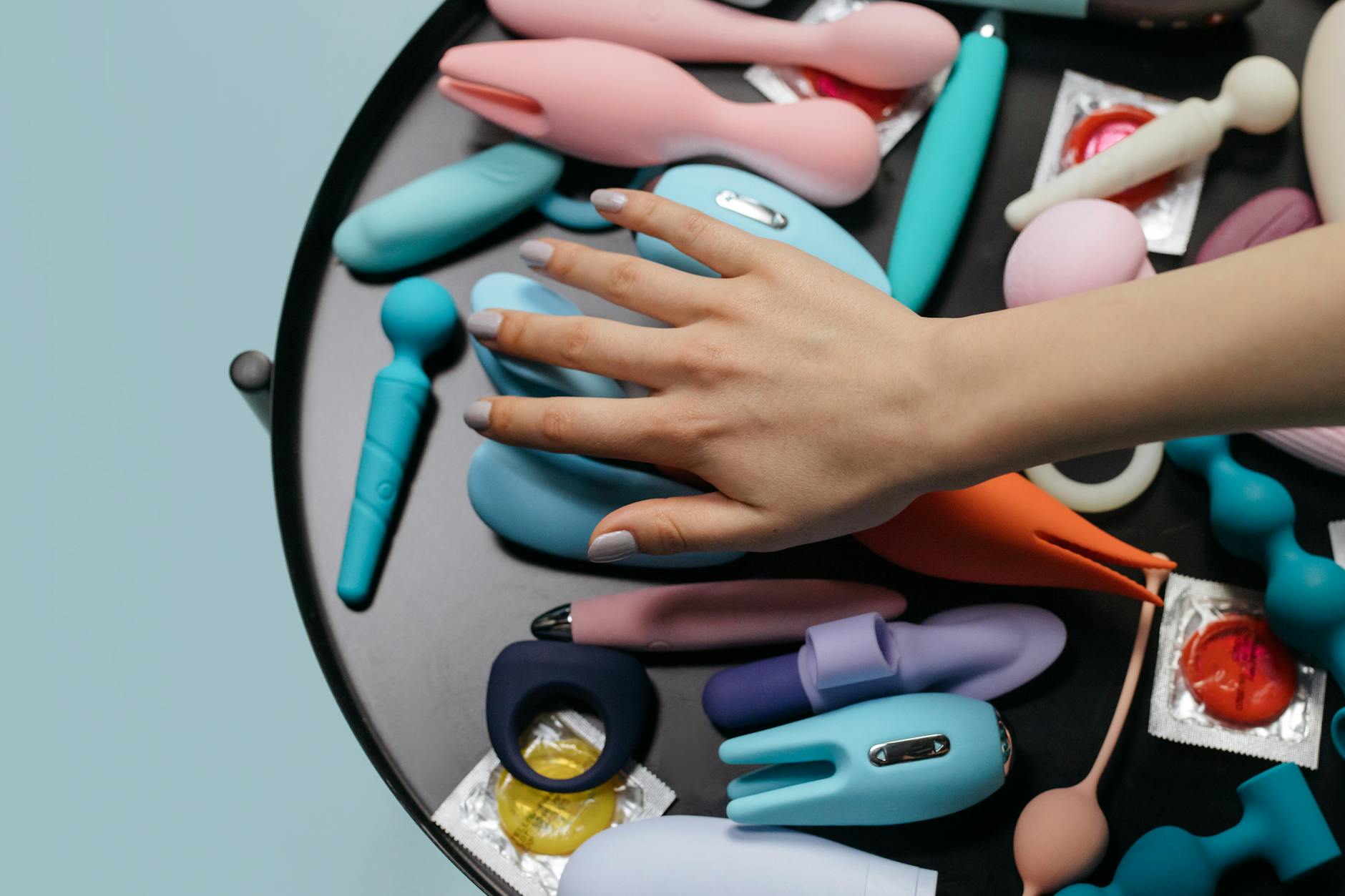
How to Use a Lemon Vibrator When Your Sex Drive Doesn't Match Your Partner's
Let's be real. One of you wants sex three times a week. The other wants it once a month. Maybe it's the opposite. Either way, someone's frustrated, someone feels guilty, and you're both starting to wonder if this is actually a compatibility problem or just a normal part of being in a long-term partnership.
Here's what research actually shows. Mismatched libidos are one of the most common relationship complaints I hear. And the good news? It's rarely the dealbreaker couples think it is. The bad news is that most couples try to solve it by compromising on frequency, which makes everyone feel worse. The actual solution is more nuanced and involves understanding what's really driving the mismatch, plus giving both partners permission to meet their own needs without making it a referendum on the relationship.
This is where solo tools like the lemon clitoral vibrator come in. Not as a band-aid. As a real piece of the puzzle.
The mismatch is almost never just about libido
When someone says they have low desire, what they usually mean is one of five things. They're stressed about work. They're touched out from parenting. They're not feeling emotionally connected to their partner. They're not getting enough sleep. Or they're having physical issues (pain, medication side effects, hormonal shifts) that make sex uncomfortable. Notice none of those are actually "I don't want sex." They're "I can't access desire right now."
The higher-desire partner usually assumes the low-desire partner has just stopped loving them or finding them attractive. That's almost never true. And the lower-desire partner feels guilty for not matching their partner's needs, which then makes sex feel like an obligation, which tanks desire even further. You're locked in a cycle that has nothing to do with actual attraction or compatibility.
Before you even think about bringing a lemon vibrator or any other tool into the picture, you need to understand what's actually happening underneath the mismatch.
Start with curiosity, not negotiation
Most couples I work with try to solve libido mismatch by turning it into a math problem. "How often do you actually want sex?" followed by "What if we split the difference?" That approach fails because it skips the part where you actually understand each other.
Instead, ask softer questions. "When you don't feel like having sex, what's usually going on in your head or body?" "What does desire feel like for you, and how is it different from what you think I experience?" "Are there times when you do feel interested, and what's different about those times?"
Listen to the answer without trying to fix it. The lower-desire partner isn't defective. They're just experiencing desire differently. Understanding that difference is the foundation for everything else.
Solo pleasure becomes part of the solution
Here's where it gets practical. If you're the higher-desire partner, solo exploration with a lemon vibrator or other clitoral vibrator is not cheating. It's not a replacement for partnership. It's maintenance. It keeps you from building resentment toward your partner for not wanting sex as often, and it keeps sex from becoming transactional when it does happen.
If you're the lower-desire partner, using a lemon clitoral vibrator solo can actually help you reconnect with your own pleasure independent of performance pressure. Sometimes people with lower desire have learned to disconnect from their body entirely because partnered sex feels like an expectation they can't meet. Solo exploration reverses that. It says, "Your pleasure matters on its own, not just when your partner is involved."
Both of these things can coexist. You can still have partnered sex. You're just not making that the only outlet for desire.
How to actually introduce the conversation
Okay, so you want to suggest that maybe solo tools could help, but you're not sure how to say that without it sounding like you're saying your partner is broken or that you want to outsource intimacy.
Start here. "I've been thinking about our mismatch, and I don't think it's a problem we can solve by just having more or less sex. I think it's actually an opportunity to figure out what we each need to feel connected. Part of that might be me exploring on my own so I'm not putting pressure on you. And part of it might be you exploring too, not for me, but for you."
Then offer a lemon vibrator or other sexual toy not as a fix, but as a tool. If your partner is interested, great. If not, that's also information. What matters is that you're signaling that you're not trying to change them. You're trying to build something that works for both of you.
The patterns that actually shift things
Once you're both using solo tools (or at least not fighting about the fact that one of you is), a few things tend to happen naturally. The lower-desire partner often finds that their desire increases when the pressure comes off. Not always, and not overnight, but regularly. The higher-desire partner stops stewing in resentment and becomes more patient and present during sex that does happen. And both of you get a clearer read on whether the mismatch is actually about desire or about something else like stress, health issues, or emotional distance.
You also get to experience pleasure on your own terms. That changes the texture of partnered sex. You're not bringing desperation. You're bringing genuine interest.
When the mismatch signals something deeper
There are situations where libido mismatch is pointing at a real incompatibility or a real problem that needs professional support. If the lower-desire partner has completely withdrawn emotionally or physically, that's worth exploring with a therapist. If the higher-desire partner is using the mismatch as an excuse to control or pressure their partner, that's a pattern issue. If there's untreated depression or hormonal dysfunction on either side, addressing that might shift things more than any tool will.
A lemon vibrator or any sexual toy is not a replacement for addressing those deeper issues. But it can be a useful part of the solution once you've started having more honest conversations about what's actually happening.
Making it work day to day
Here's the practical part. If you're using a lemon clitoral vibrator for solo exploration while your partner isn't, be honest about it but don't make it a show. It's just something you do, like exercising or meditating. It's self-care. If your partner wants to join sometimes, that's a bonus. If they never do, that's also fine.
If you're the lower-desire partner and you want to engage with a toy solo, same rule applies. It's not about compensating for what you can't give your partner. It's about staying connected to your own body and pleasure. That actually makes it easier to show up more fully in partnered sex when it happens.
The goal is not to make the mismatch disappear. It's to make it stop being a source of shame or resentment. That happens when both people feel like their needs matter and that they're not being blamed for wanting what they want.
FAQ: Libido mismatch and solo exploration
What if my partner feels threatened by me using a toy on my own?
That usually means they're worried it means they're not enough. It's worth talking through. You might say: "This isn't about you. It's about me staying connected to my own pleasure. That actually makes sex with you better for me, not worse." If the fear persists after a few honest conversations, couples therapy can help untangle what's really driving the anxiety.
Is using a lemon vibrator solo healthy if I'm in a committed relationship?
Yes, absolutely. Solo pleasure and partnered pleasure are different things. You can want both. You can also want only one. The key is that it's your choice, not something you're hiding or ashamed of. If you're in a relationship where you can't be honest about your sexual needs, that's a different problem that tools won't fix.
How do I know if my low desire is a relationship issue or a personal health issue?
Good question. If your desire dropped suddenly after it used to be higher, look at what changed. Medication? Stress? Sleep deprivation? Health changes? Those are places to start. If it's been low for a long time or across multiple relationships, it might be worth talking to a doctor or therapist about hormonal or psychological factors. Desire doesn't exist in a vacuum.
Can a lemon clitoral vibrator actually improve our sex life as a couple?
It can, indirectly. When both partners feel like their pleasure matters separately and together, the pressure comes off sex. That usually improves things. But the vibrator itself is just a tool. The actual improvement comes from better communication and less shame.
What if one of us wants to use a toy during partnered sex but the other doesn't?
That's a conversation, not a dealbreaker. Some people love incorporating toys into partnered sex. Others find it distracting or uncomfortable. Both are valid. You can experiment with when and how, but neither of you should feel coerced. If this becomes a major point of contention, a sex-positive therapist can help you find common ground.
Is a mismatched libido a sign we're not right for each other?
Not necessarily. It's a sign you need to have more honest conversations and possibly get some support in having them. Many couples with significant libido differences build deeply satisfying long-term relationships because they stop trying to make each other's desire match and start accepting each other as they are. That shift usually comes from professional support or from reading and talking with other couples who've navigated it.
The bigger picture
Mismatched libidos don't end relationships. Shame and resentment do. The moment you stop treating the mismatch as a problem to fix and start treating it as information about what each of you actually needs, things shift. Solo exploration with a lemon vibrator or other clitoral vibrator becomes part of that shift. Not the main event. Just a piece of a larger commitment to honoring what each of you brings to the relationship.
Your sex drive doesn't have to match your partner's for your relationship to work. What has to match is a willingness to stay curious about each other and keep talking. Everything else follows from that.