Your 40s is when pleasure gets recalibrated, not downgraded
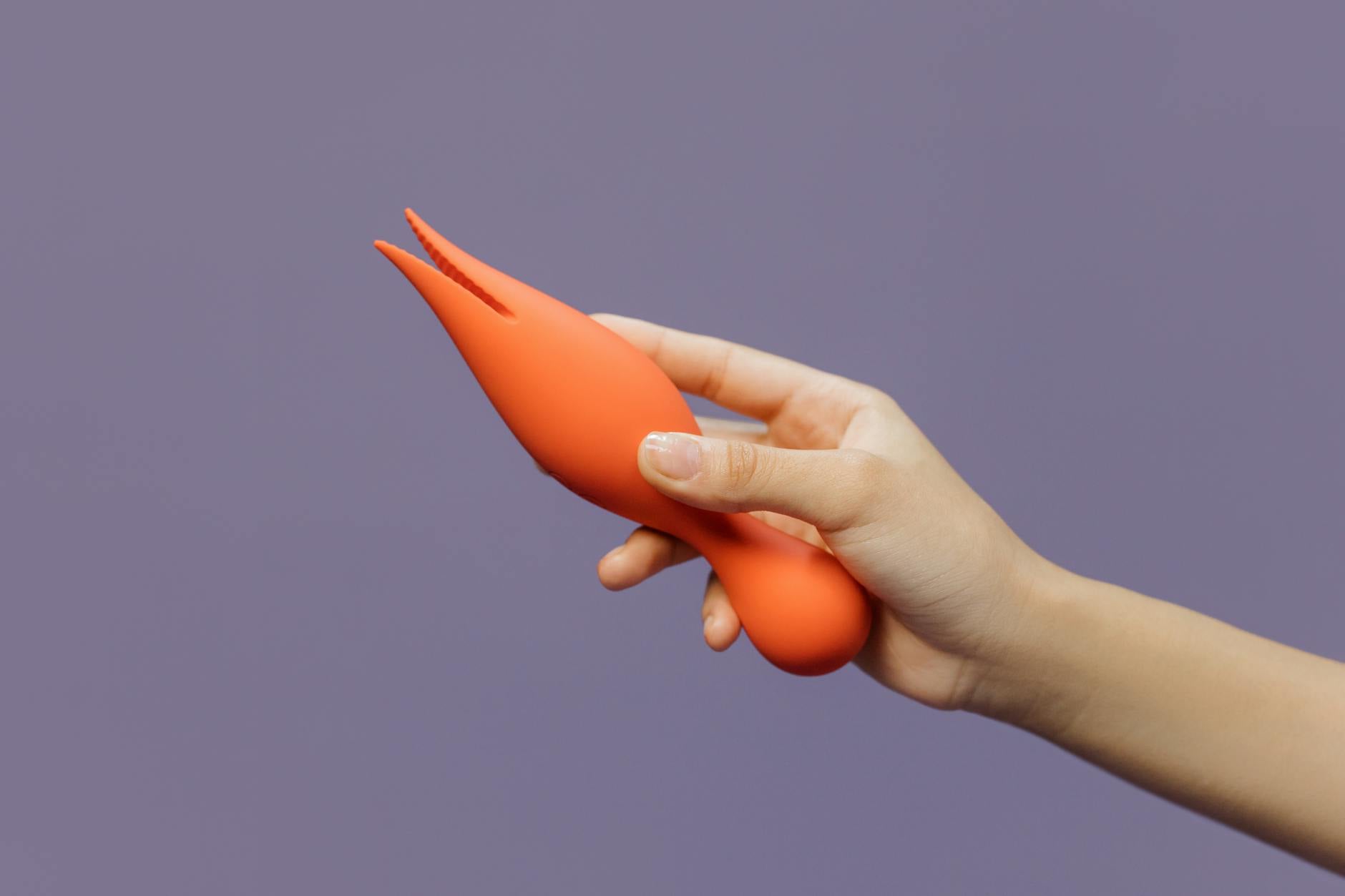
Honestly? Your 40s is when most people figure out what they've been missing. Hormones shift. Your sensitivity changes. The speed at which your body turns on might feel different. And here's the thing nobody tells you: a lemon vibrator starts working better now, not worse. Understanding why means understanding what perimenopause actually does to your physiology and what it doesn't.
You're not broken. Your body is adapting. And the right tool makes that adaptation feel better than your 20s ever did.
What actually changes in your 40s
Estrogen levels start their slow decline around your early-to-mid 40s, even if you haven't hit menopause yet. Progesterone drops too. This isn't catastrophic or sudden. It's a gradual shift that compounds over months and years. Here's what that shift does:
Your vulva's tissue becomes slightly thinner and more delicate. Lubrication takes longer to build and may feel less abundant. Your clitoris is still packed with nerve endings (those don't change), but the skin around it might feel more sensitive to direct friction. Arousal itself slows down. Where you might have gotten wet in three minutes at 30, now it's five or seven. Your orgasm's intensity or shape might feel different. Some people report sharper, more concentrated sensations. Others notice a softer build. Both are normal.
What doesn't change: your capacity for pleasure, your ability to orgasm, your desire, or your neural wiring for sensation. The brain stays the same. The hardware just needs a slight adjustment.
Why lemon vibrators work better for hormonal changes
A lemon clitoral vibrator, especially one that uses suction or air-pulse technology, sidesteps the friction problem that becomes more real in your 40s. Instead of constant mechanical vibration against increasingly delicate tissue, suction creates gentle waves of pressure that stimulate nerves without grinding. It's the difference between rubbing something raw and massaging it alive.
Lem vibrators and similar designs also give you precise control over intensity. In your 40s, you're more likely to know exactly what you want. You don't need to guess anymore. Starting at pattern one and building upward means you can match your body's actual pace instead of forcing yourself to keep up with an arbitrary rhythm.
The other advantage: air-pulse or suction-based lemon sexual toys don't require the same level of lubrication that friction-based vibrators do. This matters when your body is producing less of its own. You still want to use water-based lubricant (always, forever), but the design itself isn't fighting against dryness.
How to adjust your routine when arousal feels slower
First, accept that slower isn't worse. It's often better. In your 40s, you typically have a clearer sense of what actually turns you on versus what you thought was supposed to turn you on. That clarity is gold.
Budget 15 to 25 minutes for foreplay before you bring in a lemon vibrator. Use that time to notice what's actually happening in your body: where you feel sensation, what touches make you pay attention, what rhythm your breathing wants to follow. Many people in their 40s report that this extended warm-up phase is the single biggest shift that improves their experience.
When you do reach for your lemon vibrator, start lower than you think you need to. If your device has settings one through ten, begin at two or three. Your tissue is more sensitive now, which is actually good information. It means you can feel more, not less. You're just feeling it sooner.
Consider water-based lubricant that's been designed for sensitive skin. Brands that skip glycerin and added fragrance tend to feel better if your tissue is more reactive. Apply it generously. You're not adding insult to injury. You're creating conditions where your body can respond the way it wants to.
The emotional piece nobody mentions
Your 40s often come with a different headspace around sex. Maybe your kids are older or launching. Maybe you're rebuilding after a relationship ended. Maybe you're finally alone with your partner for the first time in years. Maybe you've just stopped apologizing for having needs.
This mental shift changes everything. Your brain controls a massive portion of your arousal. When your brain is clearer about what you actually want (instead of what you've been told you should want), your body catches up faster. Even if hormones are shifting downward, mental permission can shift upward in a way that balances the equation.
I've watched countless clients describe their 40s as the first time they actually enjoyed their own body instead of performing their body for someone else. The physical changes aren't holding you back. The permission is what's catching up.
When to bring your partner into the adjustment
If you're with a partner, they might need to know that your preferences have changed. This isn't you rejecting them. It's you getting clearer. A conversation that separates the two topics works best.
Instead of: "Sex doesn't feel the same anymore." Try: "My body is shifting. I'm learning what works better now. I want us to explore this together."
Many partners actually find this phase sexier. You're more direct. You know what you want. You're more likely to ask for it. A good partner finds that incredibly hot.
If you're using a lemon vibrator with your partner, communicate about timing and sensation. "I need longer to warm up now" is different from "I don't want you." Most couples I've worked with find that building in this longer foreplay phase actually strengthens their connection because it forces more attention and presence.
The physical fine-tuning that makes the biggest difference
Pelvic floor strength matters more in your 40s, but not in the way most people think. You don't need to do aggressive Kegels. You need to learn how to relax your pelvic floor fully as well as engage it. When your pelvic floor is tense (which it often is during midlife stress), sensation gets muted.
Try this: Before you use your lemon vibrator, spend two minutes breathing into your pelvic floor. Imagine it softening with each exhale. This tiny shift can make your vibrator feel 40 percent more intense because you're not fighting tension.
Also: If you notice any sharp pain or persistent discomfort, get it checked. Genitourinary syndrome of menopause is real and treatable. Topical estrogen creams work fast and usually solve the problem within weeks. Don't just assume it's normal. It often is, but it's also often fixable.
The timer shift: planning versus spontaneity
Your 40s is when you might stop believing in spontaneous arousal and start planning for it instead. This sounds unromantic until you realize that planning means anticipation. Anticipation often builds arousal faster than the moment itself does.
Sending your partner a text at 3 p.m. that says you're looking forward to tonight gives your body hours to start warming up mentally. By the time you're together, you're already primed. This isn't less sexy. It's smarter.
Keep your lemon vibrator somewhere accessible instead of hidden in the back of a drawer. Accessibility changes habit. When it's easy to reach for, you use it more. When you use it more, you learn your body's actual preferences in your 40s instead of running on decade-old assumptions.
People also ask
Does perimenopause lower your sex drive, or is it just the friction that makes it feel like less fun?
Both. Dropping estrogen can slightly lower baseline desire. But here's the critical part: the friction (literally and metaphorically) makes it so much harder to access what desire is still there that it feels like it's gone. Once you remove the friction (with better lube, longer foreplay, a tool like a lemon clitoral vibrator, or talking to your partner differently), most people find their desire is fine. It's just requires a different approach now.
Can you still have intense orgasms in your 40s with hormones shifting?
Completely. Many people report their strongest orgasms in their 40s or beyond. Why? Partly because your body has figured out what actually works. Partly because you've stopped performing and started feeling. And partly because you finally have permission to take the time you need. A lemon vibrator gets you there faster because it works with your body's new physiology instead of against it.
Is it normal to need a vibrator now when you didn't before?
Yes. It's not a sign your body is broken. It's a sign your body is being honest about what it needs. Your 20s might have been forgiving about sloppy technique or misaligned timing. Your 40s is less forgiving, which is actually information. You're learning what precision feels like. A lemon vibrator isn't a workaround. It's a tool that matches your body's actual needs.
How much does lubrication matter if I'm using a lemon suction vibrator?
It matters, but less than it does with friction-based toys. Air-pulse and suction don't require the same glide that vibration does. That said, water-based lubricant still makes everything feel better and protects your tissue. Use it anyway. Generously. There's no such thing as too much lube in your 40s.
Should I tell my partner my lemon vibrator is because something is wrong with me?
No. Frame it as: "My body is shifting, and this tool helps me feel better." A partner worth keeping gets this. They might even want to be part of exploring it. Most people I work with find that introducing a lemon clitoral vibrator actually strengthens their sexual connection because it forces communication about what actually feels good.
How long does it take to adjust to your body's changes in your 40s?
Three to six months if you're actively learning what works. Most of that adjustment is mental, not physical. Once you accept that longer foreplay and different tools aren't failures, you often find your 40s sex is significantly better than your 30s. Your body hasn't betrayed you. It's just grown more specific about what it needs.
The honest ending
Your 40s isn't when your sexuality ends. It's when it finally gets to be honest. Your body stops pretending. You stop performing. And the tools that actually work (like a lemon vibrator designed for sensitivity and precision) become less of a compromise and more of a relief.
Hormones shift. Tissue changes. Arousal slows. All true. None of it means less pleasure. Often it means more. Because you're finally in your own body, not someone else's idea of what your body should be.
If you're feeling lost in the adjustment, you don't have to figure it out alone. A therapist or sex-positive healthcare provider can help you separate what's actually hormonal from what's about permission, communication, or outdated assumptions. And honestly? That conversation is half the battle.