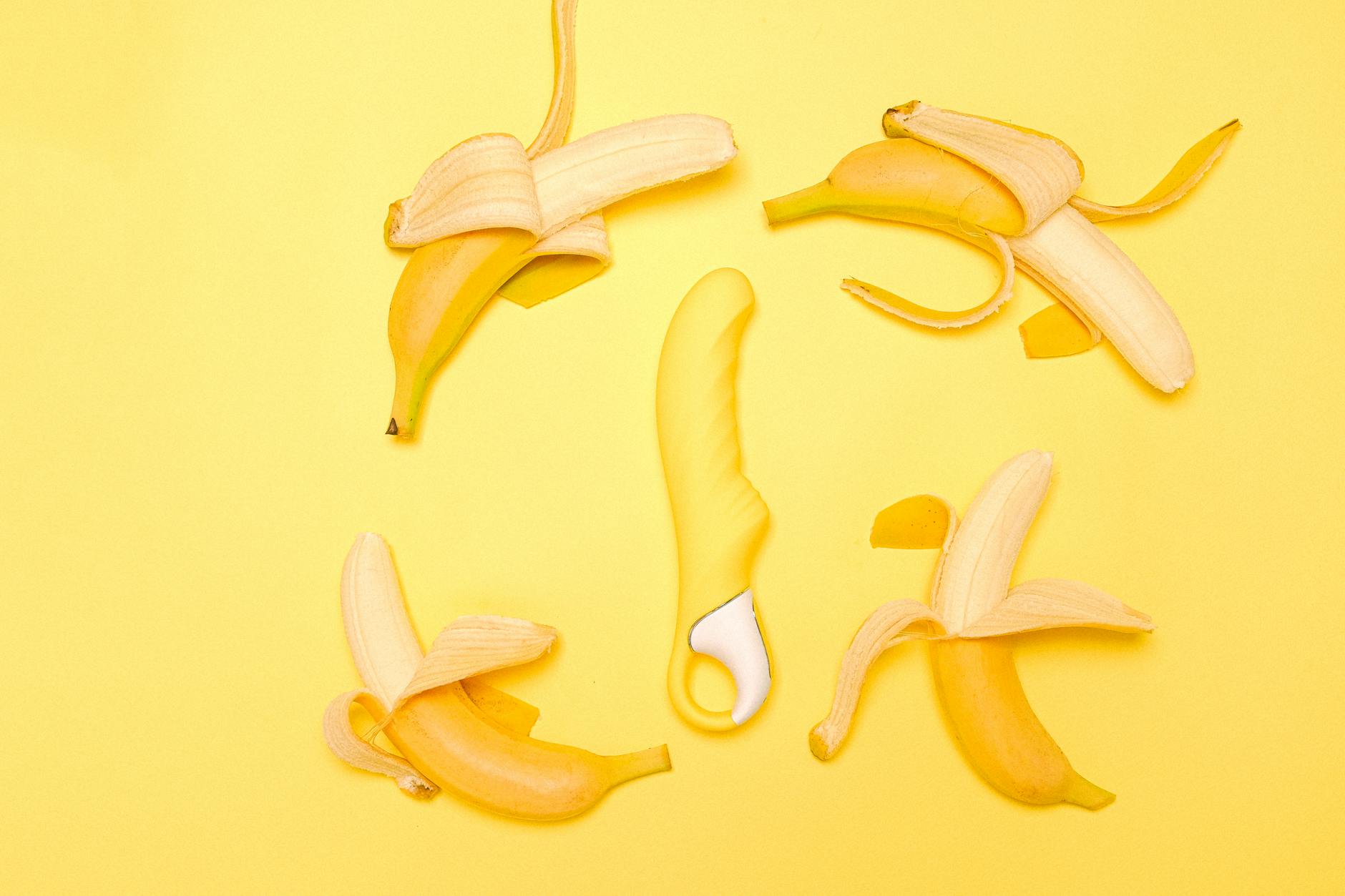
How to Use a Lemon Vibrator When Your Hormonal IUD Affects Sensation
Let's be real. Nobody tells you that the IUD that's supposed to be "set it and forget it" might actually make you forget what pleasure feels like.
Hormonal IUDs are genuinely excellent contraception. They have the lowest failure rate of any method, they're good for five to seven years, and they're extremely low maintenance. But here's what often gets glossed over in the conversation with your doctor: many people experience noticeably reduced sensation, lower arousal, and difficulty reaching orgasm after insertion. Not everyone. Not always dramatically. But enough that it's a real, common pattern that deserves an actual conversation.
I'm going to walk you through what's actually happening in your body, why a lemon clitoral vibrator like the Lem can be specifically helpful, and how to use one thoughtfully when an IUD has changed your pleasure response.
The hormonal IUD and your arousal system
Here's the mechanism. Hormonal IUDs (Mirena, Skyla, Kyleena, Liletta) release a synthetic progestin directly into your reproductive system. Some of that hormone does enter your bloodstream, though the amount is much lower than with birth control pills. That matters, because progestin affects dopamine, which is the neurotransmitter tied to desire and sexual motivation.
Lower dopamine doesn't mean you stop wanting sex entirely. It means you're less likely to initiate it. You might feel less responsive to your partner's touch. Arousal takes longer to build. Orgasms, when they do arrive, might feel muted or require significantly more stimulation than before.
Three additional things happen with hormonal IUDs:
1. Lubrication changes. Progestin alters vaginal tissue thickness and moisture. Some people find they need more lube; others notice less natural lubrication overall. Both are normal.
2. Clitoral sensitivity shifts. The clitoris is extremely responsive to hormone fluctuations. With a hormonal IUD suppressing ovulation, clitoral sensitivity can become less reactive to light touch. This is why some people find that direct, focused stimulation works better than they expected.
3. Orgasm architecture changes. The intensity, duration, and ease of orgasm can all shift. Orgasms might feel shorter, less intense, or take longer to build. Some people describe them as "flatter" than before.
None of this means your pleasure is gone. It means your pleasure has a different address.
Why a lemon clitoral vibrator works when sensation feels muted
Air-suction vibrators like the Lem are particularly useful for IUD-related sensation changes, and here's why.
When hormonal suppression makes your clitoris less responsive to gentle touch, you need focused, sustained stimulation that doesn't rely on sensitivity alone. The Lem uses gentle suction and pulsing patterns that stimulate the nerve network around the clitoris without requiring the kind of micro-sensitivity that an IUD may have dampened.
It's not that suction is "stronger" exactly. It's that it engages different nerve pathways. A traditional vibrator relies on rapid oscillation and assumes your tissue is responsive to that rhythm. Suction works with the architecture of your clitoris itself, pulling soft tissue into the cup and creating consistent pressure.
Many of my clients with hormonal IUDs report that after months of finding traditional vibrators underwhelming, the Lem is the first device that feels genuinely satisfying. It's not a workaround. It's a better match for how their body is responding right now.
How to integrate the Lem into your routine when hormones are suppressing sensation
Start with time, not intensity. Forget the idea that you need to orgasm in fifteen minutes. Budget thirty to forty-five minutes for solo exploration. Progestin-suppressed arousal builds slowly, and there's no prize for speed.
Use water-based lubricant even if you think you don't need it. The synthetic progestin in your IUD has already altered your lubrication profile. Adding a thin layer of external lube helps the Lem create an effective seal and makes the entire experience more comfortable. This is not a sign something is broken. It's just adaptation.
Start on the lowest setting and stay there for five to ten minutes before considering moving up. Your goal is not to find the most intense setting you can tolerate. Your goal is to let the device wake up sensation that's been sleeping. That takes time.
Pay attention to patterns throughout your cycle. Even with a hormonal IUD suppressing ovulation, your body still has subtle hormone fluctuations. You might notice that certain days feel more responsive than others. Knowing your own micro-rhythm helps you plan intimacy with more realistic expectations.
When to consider removing the IUD
If sensation dampening is severe enough that it's genuinely distressing, that's worth a conversation with your provider. Some options exist.
You could switch to a copper IUD, which has no hormonal component and typically doesn't affect arousal (though some people do report different sensations with any IUD). You could explore other contraceptive methods entirely. Or you could stay with your hormonal IUD and accept that this is one of its trade-offs, armed with better tools to work with your body as it actually is right now.
None of those choices is wrong. What matters is that you're making the choice consciously, not just accepting numbness as the price of good contraception.
The partner conversation
If you're partnered, your IUD's effect on your sensation is not just your private adjustment. It's a shared experience.
Your partner might notice that you're less responsive to their usual approach. You might need longer warm-up time. Orgasm might be less automatic. The temptation is to hide this and pretend nothing has changed. Please don't. The clearest path forward is saying out loud: "My IUD has genuinely changed how my body responds to touch. Let's figure this out together."
Introducing a lemon clitoral vibrator into partnered sex isn't about replacing their touch. It's about expanding what works. Some couples find that the Lem becomes a regular part of foreplay. Others use it as a tool when they want to guarantee an orgasm without it becoming a whole production. There's no single right way. But there is a better way than silence.
What helps beyond the toy
A few other things that genuinely matter when an IUD has shifted your arousal.
Mental load reduction helps. The cognitive space you're taking up worrying about your reduced desire actually perpetuates the problem. If you can create conditions where you're not thinking about the IUD or your altered sensation, that mental clarity alone sometimes rescues arousal.
Increased foreplay time, obviously. You're not broken. You just need more runway. Budget the time and protect it from interruption.
Consider whether other medications or life factors are amplifying the IUD's effect. Antidepressants, sleep deprivation, stress, and relationship tension all compound sensation dampening. Addressing those won't fix the IUD's hormonal impact, but it can make the overall picture significantly less bleak.
Remember that this might not be permanent. Some people adjust to their hormonal IUD after six to twelve months. Sensation doesn't always return to baseline, but it often improves. Others find that the first few years are tougher and then things shift. There's no universal timeline.
FAQ
Can you use the Lem with a hormonal IUD safely?
Yes, absolutely. External vibration poses no risk to your IUD. The device doesn't contact the IUD, and vibration doesn't disturb it. What matters is that you're comfortable and that the tool actually helps with sensation changes you're experiencing.
How long does it take to adjust to sensation changes from an IUD?
There's no standard timeline. Some people notice dampened sensation immediately after insertion and adjust within a few months. Others don't notice changes until weeks in. Some people never experience notable sensation change. If you're concerned, check in with your provider at your six-week follow-up visit.
Is low sensation from an IUD a reason to get it removed?
Not by itself, unless it's significantly affecting your quality of life or your relationship. If the sensation change is manageable with tools and time, many people keep their IUDs for the excellent contraceptive protection. If it's distressing, removal is a completely valid choice. This is your body and your call.
Will switching to a copper IUD fix sensation problems?
Often yes, because the copper IUD has no hormonal component. But copper IUDs have their own trade-offs, including heavier, longer periods for some people. It's a different set of compromises, not a pure upgrade.
Can you orgasm with a hormonal IUD?
Yes. Some people find it easier or harder, but ability isn't lost. Many people orgasm regularly with a hormonal IUD. Some find they need different stimulation, more time, or different mental conditions to get there. But the capacity is still there.
Should you tell your partner about sensation changes from your IUD?
Yes. It affects both of you. A good partner will want to understand what's happening and figure out what actually works for you now. Keeping it secret usually just creates confusion and distance.
You're not broken. You're adjusted.
Your hormonal IUD is quietly managing something that used to require either pills every day or more invasive procedures. That's genuinely powerful. The trade-off of altered sensation is real and worth acknowledging, but it's also manageable.
Introducing a lemon clitoral vibrator is one way to work with your body instead of against it. So is extended foreplay, better communication with partners, and time. You might find that the Lem becomes a regular part of your pleasure routine. Or you might use it occasionally and find that's enough. What matters is that you're not waiting for sensation to magically return to exactly how it was before.
Your pleasure matters. Your IUD is good contraception. And right now, they're both true at the same time. You get to have effective birth control and a real, responsive sexual life. You just might need to be more intentional about how you get there.
If you want to explore how different tools and approaches work for your specific situation, reach out to us. We're here to help you figure out what actually works for your body as it is right now.