
Let's name what's happening
Your partner doesn't touch you the way they used to. Maybe they flinch slightly when you reach for their hand. Maybe sex feels obligatory when it happens at all. Maybe affection has become so rare that you've stopped initiating because rejection stings too much.
Here's what I see in my practice: couples in this position often split into one of two camps. One partner blames themselves ("Maybe I'm not attractive anymore"). The other partner shuts down entirely ("If they don't want me, fine"). Neither camp leads anywhere good.
A lemon vibrator won't fix the avoidance. But it can do something more useful: it can help you hold onto your own pleasure, your own sense of being a sexual person, while you figure out what's really going on.
Why partners pull away from touch
Avoidance is never really about you, even though it feels that way. The most common reasons I hear:
Stress and overwhelm. Your partner is carrying something heavy. Depression, work burnout, family stuff, financial anxiety. When the nervous system is already firing on all cylinders, touch can feel like one more demand on their bandwidth.
Touch aversion from trauma. Sometimes past trauma rewires the nervous system so that physical contact registers as threatening, even from a trusted partner. This is deeply unconscious and has nothing to do with attraction.
Perfectionism or shame about their own body. If your partner doesn't feel sexy in themselves, they might preemptively reject your advances to avoid being seen.
Mismatched desire that's been unspoken for years. Some people have genuinely lower sex drives. Others have learned to suppress desire because it felt unsafe or unwelcome earlier in the relationship. By the time you notice the withdrawal, it's been building for a long time.
Relationship rupture without repair. You had a conflict. Then another one. Nobody fixed it. Touch became the casualty of that unresolved tension.
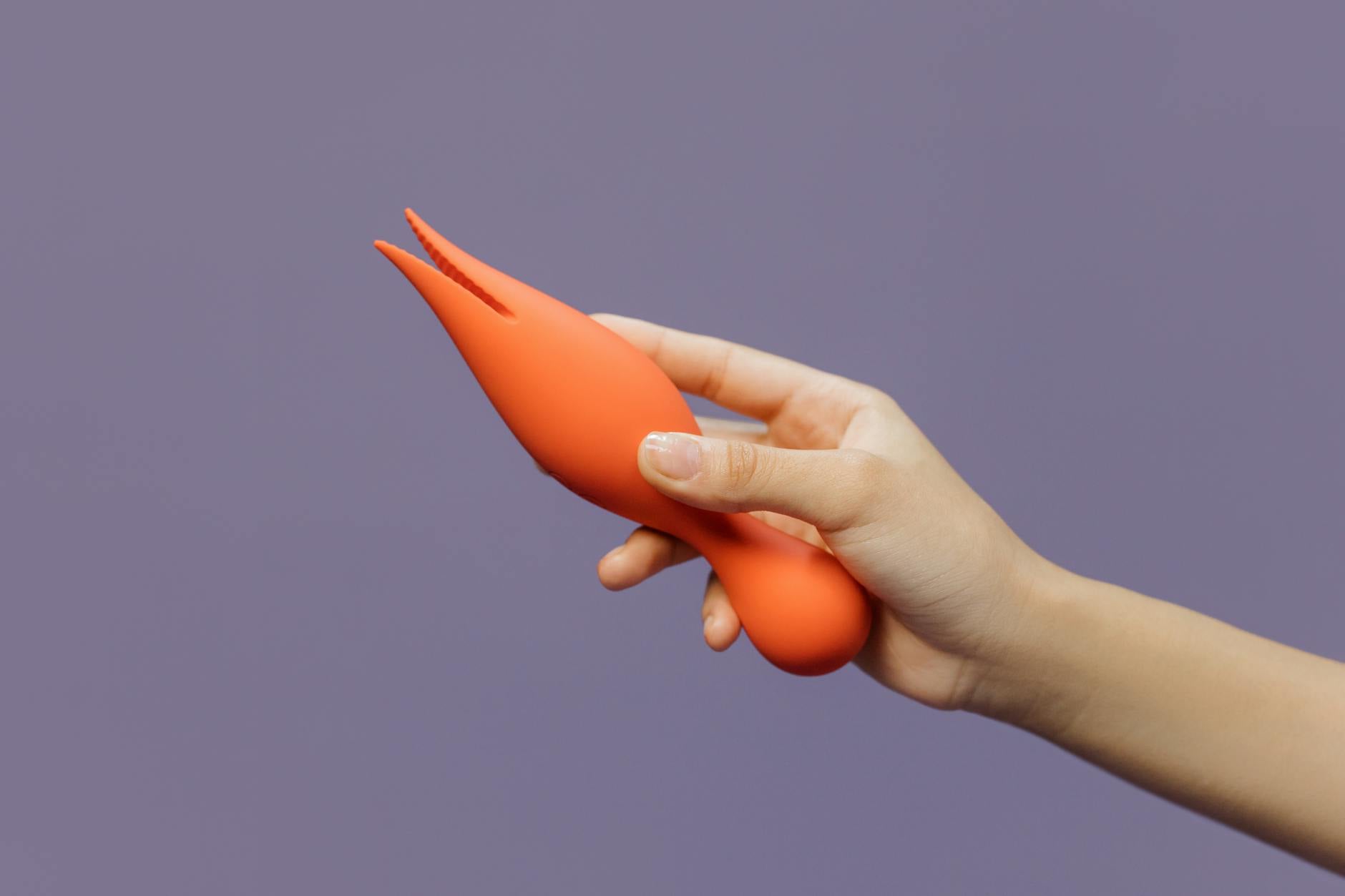
Photo by cottonbro studio on Pexels
Why introducing a lemon vibrator helps (and how to do it right)
Introducing a toy into a relationship where touch is already fraught can feel risky. You might worry your partner will interpret it as criticism ("You're not enough, so I need this") or rejection ("I've given up on you").
Here's the reframe: a lemon clitoral vibrator gives you agency. It says, "I'm not waiting for permission to experience pleasure. I'm not disappearing because you're unavailable. I'm staying in my body."
That's actually attractive to most partners, even ones in avoidance mode. It breaks the cycle of pursuit and withdrawal that erodes attraction even further.
When you introduce the toy, the framing matters completely. Not: "I need this because you don't satisfy me." Instead: "I've been thinking about how to feel more connected to my own pleasure. I'd like to try something."
If your partner reacts with defensiveness, you have real information. That reaction usually means they're carrying shame about the dynamic too. That's the conversation to have, preferably with a therapist.
If your partner responds with curiosity, even mild curiosity, you have room to move. You can invite them to watch, to touch you in other ways while you use the lemon vibrator, to simply be present without pressure.
The pleasure map: using a lemon vibrator solo in a distant relationship
When your partner is avoiding touch, using a lemon vibrator alone becomes a form of self-advocacy. Here's how to do it in a way that actually helps rebuild the relationship, not just bypasses it.
First, don't hide it. Shame in secret is what kills desire in long-term relationships. If you're using a toy, your partner will eventually sense it. Better they know you're actively engaging with your own pleasure than discover it and feel blindsided.
Second, use it at a time when you can be present to the feeling. Not while you're resentful, not while you're trying to prove something. An air-suction lemon vibrator like the Lem works best when you're actually relaxed enough to let sensation build.
Third, notice what shifts. Do you feel less angry at your partner afterward? More grounded? More willing to stay in the relationship while change happens? These are signs it's working as a bridge, not a replacement.
Most people find that consistent self-pleasure actually increases desire for partnered sex, not decreases it. When you're regularly connected to your own arousal, you radiate something different. You're less desperate, less resentful, more actually attractive.
The conversation you can't avoid
Eventually, you need to talk about the avoidance directly. A vibrator buys you time and peace, but it doesn't fix the underlying issue.
Here's what I recommend saying: "I've noticed we've drifted on physical affection. I don't think it's because you don't love me. But I need to understand what's happening on your end. Is it stress? Are you worried about something? Have I done something that made you pull back? I want to fix this together, but I need you to be honest."
Then actually listen. Most partners in avoidance mode have been waiting for permission to tell the truth. Once they start, it usually comes out.
If your partner says they have lower desire than you, the work is different than if they're dealing with shame or trauma. But in both cases, a willingness to name it is where healing starts.
When avoidance is a bigger problem
Sometimes touch avoidance is a symptom of something deeper. Depression. Infidelity. An affair partner. Fundamental incompatibility that neither of you wants to name.
If your conversations about intimacy go nowhere, if your partner refuses to engage with the topic at all, if you're using the lemon vibrator to compensate for a relationship that feels emotionally dead, that's a sign you need outside help.
A therapist trained in couples work (ideally someone familiar with Gottman Method approaches) can help you figure out whether this is a relationship worth repairing, or whether you're pouring energy into something that can't be fixed. Both answers are valid. But you deserve to know which one is true.
The permission you actually need
Using a lemon vibrator when your partner avoids touch isn't selfish. It's the opposite. It's you saying: "My pleasure matters. My body matters. I'm going to stay connected to myself even when you're not available."
That kind of self-respect often creates the opening your partner needs to come back. Not because the vibrator is magic. But because you stopped performing desperation. You stopped disappearing. You became someone worth touching again.
Start there. Use the toy. Have the conversation. See what's possible.
People also ask
What if my partner feels threatened by me using a lemon vibrator?
That reaction usually signals insecurity or shame on their end, not a problem with you or the toy. A caring partner might feel uncertain at first, but then become curious. If your partner remains threatened after you explain that this is about self-care, not replacement, that's worth exploring in therapy. You deserve a partner who wants you to feel good.
Can using a lemon clitoral vibrator help me feel less resentful toward my partner?
Absolutely. When you're regularly experiencing pleasure, your nervous system is less activated. You're not carrying the constant low-level wound of rejection. That typically makes you calmer, clearer, and more able to communicate without defensiveness. Some couples report that one partner using a toy actually opens the door to reconnection because the pressure is off.
How often should I use a lemon vibrator if my partner is avoiding intimacy?
There's no "should." Some people use their lemon vibrator multiple times a week. Others use it once or twice monthly. Listen to your body. If you're using it to punish your partner or prove something, that's a sign to pause and check your intentions. If you're using it to stay grounded and connected to yourself, use it as much as feels good.
Should I use the lemon vibrator with my partner if they're willing to be present?
Definitely. If your partner is willing to watch, to touch you in other ways, or to be nearby while you use a lemon sucker toy, that's a real form of intimacy. It's different from partnered sex, but it's genuine connection. Some couples find that incorporating a lemon sexual toy into their intimate time together actually rebuilds trust and presence because there's less pressure to perform.
What if my partner says they want to use the lemon vibrator on me?
That's often a really positive sign. It means they're willing to engage with your pleasure, even if they're not comfortable with other forms of touch right now. Let them. Some partners with touch aversion find that using a toy on their partner feels safer than skin-to-skin contact because it's more structured and less overwhelming.
How do I bring up lemon adult toys in conversation without it feeling awkward?
Start small. You don't need a big production. "I've been thinking about exploring some things for myself. I found something I'd like to try. Would you be open to talking about it?" Most partners appreciate the directness more than the elaborate lead-up. If your partner seems closed, give them space. But don't disappear or apologize for having desires. You can revisit the conversation in a few weeks once they've had time to sit with it.
Moving forward
Using a lemon vibrator when your partner avoids intimate touch is not a solution. It's a holding pattern. A way to stay in your body while you figure out whether this relationship can shift, or whether you need to make bigger decisions.
But here's what I know after decades of working with couples: the person who stays connected to their own pleasure, who doesn't sacrifice their body or their desires in service of someone else's avoidance, is usually the one who ends up leading the relationship toward repair. Not through ultimatums. Through simple, quiet self-respect.
Start there. Then have the hard conversation. Then see what's possible.
If you're struggling to have that conversation, or if you've had it and nothing shifted, we're here to help. Reach out at /contact to explore how deeper support might serve you and your relationship.