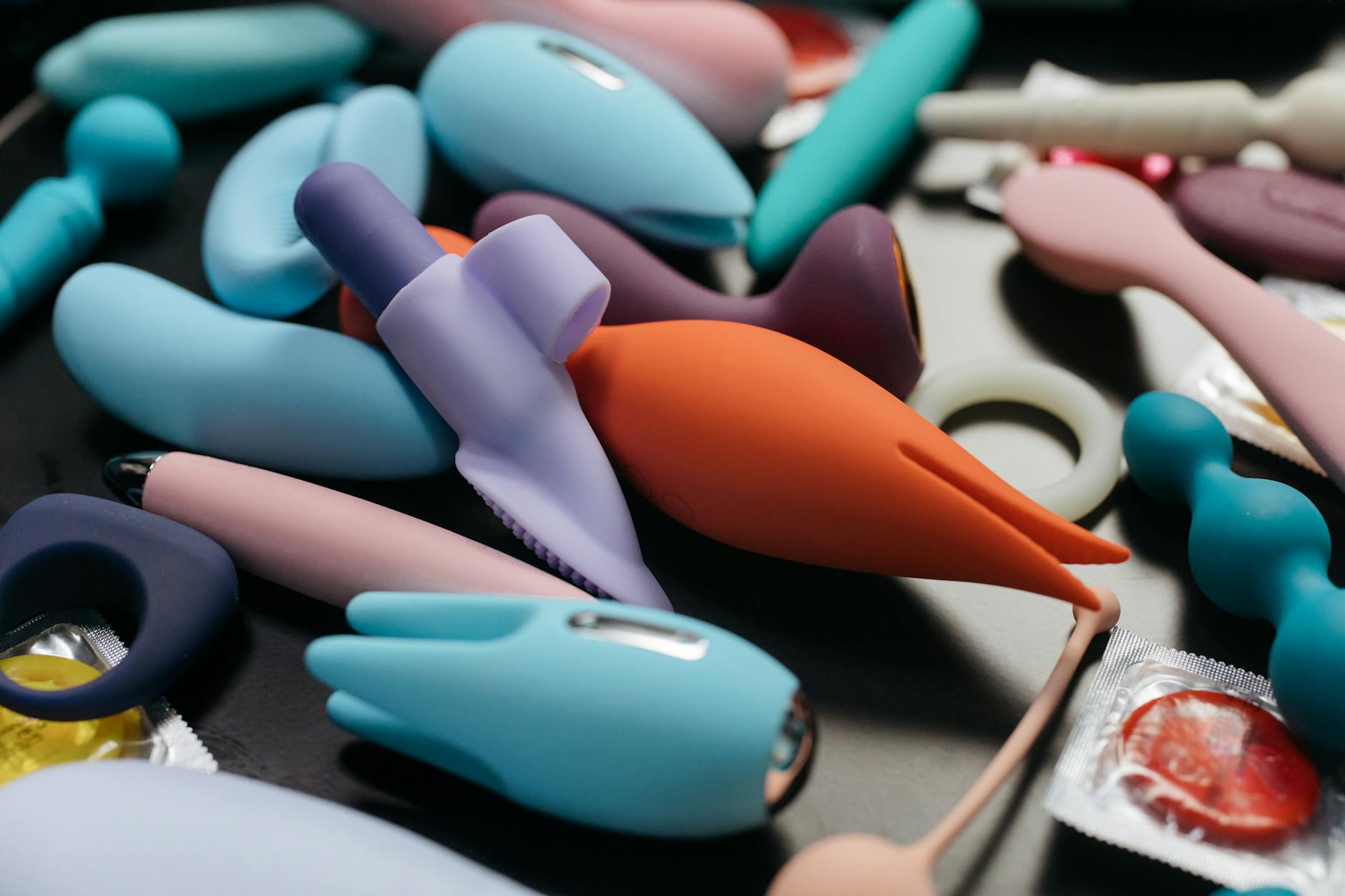
When toys become the argument instead of the solution
Here's what I hear in my practice all the time. One partner brings home a lemon vibrator or lemon clitoral vibrator. The other partner freezes. Not because they're against pleasure, but because they're worried about hygiene, or they think it's a sign something is wrong, or they genuinely don't understand why it's necessary when things have been fine before. The toy gets hidden in a drawer. Tension lingers. Neither person says what they're actually thinking.
This isn't about the toy. It's about what the toy represents to each partner.
I'm going to walk you through how to actually use a lemon vibrator together when one of you is hesitant, scared, or skeptical. Because that conversation is where the real intimacy lives.
Why partners actually object to adult toys (the real reasons)
Most hesitation isn't puritanical. It's one of five things.
Concern #1: "Is it safe?" Your partner has seen claims online. They've heard that silicone can leach chemicals, or that vibrations might damage nerves, or that using a toy will make them "unnecessary." These fears sound irrational until you realize where they're coming from. They're scared. Not of the toy. Of losing you.
Concern #2: "Does this mean I'm not enough?" This one surfaces as logic. "Why would you need that if we have each other?" What they're really asking is: am I failing you sexually? The lemon vibrator becomes a mirror of their own perceived inadequacy.
Concern #3: "This feels clinical, not intimate." Some partners experience toys as a step toward pornography or fantasy, which they equate with emotional distance. To them, intimacy means natural, unassisted response. A toy feels like it interrupts that.
Concern #4: "I don't know how to use it." This is just honest anxiety. They worry about hurting you, or not doing it right, or looking foolish. Vulnerability disguised as skepticism.
Concern #5: "I'm not comfortable talking about this yet." And that's legitimate. Some people need time to adjust to the idea. Pushing them into it doesn't build trust. It erodes it.
None of these is a toy problem. All of them are communication problems.
The conversation that needs to happen first
Before you even show them the lemon vibrator, you need to have this talk. Not during sex. Not when you're frustrated. Calm evening, low stakes, both of you sitting down.
Start with what you want, not what you're buying. "I've been thinking about pleasure, and I realized that my body responds differently at different times. I want to explore what feels good to me right now. I'd love to do that together, but I want to do it in a way that makes you feel secure too."
That's different from "I want to buy a vibrator." The first one invites partnership. The second one sounds like a demand.
Then ask the real question. "What worries you about this?" And listen. Don't defend. Don't explain. Just listen to what comes up. You might hear one of those five fears listed above. Or you might hear something you didn't expect. That's valuable information.
If they say, "I'm worried it's not safe," you have actual data to share. A quality lemon clitoral vibrator from Hello Nancy's Avo Shop is made from medical-grade silicone. It's body-safe, tested for chemicals, and designed to be used with water-based lubricant. But don't lead with specs. Lead with reassurance. "I get that. Let me show you what I've researched."
If they say, "I feel like you don't want me anymore," that's different. That's not a toy conversation. That's a relationship conversation. You might say: "That's not even close to true. Actually, I want us to feel more connected. This is about exploring together, not replacing anything."
How to introduce the lemon vibrator without it feeling like a test
Once you've heard their concerns and they've heard your reasoning, timing matters.
Don't pull it out mid-foreplay and expect them to relax. That's too much pressure. Instead, show it to them when you're not about to have sex. Let them hold it. Let them ask questions. "What does it do?" "How do you charge it?" "Does it hurt?" Treat it like you're showing them a new kitchen appliance, not a secret weapon.
Let them turn it on without you touching it. Hearing the vibration pattern, seeing how gentle or intense it is, removes a lot of the mystery. Some partners feel better after they realize it's quieter than they expected, or less aggressive, or that it has multiple speeds they can control.
Then put it away. No pressure. No "so when do we try it?" Just normalize it in the space.
How to use it together when you do move forward
When you both feel ready, start small. This isn't about fireworks. It's about collaboration.
You might use the lemon vibrator on yourself while your partner is inside you or next to you. This keeps you in control (you decide the pressure, the spot, the pattern) and lets your partner watch, participate, ask questions as you go. "You okay?" "Does this feel good?" "Want me to try?" Check in constantly.
Or your partner can use it on you, starting at low intensity. Hand them control. Tell them where you want it. "A little lighter there. Actually, stay right here." This teaches them what you enjoy and reminds them that they're driving the experience, not the device.
If they've been worried they'll be "replaced," using the toy together proves immediately that they won't be. You're more connected, not less.
When one partner is still resistant (and when to let it go)
Sometimes after all this, your partner still isn't ready. That's okay. You have options.
First option: give them more time. People move at different speeds. "I hear you. We don't have to do anything right now. But I'd like to try this when you feel comfortable. No rush." That takes the pressure off and signals that you respect their boundary.
Second option: use it solo, with their knowledge. "I'm going to explore this on my own. You don't have to participate, but I wanted to be transparent." Some partners find it easier when they're not performing. They can watch, or leave the room, or just know it's happening without being the focus.
Third option: if this represents a larger intimacy gap, consider talking to a couples therapist. A professional can help you both understand what's underneath the toy resistance. Often that work transforms the entire relationship, toys or no toys.
What you don't do: sneak it. Hide it. Use guilt. "Everyone else does this." That erodes trust faster than anything.
The common fears, debunked with facts
If your partner asks these, here are the answers.
"Won't it make you numb down there?" No. Vibration stimulates nerve endings, it doesn't damage them. The clitoris has 8,000 nerve endings. One lemon clitoral vibrator cannot overwhelm that entire system. Regular use actually increases sensation over time because you're learning what you like.
"Is it sanitary?" Yes. Medical-grade silicone is non-porous, which means bacteria can't hide in it. Wash it with soap and warm water before and after use. It's cleaner than a lot of things you touch daily.
"Will you get addicted to it?" People aren't neurologically addicted to vibrators the way they are to drugs. But they do find what works and keep using it. That's just preference, not addiction. Your partner probably has a favorite coffee order they get every week. Same thing.
"Doesn't it mean you're not attracted to me anymore?" Absolutely not. Arousal is physiological and contextual. Some bodies need different things at different times. Using a lemon vibrator doesn't change attraction. If anything, it usually increases it because both partners feel more satisfied.
Building trust around toys, not just using them
The bigger picture here is that you're learning to talk about sex, pleasure, bodies, and boundaries. That skill is worth far more than any single toy.
When you move through the discomfort of that conversation, you're actually strengthening the relationship. You're saying: "I trust you with my desires. I want to understand your fears. We can figure this out together."
That's the work. The lemon vibrator is just the context where it happens.
People Also Ask
How do I convince my partner to try a clitoral vibrator? You don't. You invite them. There's a difference. "Would you be open to exploring this together?" is an invitation. "You have to be comfortable with this" is a demand. Invitations leave room for a real answer. Demands create resistance.
Is a lemon clitoral vibrator safe for all body types? Yes. The shape of the clitoris is similar across bodies, though sensitivity varies. What matters is starting at low intensity and communicating about what feels good. A lemon vibrator's suction-based design is often gentler than traditional vibrators, which helps partners who worry about intensity.
What if my partner uses the lemon vibrator alone and I feel excluded? That's a conversation about boundaries and comfort, not about the toy itself. You might say: "I feel left out when you use this without me. Can we find times to explore it together?" Or you might discover that solo use actually helps your partner feel more confident, which then translates into better partnered experiences. Open that dialogue instead of assuming you know what it means.
Can using a vibrator together actually improve our relationship? It depends on how you approach it. If you use it as a Band-Aid for deeper intimacy problems, no. But if you use it as a doorway to talk about pleasure, boundaries, and needs, yes. The conversation around the toy is often more valuable than the toy itself.
What's the best way to store a lemon vibrator so my partner doesn't feel weird about it? Store it openly. A nightstand drawer. Not hidden like shame. When toys are normalized as part of your life together, the weirdness dissolves. Your partner will feel less anxious if the vibrator is just... there. Matter of fact.
My partner says vibrators are "unnatural." How do I respond to that? With curiosity, not defensiveness. "What does natural mean to you?" Sometimes they mean "I didn't grow up with this." Sometimes they mean "It feels clinical." Sometimes they mean "I'm scared." Once you know what they actually mean, you can address it. And sometimes the answer is: you use the lemon vibrator solo until they're comfortable. That's fine too.
What actually changes when you get through this
Once both partners are on the same page about toys, intimacy usually shifts. Not because of the lemon vibrator itself. Because you've learned to talk about what you want without shame. You've practiced asking for vulnerability from each other. You've named fears and moved through them together.
That skill applies to everything. How you talk about money. How you navigate conflict. How you handle changes in your bodies as you age. How you stay connected through stress.
The toy is incidental. The communication is everything.
If you're navigating this with a partner right now, remember: discomfort is normal. Disagreement is normal. But working through it together, with curiosity instead of judgment, is what keeps relationships alive. Start with the conversation. The lemon clitoral vibrator will follow.