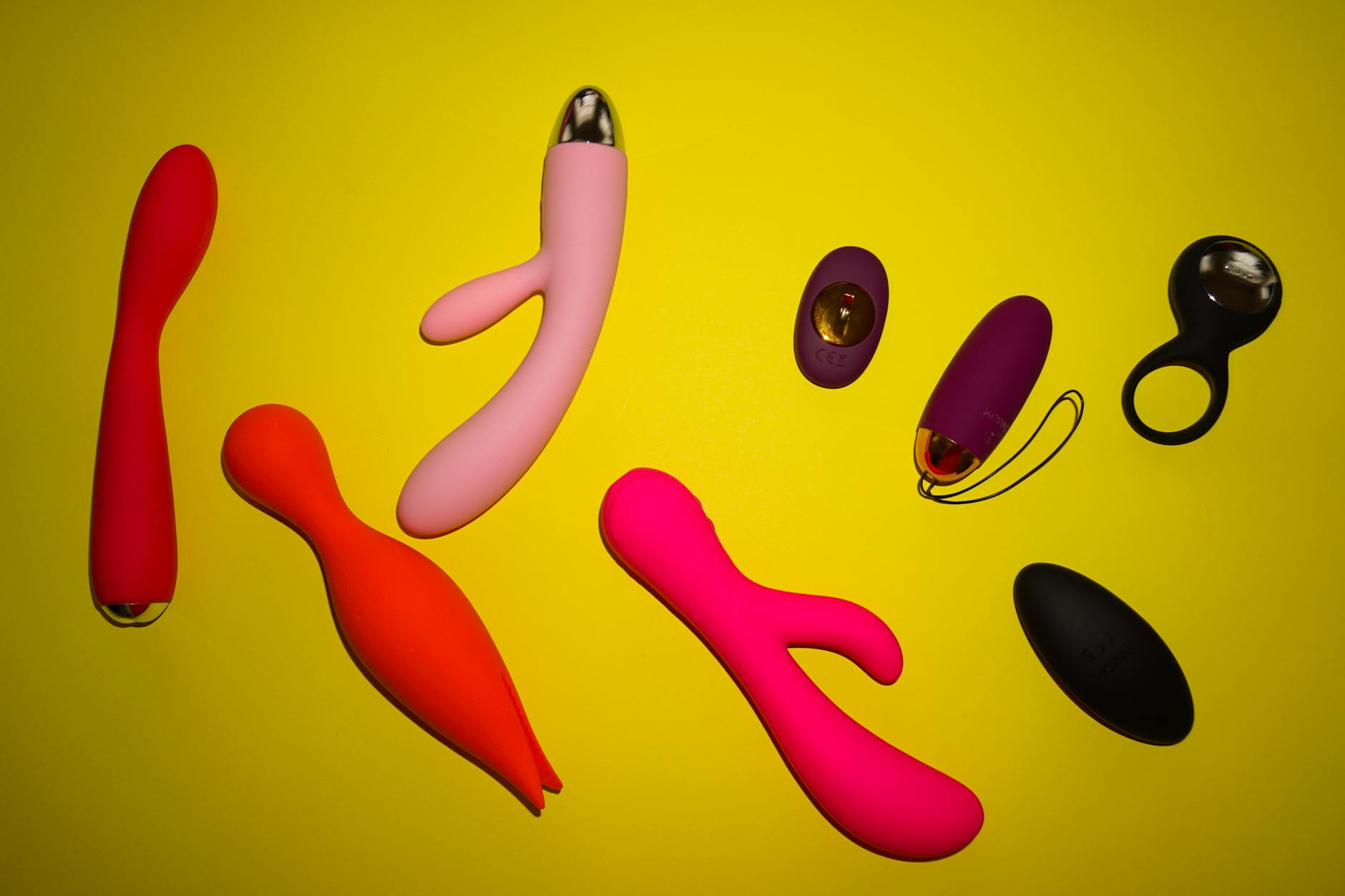
The resistance is not about you
Let's get real. When a partner says no to toys, it almost never means "I don't trust you" or "Our sex life is broken." What it usually means is something quieter: "I'm worried this means I'm not enough." Or: "I don't know how this fits into what we already do." Or: "I'm not sure what toys are supposed to feel like, and uncertainty feels risky."
Those are legitimate concerns. And they're not something you can argue away. You can only work through them together.
The goal here isn't to convince your partner that a lemon vibrator is a good idea. The goal is to have an honest conversation that leaves you both less defensive and more curious about each other.
Why partners resist toys (and what's really happening)
Resistance to toys usually falls into three categories. Recognizing which one your partner is actually in will change how you approach the conversation.
Insecurity. "If you wanted a vibrator, that means my fingers or my body aren't satisfying you." This is the most common one, and it's rooted in a very human fear: Am I enough? The lemon vibrator feels like proof that the answer is no.
Unfamiliarity. "I've never used a toy. I don't know what it does. I don't know if it will hurt. I don't know how to touch you if something is already touching you." Unfamiliarity breeds caution. That's healthy. It just means you need to move slowly and explain as you go.
Actual incompatibility. Some people genuinely don't want toys in their sex life. Not because they're insecure or afraid, but because their preference is genuinely different from yours. That's real, and it deserves respect without resentment. But most of the time, what looks like a hard no is actually "not yet." The difference matters.
How to start the conversation without triggering defensiveness
Timing is everything. Don't bring this up during sex, after sex, or when you're frustrated. Bring it up on a Tuesday afternoon when you're both calm and have time to think. And frame it as curiosity, not criticism.
Not: "Our sex life isn't satisfying me. I want to try a toy."
Yes: "I've been thinking about pleasure differently lately, and I'm curious what you think. No pressure at all. I just wanted to talk about it."
That difference feels small, but it's the difference between your partner hearing "you're failing me" and "I want to explore something together." One triggers defensiveness. The other invites conversation.
Then listen. Actually listen. Don't defend. Don't interrupt. If your partner says "I feel like toys mean I'm not enough," the answer is not to say "That's not true." The answer is: "I hear that. That makes sense. That's not how I see it, and I want to tell you why, but first, tell me more about that feeling."
Reframe the lemon vibrator as a partner, not a replacement
This is the move that shifts everything.
Right now, your partner is probably imagining a lemon vibrator as a solo device. Something you use alone, or something that comes between the two of you. But the lemon clitoral vibrator is actually a tool that works best when you're both involved.
With the Lem, for example, you can be inside the sensation with them. You can hold it. You can watch what happens. You can adjust the pattern based on their response. It's not me and the toy. It's you and me and something that helps us connect deeper.
That's a completely different story.
When you're explaining this, be specific. "I was thinking we could try it together, maybe during foreplay. You could hold it, or I could, and we'd figure out what feels good. It's not instead of us. It's something we do as part of us."
That framing dissolves a lot of the threat.
Start smaller than you think you need to
If your partner is already resistant, showing up with a sleek lemon sucker or full-size vibrator is too much. The visual alone can feel intense if someone's already anxious.
Instead, start with the conversation. Not the toy. Get comfortable talking about pleasure without judgment first. That's harder than it sounds. Most couples have never actually said to each other: "What would feel amazing to you?" or "Are you curious about trying anything new?" Those conversations are vulnerable and awkward. Do them anyway.
Once the conversation feels safe, then you can introduce the physical object. And when you do, keep it low-stakes. Maybe show them a picture first. "This is what I was looking at. It's called a lemon clitoral vibrator. It works by suction instead of vibration, so it feels different than you might expect. Do you want to see it?"
Let them touch it. Let them hold it. Let them get curious about it without any expectation that you'll use it that day. Or that week. Familiarity kills a lot of the fear.
What to do when your partner says yes to trying it
You've had the conversation. They're willing. Here's where most people rush.
Don't. Move slowly.
First use shouldn't be intense. Set the scene in a way that feels comfortable for both of you. Low lights, time, no pressure to orgasm. Start with the lower settings on the lemon vibrator. Let them get used to the sensation. Your job is to pay attention to them, not to the toy.
Talk through it. "Does this feel okay?" "Do you want me to change the pattern?" "What does this feel like?" Narrating what you're observing and what they're experiencing keeps you connected instead of letting the toy create distance.
And here's the thing most people miss: your partner might not have an orgasm. Or they might feel less sensation than they expected. That's normal. The first time using a lemon clitoral vibrator isn't about performance. It's about learning what it does, how it feels, and whether it's something you both want to do again.
If they want to stop, you stop. No lingering disappointment. No "But I thought this would fix things." Just: "Thanks for trying that. What did you think?"
The conversation that happens after
Within 24 hours, have another check-in. Not during sex. Just a normal conversation. "How did that feel? Any thoughts?" Listen to what they say without defending your choice to bring it up.
If they hated it, ask why. Was it the sensation? Did it feel too clinical? Was the timing off? Was it actually fine in the moment but feels weird in retrospect? Different answers mean different next steps.
If they felt neutral, that's okay too. Toys aren't for everyone, even when there's no trauma or insecurity involved. Your partner might genuinely prefer sex without them. That's legitimate. The question is whether you can meet in the middle, and if so, where that middle is.
If they enjoyed it, or even just felt curious about it, then you've actually moved the needle. Now you know you can explore together.
When your partner says no and means it
Sometimes the answer is no. Not "not yet." Not "I'm scared." Just no.
If you've had the conversation honestly, and your partner has genuinely said "I don't want toys in our sex life," then you have a choice to make. You can respect that boundary, or you can't. But you can't keep pushing while claiming to respect it.
If this is a dealbreaker for you, that's information worth having. Some people really do need toys as part of their sexuality. If your partner doesn't want that and you do, that's a genuine incompatibility. Working with a relationship therapist together can help you figure out if there's a middle ground, or if you need to accept this difference and move forward from there.
But most of the time, what feels like a hard no is actually "I need more time" or "I need to understand this better." The difference is whether your partner is willing to stay curious. If they are, you're not at a dead end. You're just at a slower pace.
The real goal
The lemon vibrator is the surface-level thing. The actual goal is deeper. You want your partner to know that their pleasure matters. That you're interested in what feels good to them. That you're willing to be vulnerable and clumsy and awkward together in service of something better.
That willingness to be curious without judgment, to stay connected even when things feel unfamiliar, to listen instead of defend. That's what actually changes a relationship.
The toy is just the vehicle for practicing it.
FAQ: Partner resistance and toys
What if my partner thinks wanting toys means we have a bad sex life?
That's an incredibly common fear, and it's worth naming directly. You might say: "I love our sex life. This isn't about fixing something broken. It's about adding something new because I'm curious, and I'd love to explore with you." The distinction between "something's wrong" and "something's interesting" is crucial. Make it explicit.
How long should I wait before bringing this up again if they said no?
It depends on why they said no. If they said no out of genuine disinterest, bringing it up again in a week will just feel pushy. If they said no out of fear or uncertainty, waiting three to six months and approaching it differently is reasonable. The key is: have you both changed, or are you just re-litigating the same conversation? If it's the latter, you're not ready yet.
Can we use a lemon clitoral vibrator if my partner is worried about pain?
Actually, this is one of the lemon vibrator's strengths. Because it works through suction instead of direct vibration, many people with sensitivity find it gentler than traditional vibrators. If pain is your partner's concern, starting with the lowest setting, going slowly, and framing it as exploration rather than performance can help. But if your partner has pain during sex, that's actually worth discussing with a healthcare provider first, separate from the toy conversation.
What if I want the lemon vibrator but my partner never wants to use it?
Then you get to decide: do you use it solo, or not at all? Both are valid choices. Some people in couples use toys alone and never with their partner. Others decide not to use toys if their partner doesn't want them in the bedroom. There's no right answer. But you do get to have a preference, and your partner gets to have a boundary. The conversation is about finding where those overlap.
Is it reasonable to use a lemon vibrator alone if my partner doesn't want it in our sex life?
Yes. Your solo pleasure and your partnered pleasure can exist in different spaces. Some partners are completely fine with toys being used outside of sex but not during. Others aren't. This is worth asking directly: "If I wanted to use a vibrator on my own time, separately from us, would that be okay with you?" The answer you get will tell you whether this is about the toy itself or about anxiety around toys in the relationship generally.
How do I know if my partner is just scared or genuinely not interested?
Scared people usually ask questions. They want to understand. Genuinely uninterested people tend to shut down the conversation. Scared people might try something once and decide it's not for them. Genuinely uninterested people often won't try at all. Listen to the difference in those responses. One is a boundary you can work with. The other is a preference you need to respect.
What if we try the lemon vibrator and my partner likes it but I feel awkward?
That's actually common. You might feel self-conscious about bringing it in, or weird about the mechanics of it, or uncertain about your role. Talk about that too. "I'm glad you liked that. I felt a little awkward, and I want to figure out what would help me feel more comfortable." Your comfort matters as much as theirs. That might mean a different position, a different setting, or a different way of approaching it entirely.
The conversation is the victory
Honestly, if you can have an open conversation about pleasure with your partner without shame or defensiveness, you've already won something big. The lemon vibrator is just the object that made that conversation happen.
Everything else flows from there.
If you want more guidance on navigating communication around pleasure and intimacy, check out our guide on how to choose a lemon vibrator if you've never used one before. And if your partner's resistance is tied to anxiety around pleasure more broadly, our piece on how to use a lemon vibrator when you have anxiety around pleasure might help you both understand what's underneath the resistance.
For ongoing support navigating relationship transitions and intimacy questions, reach out. We're here.