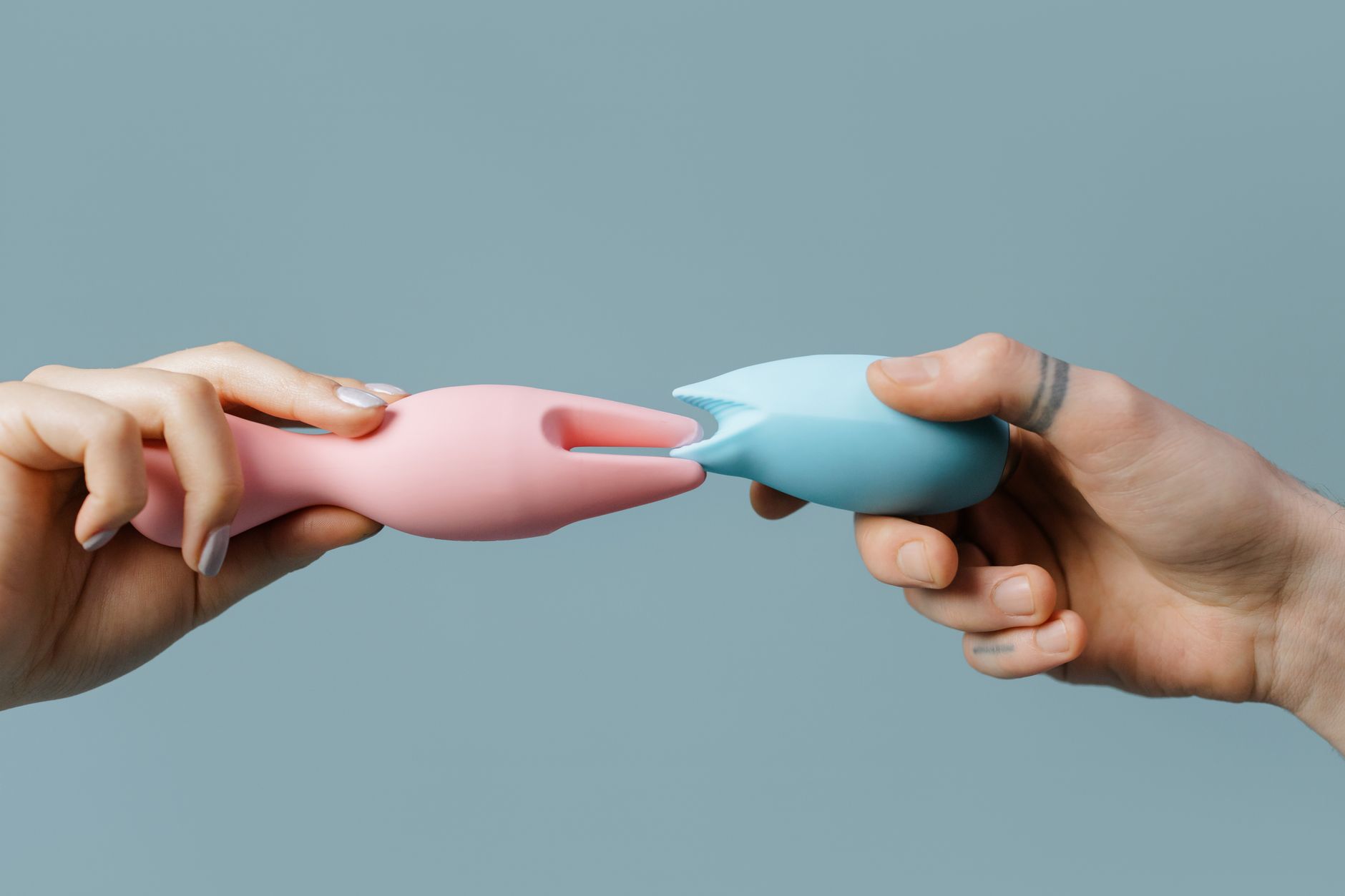
The intensity gap is real, and it's not a dead end
Let's be honest: one of you probably loves a vibrator that feels like it means business. The other might prefer something that barely registers as more than a whisper against the skin. Neither preference is wrong. Both are totally valid. And for most couples, this mismatch feels unsolvable. One person ends up white-knuckling through intensity that's too much, or the other gets bored because everything feels like it's on baby setting.
Here's the thing though. A lemon vibrator, with its unique suction-based design, actually handles this gap better than traditional vibrators. It's not magic. It's just physics meeting flexibility.
Why intensity preferences clash in the first place
Think about how vibrators typically work. They buzz at one frequency. You turn it up or down, and that's really the only variable. Some bodies love that consistent, deep rumble. Other bodies find it too much, too fast, or just unpleasant after a few seconds.
Add a partner to the mix and you've got someone trying to hand-hold the settings while also being present during sex. Which is basically impossible. Either they stay at a level that works for one person and not the other, or you're taking breaks mid-session to adjust.
A lemon vibrator changes the equation because suction works differently than vibration alone. The sensation isn't just a straight frequency. It's a rhythmic pressure that builds and releases. This means you can often find a sweet spot at a lower intensity level that still feels genuinely satisfying. You're not sacrificing sensation for comfort.
The practical setup that actually works
Here's what I recommend to couples navigating intensity mismatch.
Start by talking before you use it. Not during. Not as foreplay ramps up. Beforehand. Ask your partner: what intensity level makes your body sing? What makes it feel like static? Is there a level where you can stay for a while without it feeling numb or overwhelming? Write it down if it helps. This isn't clinical. It's just knowing the map before you drive.
One of you takes the lead initially. Whoever has more sensitivity usually goes first. They figure out their sweet spot on the lemon vibrator. Patterns 1 through 3 are typically the starting zone. Most people with higher sensitivity find their groove at pattern 2 or 3. The partner with lower sensitivity watches. They notice what their partner's body does. Where does pressure increase? When does breathing change? That information matters.
Then swap. The partner who craves more intensity uses it on themselves. They'll probably land at pattern 4, 5, or 6. They might discover they actually like lower patterns once they understand what the suction is doing to their body. Or they might use it in a different way. Some people find that moving the lemon vibrator in circles or using it with more direct pressure changes the sensation entirely, even on a lower pattern.
The game-changer: using it together without pressure
Once you both know your individual numbers, you can actually use a lemon clitoral vibrator as a couple's tool. Here's how.
One partner wears or uses the lemon vibrator. The other partner uses their hands on their own body or focuses on different types of stimulation altogether. This isn't about both of you needing the same toy at the same time. It's about creating a shared rhythm where you're both experiencing pleasure on your own terms.
If your bodies are close together during this, that matters. You're not just having sex. You're experiencing each other's pleasure. That's actually more connecting than trying to force the same sensation onto two very different nervous systems.
Another option: one partner uses the lemon vibrator on themselves while the other penetrates or provides another kind of touch. The person with the lemon vibrator can adjust the intensity or pattern to match the rhythm of what's happening. The other person isn't in charge of the vibrator. They're in charge of their part. This distributes the control and removes the pressure of trying to manage someone else's pleasure.
Communication patterns that prevent resentment
This is where most couples mess up. You figure out a system, and then no one talks about it again. Then somehow the higher-intensity partner feels like their needs don't matter, or the lower-intensity partner feels like they're always being pushed toward more sensation.
Here's what helps. Before you use a lemon adult toy together, agree on a simple signal. Not a full safeword, just a way to say "less" or "different" or "I want to switch" without it killing the mood. Some couples use a hand signal. Some use words like "down" or "pause." Whatever works for you. The point is that adjusting intensity becomes normal and easy, not something you need to schedule a conversation about.
Also, check in after. Not like you're filling out a survey. Just a simple "that felt good" or "I think I liked pattern 3 better next time." Couples who do this actually stay more connected over time. You're gathering data about each other's bodies. That's intimate.
When one partner resists the tool altogether
Sometimes intensity mismatch isn't just about settings. One partner might have anxiety about using a vibrator at all. They might worry it means they're not enough, or they might have had a bad experience with a toy that was too intense.
If that's happening, the lemon vibrator is actually a solid entry point because of how it feels. It's not a typical vibration. The sensation is almost like a gentle suction massage instead of a buzzing sensation. For people with toy anxiety, that can feel less intimidating. Start with the lowest pattern. Use it on yourself first, not on them. Let them watch. Let them ask questions. There's no timeline here.
And here's something most couples don't realize. Using a lemon vibrator together often reduces performance pressure. When both of you aren't trying to achieve the same thing at the same time, suddenly sex becomes more about connection and less about logistics. That paradoxically makes pleasure easier for both people.
The body position that matters more than you think
Intensity also depends on positioning. If you're lying face-to-face and using a lemon clitoral vibrator, the angle changes the pressure. If you're side-by-side, the sensation is different again. If you're positioned so that your partner can watch your face while using it on you, the mental component shifts everything.
Try this: one partner uses the lemon vibrator while the other is inside you or beside you. The person using the vibrator can tilt it, move it, change the pressure without changing the pattern. You're giving yourself micro-adjustments based on what your body needs in that moment. Your partner can feel that and match it with their own rhythm.
This isn't advanced technique. It's just working with your body instead of against it.
When intensity preferences shift over time
Here's a thing no one talks about. Your intensity needs change. Sometimes across a lifetime. Sometimes across a single week depending on stress, hormones, or what's happening in the rest of your life.
A couple I worked with used a lemon vibrator at pattern 5 for two years. Then the partner who preferred lower intensity went through a period of grief. Suddenly she needed more sensation because her body needed something strong to feel anything at all. Her partner was shocked. They thought they'd figured it out.
But because they had the communication pattern already, they just adapted. They checked in. They explored together. A year later, her intensity needs had shifted back. The point is that having a tool like a lemon sexual toy that has multiple patterns means you're not locked into one solution forever. Your system can evolve as you do.
Real talk about fairness
One more thing. Using a vibrator together isn't automatically fair or balanced. If one partner is always the one adjusting their preference, that breeds resentment. I've seen couples use this as an excuse to skip penetration or skip the kind of touch the lower-intensity partner actually wants.
So make sure you're also giving each other the kinds of touch and stimulation that feel good independent of the lemon vibrator. Manual stimulation. Oral. Penetration. Whatever works for both of you. The lemon vibrator is not a replacement for varied touch. It's an addition to the toolkit.
When you approach it that way, intensity mismatch stops being a problem to solve and starts being just another part of how your bodies talk to each other.
People also ask
Can you use one lemon vibrator for both partners if you have different intensity needs?
Yes, but not simultaneously on both bodies. The better approach is taking turns or using it on one partner while the other provides different stimulation. You can also adjust the pattern between partners. Most couples find that having 6 different patterns gives enough flexibility that both partners find something that works, even if it's not the exact same pattern.
What pattern should I start at if my partner and I have different sensitivities?
Always start at pattern 1, even if you think you want more. You can increase from there. The person with lower sensitivity can work up to patterns 4, 5, or 6. The person with higher sensitivity often finds patterns 2 or 3 are sufficient. But everyone is different. There's no universal "right" pattern.
Does using a lemon vibrator together make partners feel less needed?
Not if you're using it as part of partnered sex, not instead of it. A lemon clitoral vibrator is a tool, like hands or mouth. It's not replacing the other person. It's actually creating more space for them to participate in a different way.
How do I bring up intensity mismatch without making my partner feel bad?
Frame it as curiosity about their body, not criticism. "I've noticed I seem to like it stronger than you do. What intensity level feels best for you?" Make it about discovering each other, not about problems. Then actually listen. The conversations that work are the ones where both people feel genuinely heard.
Is it normal that my partner's intensity preference changed after using the lemon vibrator for a while?
Completely normal. The more someone uses a vibrator, the more they understand what they actually like versus what they thought they should like. Preferences also shift with stress, hormones, relationship changes, and even just what else is happening in your body that day. Check in regularly instead of assuming it's locked in.
What if one partner wants to use the lemon vibrator and the other refuses?
Start with education, not pressure. Let the reluctant partner use it on themselves first in private. Or watch while you use it. Anxiety often comes from the unknown. Once they understand how it works and what it actually does, resistance often softens. If they still don't want to, that's their boundary. Respect it. There are other ways to address intensity mismatch, like manual techniques or different types of touch.
The shift happens when you stop forcing it
The couples I work with who handle intensity mismatch best aren't the ones who find the perfect compromise. They're the ones who stopped trying to have the same experience. They figured out that different intensity needs aren't a flaw in the relationship. They're just how two different bodies work together.
A lemon vibrator gives you the tool to do that. Multiple patterns. Flexible suction-based sensation. The ability to adjust without stopping mid-moment. And honestly, the permission to stop treating intensity mismatch like something that needs fixing and start treating it like something you navigate together.
Start with the conversation. Then let the vibrator do its thing. Your bodies will tell you what works.