
Let's talk about the conversation first
The lemon vibrator isn't the problem. The conversation is the problem. Most couples who feel awkward about bringing toys into partnered play aren't awkward because vibrators are weird. They're awkward because nobody taught them how to talk about desire without it feeling like criticism or rejection. A lemon clitoral vibrator is just the catalyst that forces the conversation you should have been having all along.
If you're thinking about introducing one, good news. You're already ahead of most couples.
Why this matters (and what you're actually asking)
When one partner suggests using a lemon vibrator together, the other partner often hears something they didn't say. They hear "you're not enough" or "I'm bored" or "something's wrong." What they actually mean is "I want to explore more with you" or "I'm curious about this and I trust you" or "I want to feel closer and try something new together."
These are wildly different things. The first interpretation kills sex. The second opens it up.
Here's what research on couples and sex toys actually shows: couples who introduce vibrators together report higher satisfaction, more communication, and less performance anxiety. Not because the vibrator is magic. Because the act of asking forced them to talk about pleasure directly. That conversation is the real aphrodisiac.
The setup conversation (before you buy anything)
Don't start with logistics. Start with honesty.
Sit down when you're not in the bedroom and not trying to have sex. Afternoon coffee, a walk, somewhere neutral. One of you brings it up like this: "I've been thinking about exploring more together, and I'm curious if you'd be interested in trying a toy together. I want to do this with you because I like being with you." That's it. Specific. Not accusatory. Couple-focused, not solo-focused.
Listen to what your partner actually says, not what you're afraid they mean. Ask questions. "What would make you feel comfortable?" "Is there anything that worries you?" "What does this feel like to you?" Let them sit in the questions for a moment. Silence is okay here.
Most partners' hesitation isn't a flat no. It's usually fear. Fear that they're not enough, that their pleasure won't matter anymore, that it'll feel impersonal. Your job is to hear that fear and respond to it directly. "Your pleasure absolutely still matters. This is about adding to what we already have, not replacing it." "I'm only interested in this if we're doing it together."
Choosing the right lemon vibrator (and why it matters)
The lemon clitoral vibrator from Hello Nancy's Savo Shop works beautifully for couples because of its design. It's compact, easy to hold, and doesn't require a lot of explanation. It's not intimidating the way a massive wand can feel.
But here's the real reason to pick something together: it makes the whole thing feel like planning, not like one person is making decisions for both of you. Go online together. Look at options. Talk about what appeals to you, what feels less scary, what you're curious about. If your partner wants to know how something works before you buy it, watch the demo video together. Let them ask questions.
Buy it together or have it arrive when you're both home. The unboxing itself is part of the process. Read the instructions out loud. Charge it. No mystery, no surprise execution. You're building anticipation and normalcy at the same time.
The physical setup (before you actually use it)
Explore it when you're not having sex. Sounds weird but it works. One evening, lie in bed with clothes on and just hold it. Figure out where it goes comfortably. Talk about what the sensations might feel like. This removes stakes from the first actual use. You're not trying to perform. You're just learning.
When you do move toward using it during sex, talk through the basics first. "Do you want me to use this on you, or do you want to control it?" "Should I warm you up first?" "If it feels weird or uncomfortable, tell me and we'll pause." These aren't mood killers. They're trust builders.
The lemon vibrator's suction-based stimulation feels different from vibration. Some people need a moment to adjust to it. That's normal. "Different" doesn't mean wrong. Give yourself permission to explore without expecting instant intensity or immediate orgasm. Sometimes the hottest part of using a toy together is just getting comfortable with each other in a new way.
What to actually do with it (the practical bit)
Start slow and let your partner be in charge of pace. Many couples make the mistake of going straight to high intensity because that's what they've seen in videos. Real life is different. Low settings, longer warm-up, more attention to how your partner is actually responding.
If you're using the lemon vibrator on a partner, pay attention to their body language. Are they breathing differently? Is their hips shifting? Are they giving you feedback? You're looking for signs of genuine pleasure, not just performance. Some people go quiet when they're getting close. Others become more vocal. Know your partner's signals.
One thing that helps: don't narrate. Don't say "does that feel good?" every thirty seconds. Let them focus. If they want to talk, they will. Your job is to stay present and responsive, not to turn it into a conversation.
If you're using it on yourself while your partner is present, that's vulnerability. They're watching you experience pleasure. It's hot, but it can also feel exposing. That's fine. Exposure builds intimacy. Let them see you. Let them be part of it.
When it doesn't feel amazing (and that's okay)
Not every session is going to be mind-blowing. Sometimes the lemon vibrator feels good but not life-changing. Sometimes it takes a few tries to figure out what angles and speeds work. Sometimes you just want to go back to sex without it. All of this is completely normal.
The mistake couples make is treating a mediocre first experience as proof that toys don't work for them. But toys are like any new skill. They have a learning curve. Your body needs time to adjust to new sensations. Your brain needs time to stop overthinking it.
Give yourself at least three or four sessions before you decide if you like it. And even if you don't love it, the experiment itself has already done its job. You've opened a conversation with your partner about pleasure. You've shown each other that you're willing to be vulnerable and curious together.
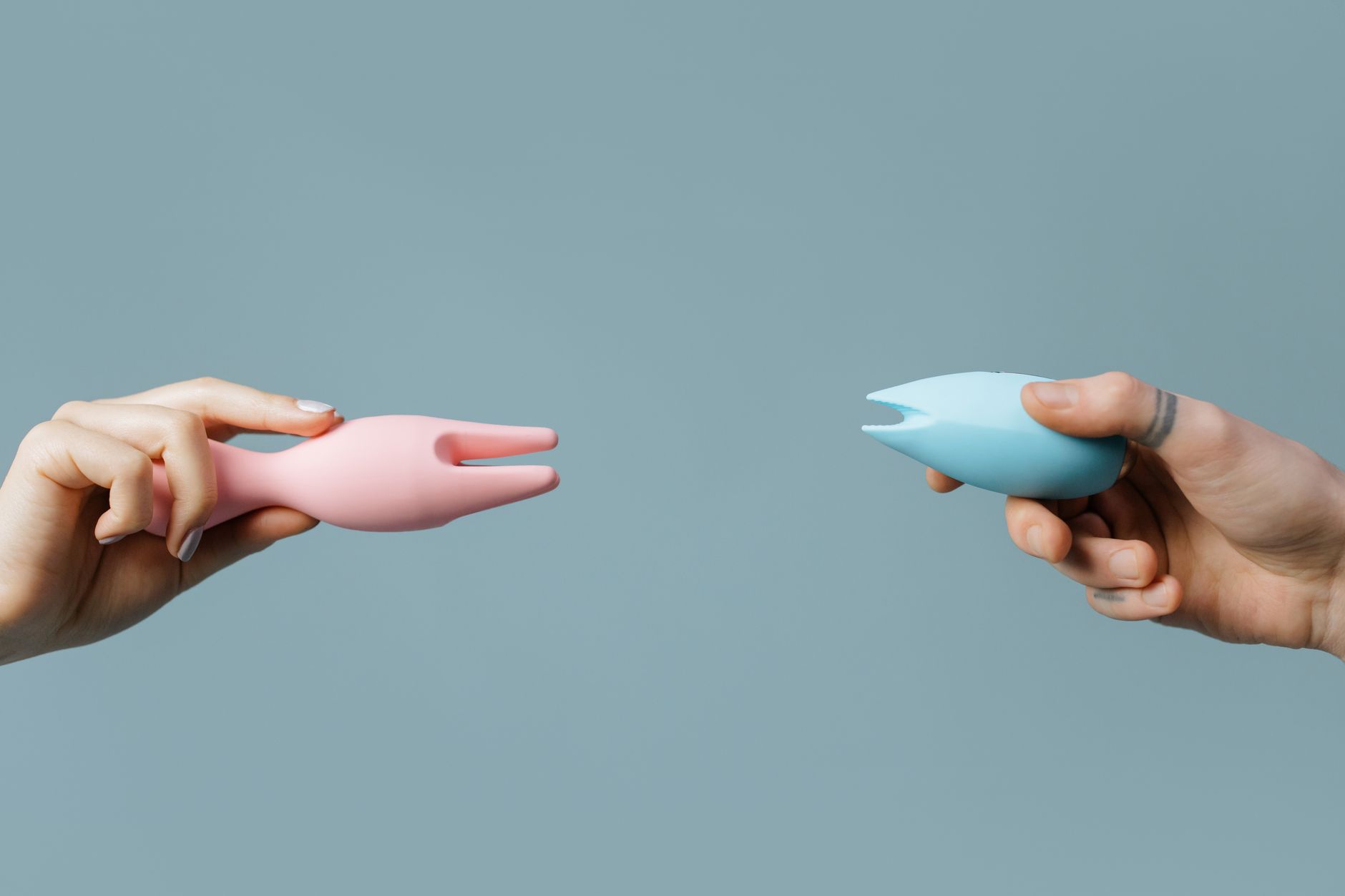
Photo by cottonbro studio on Pexels
After you use it: the conversation that matters more
Don't roll over and go to sleep without talking. Not in an intense, relationship-state-of-the-union way. Just a check-in. "That was interesting." "How did that feel for you?" "What did you like? What didn't work?" "Do you want to try that again?"
These micro-conversations build something. They tell your partner that their experience matters. They normalize talking about sex and pleasure in your relationship. They also give you data for next time.
You might find out your partner loved something you thought would be weird. You might learn that they want more of your hands and less of the vibrator. You might realize that the best part wasn't the physical sensation but the closeness of doing something new together.
All of this is information you can use to keep building.
The emotional layer (which is actually everything)
When couples introduce a lemon vibrator together successfully, what they're really doing is practicing vulnerability and communication under low stakes. You're saying "I want to experience pleasure with you, and I'm willing to ask for what I want and listen to what you want." That's enormous.
The clitoral vibrator is just the tool. The real thing happening is that you're both learning that desire doesn't diminish when you talk about it. Asking for what you want doesn't push your partner away. Trying something new doesn't mean something's broken.
If introducing toys together goes well, you've also created a template for future conversations about sex. That's how couples move from "this is really awkward" to "we can talk about anything." And that version of a relationship is way hotter than any toy.
People also ask
Will using a lemon vibrator make my partner feel inadequate?
Not if you frame it as addition, not replacement. The key is in how you talk about it. "I want to explore this with you" is different from "I need this because you're not enough." If your partner's concern is real, pause and have a longer conversation about what they're actually worried about. Sometimes the issue isn't the toy. It's that your partner needs reassurance about their role in your pleasure. Give them that.
How do I use a lemon clitoral vibrator if my partner is uncomfortable with it at first?
Don't force it. Seriously. If your partner is genuinely uncomfortable, the lemon vibrator isn't the answer. Go back to the conversation. What specifically makes them nervous? Is it the toy itself, or is it that they feel like they're being replaced? Is it that they worry about performance? Different concerns need different responses. Sometimes a partner needs more time. Sometimes they need reassurance. Sometimes they need you to stop pushing and just accept their boundary.
Should one partner control the toy or should I take turns?
Try both. Some couples find that one partner using the toy on the other feels more intimate and connected. Others like the freedom of self-exploration. You might discover that you prefer different things in different moments. That's the beauty of being partners. You get to experiment and figure out what works for you as a couple.
What if we use the lemon vibrator and it kills the mood?
That happens. Sometimes the moment of introducing it feels awkward or clinical or just wrong. If that's what happens, pause without judgment. "This doesn't feel right tonight. Let's try another time." Then actually try another time instead of pretending it didn't happen. The failed attempt isn't failure if you keep showing up to the conversation.
Is there a "right" way to use a lemon vibrator with a partner?
Nope. Right is whatever feels good and consensual to both of you. Some couples use it during foreplay. Some use it during sex. Some use it to explore solo while their partner watches. Some use it as a way to extend an experience when refractory periods are different. There's no script here except the one you and your partner write together.
How do I know if my partner actually wants to use a lemon vibrator or if they're just agreeing to make me happy?
Ask directly. "I want to make sure you actually want this and you're not just doing it for me. Be honest." Then listen. If your partner hesitates or gives vague answers, they might not be ready. That's information. You can always come back to the conversation later. But you can't build real intimacy on false agreement.
The real win
Using a lemon vibrator together for the first time isn't about the orgasm. It's about proving to yourselves that you can be curious together, that you can ask for things, and that your partner will show up. Those conversations ripple into everything else.
If you're ready to have this conversation with your partner, start simple. No pressure, no performance expectations, just honesty. The rest follows naturally.
Ready to learn more about navigating pleasure and intimacy in your relationship? Our buying guide can help you choose the right tool for your needs, or reach out if you have questions.