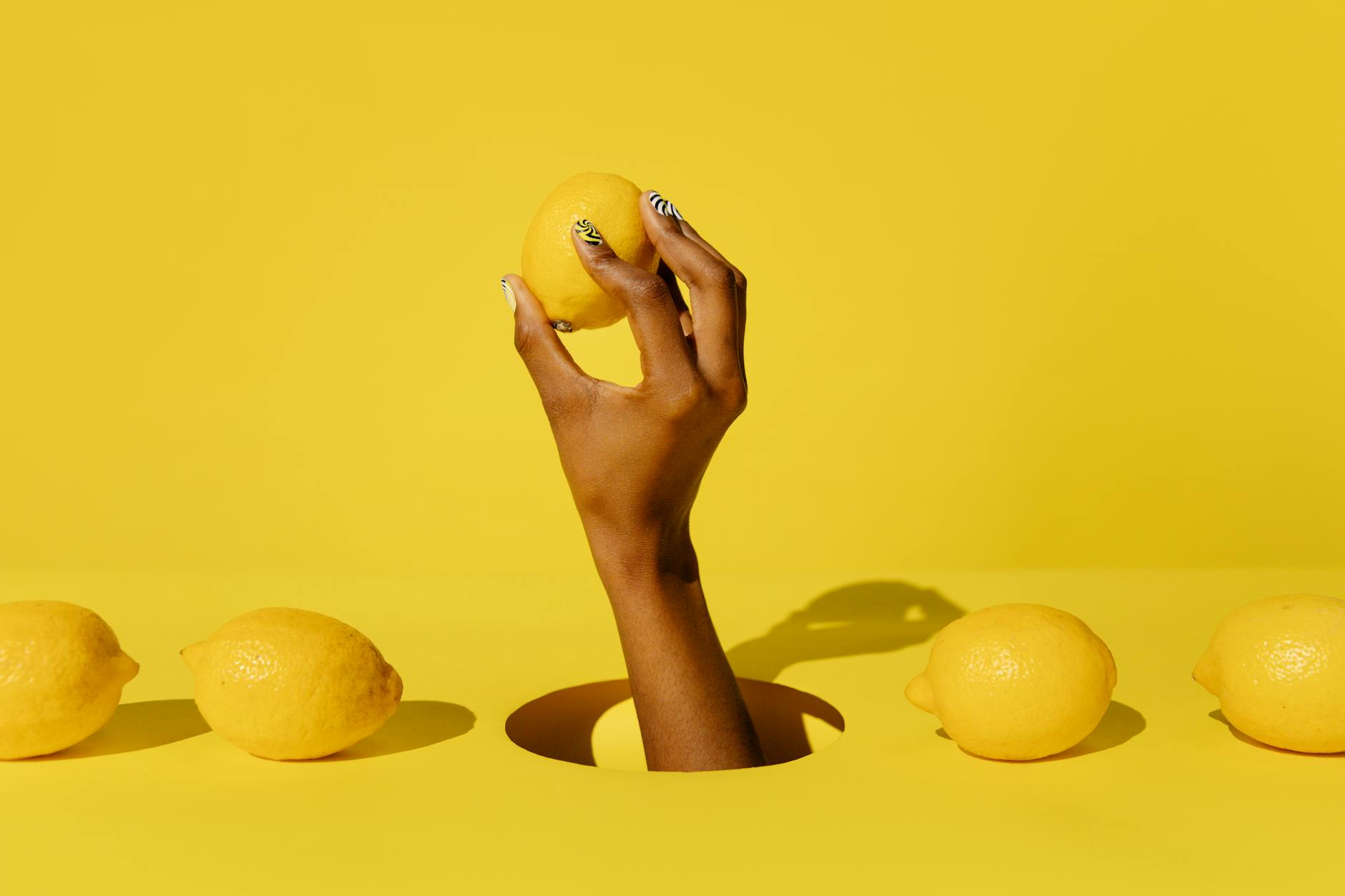
The secret nobody tells single people
Here's the thing about being single and exploring pleasure: you have an advantage that partnered people spend years trying to get back. There's no one else's timing to negotiate. No performance pressure. No assumptions about what should feel good. Just you, your body, and the space to figure out what actually works.
Most of my clients who come to self-pleasure with a lemon clitoral vibrator for the first time while single report that it becomes foundational to everything that comes later. Not just sexually, but emotionally. Because learning your own pleasure map solo means that when a partner enters the picture, you're not outsourcing your pleasure. You're collaborating.
A lemon vibrator, specifically, is built for this moment. Air-suction clitoral vibrators work by mimicking a sensation that's impossible to replicate with hands or traditional vibration alone. It's why they've become the tool of choice for people discovering their bodies without external pressure.
Why self-pleasure actually matters (and it's not what you think)
The clinical reason is straightforward: masturbation improves sexual function, increases nerve sensitivity, and creates a clearer sense of what you like. But the real reason matters more.
When you're single and exploring pleasure solo, you're not trying to reach a destination. You're not performing an outcome. You're building a relationship with your own sensation. That's a radically different energy than partnered sex, and it's the foundation for everything else.
I've worked with dozens of single clients who thought they had low libido, couldn't orgasm, or weren't "sexual people." Almost without exception, what they actually had was zero practice in isolation. The moment they gave themselves permission and bought a lemon clitoral vibrator, the conversation shifted entirely. Not because the toy is magic, but because self-pleasure removes the variables that kill arousal for many people: performance anxiety, timing pressure, someone else's pleasure to manage.
Your pleasure, explored alone, is the baseline. Everything else gets built on top of that.
Building a self-pleasure practice that actually sticks
Say this out loud: I deserve time to explore what feels good to me.
That's not standard messaging for single women, especially post-30. The cultural narrative is that pleasure belongs in partnership, or that solo sex is a placeholder until "real" intimacy arrives. Both are nonsense. Your own pleasure has value independent of who's in the room.
Here's how to build a practice that doesn't feel rushed or obligatory.
Start with lowered expectations. The goal isn't orgasm. The goal is 15 minutes of your own time, with your lemon vibrator, where you're just noticing what feels interesting. Not pressuring yourself toward a climax. Just exploring.
Time matters. Most people's nervous systems are calmer in the early morning or right before bed. Pick whichever naturally has fewer interruptions and fewer obligations stacked after it. If you live with roommates or family, a locked bathroom door and 15 minutes of "I need quiet time" is a completely reasonable boundary.
Slow the warm-up. Singles often rush through foreplay because there's no partner waiting. Flip that. Spend time touching yourself before you bring the lemon vibrator into the picture. Notice what your body responds to. This isn't filler. This is data.
Use lube, even if you don't think you need it. Water-based lube changes everything about a clitoral vibrator experience. It reduces friction, allows the suction sensation to feel smoother, and signals to your nervous system that this is a care practice, not a race. That signal matters more than you'd think.
What to expect in your first month
The first time you use a lemon vibrator, your body might not know what to do with the sensation. That's normal. Air-suction stimulation is wildly different from vibration, and your nervous system needs a moment to recalibrate.
Week one might feel awkward. Genuinely. You're learning a tool, and learning anything solo without a script feels strange. Week two, something might click. Maybe not an orgasm. Maybe just "oh, that's what this feels like." Week three and four, your body starts to anticipate it. Your arousal builds faster. The sensation gets clearer.
By the end of month one, most people report one of two things: "I haven't orgasmed, but the sensations are incredible and I'm curious," or "I had an orgasm I didn't expect, and it felt completely different than before." Both are wins.
Patience is the only input that actually matters in month one. If you come in expecting instant climax, you'll abandon it. If you come in curious, you'll stick with it.
The mental stuff that gets in the way (and how to move through it)
Let's be honest. There's probably a voice in your head saying something like "I should have a partner for this," or "I shouldn't need a toy," or "This is something I'll do until someone else comes along." That voice is doing its job. It's trying to keep you safe by keeping you small.
Ignore it.
You're not broken because you're single and exploring pleasure. You're not doing this wrong because there's no one else in the room. In fact, the opposite is true. When you understand your own pleasure cycle, you bring that knowledge into every future relationship. You're not guessing. You're not performing. You're leading.
I've worked with clients who carried deep shame around self-pleasure. Almost always, that shame was cultural, not personal. It was inherited. The moment we separated "I enjoy this" from "I should feel guilty about this," everything shifted. Your single years aren't a waiting room. They're a laboratory for your own pleasure. Treat it that way.
The pleasure autonomy thing
Here's what I notice about single clients who build a consistent self-pleasure practice with a lemon vibrator: their relationships (romantic or otherwise) shift. Not because they're having more sex, but because they stop outsourcing their worth to someone else's desire.
You know what your body feels good with. You know how long arousal takes. You know what patterns work. You're not hoping someone figures you out. You're not waiting for someone to validate your sexuality. You already know.
That's power. Real, grounded power that changes how you show up everywhere.
Single women with a clear pleasure practice are also, in my clinical experience, much more likely to actually communicate their needs in partnerships. Not because they're more assertive (though sometimes). Because they already know the answer. They're not guessing.
Creating space that supports the practice
Physical space matters more than it sounds. A locked door. Enough time that you're not watching the clock. Maybe a small speaker if you want sound, or silence. Some clients light a candle. Some shower first because the water helps them feel present in their body.
All of this is secondary to one thing: you deciding that your pleasure is worth the logistics. That's it.
Most people can find 20 minutes twice a week if they actually prioritize it. It's the prioritization that's hard. But here's the thing: you'll make time for things that matter to you. And once you've had your first real, solo pleasure experience with a lemon clitoral vibrator, it becomes hard to argue that it doesn't matter.
What comes next
If you build a self-pleasure practice now, solo, a few things become possible. You understand your arousal. You know your body. If you eventually want to share this with a partner, you can show them what works instead of waiting to be figured out. If you don't, if you stay single, you've given yourself a gift that costs nothing but time: the knowledge that your pleasure is yours to explore, indefinitely.
Start small. Buy a lemon vibrator if you haven't already. Give yourself a month. Notice what happens. Your body will tell you everything you need to know.
People also ask
Is it normal to feel awkward using a clitoral vibrator alone the first time?
Completely. Most people feel strange doing anything for the first time without a script. Your body is learning a new sensation, and your nervous system is trying to figure out if it's safe. That awkwardness typically fades within a few sessions. The key is showing up anyway, without judgment. Think of it like learning to swim: the first time in the water feels weird. By week three, your body knows what to expect. Same with a lemon clitoral vibrator.
Can I use a lemon vibrator if I've never had an orgasm before?
Yes, absolutely. In fact, single people exploring self-pleasure for the first time often have their first orgasm with an air-suction clitoral vibrator like a lemon toy. The sensation is different enough from vibration alone that it can bypass some of the nervous-system blocks that prevent orgasm. That said, orgasm isn't the goal. Pleasure exploration is. The climax might come, or it might not. Both are fine.
How often should I be using a lemon vibrator when exploring solo pleasure?
There's no "should." Some people find a rhythm of 2-3 times a week. Some do it daily. Some go a week without and then have a moment where they want it again. The only guideline I'd offer is this: if you're using it to avoid feelings rather than to explore pleasure, that's worth examining. But using it because it feels good and you like how it makes your body feel? That's the whole point. Frequency doesn't matter. Consistency of showing up when you want to matters.
Should I feel pressure to orgasm when using a lemon vibrator solo?
No. This is actually the main place where single people get derailed. They set an outcome (climax) and then judge the experience as a failure if it doesn't happen. Flip that. The experience is the success. Did you spend 15 minutes noticing your body? Did the sensations feel interesting? Did you learn something about what you like? Those are wins. Orgasm, when it comes, is a bonus. Not the goal.
What if I feel guilty about self-pleasure even though logically I know it's healthy?
That guilt is worth honoring and then releasing. Most of us inherited messages that female pleasure outside of partnership is wrong, selfish, or shameful. Those messages are old. They're not actually yours. Solo pleasure with a lemon vibrator or any clitoral vibrator is an act of self-respect, not selfishness. You're saying: "My body deserves attention. My pleasure matters. I'm worth my own time." That's the opposite of selfish. And when you can sit with that guilt, feel it, and choose pleasure anyway? That's where real freedom lives.
Does using a vibrator solo affect my ability to be with a partner later?
No. In fact, the opposite is more likely. People who understand their own pleasure usually communicate better in partnerships. They're less likely to fake orgasms, more likely to ask for what they need, and less resentful because they're not waiting for someone to figure them out. Self-pleasure is foundational, not a replacement. It's the baseline from which partnership becomes easier, not harder.