
Here's the thing that nobody tells you about orgasm timing
You finish in seven minutes. Your partner needs fifteen. This isn't a character flaw on either side. It's not that you're not attracted to them or they're taking too long. It's just what their nervous system does, and it's creating a tension that neither of you wants to talk about.
This is one of the most common friction points in long-term relationships, and almost nobody addresses it directly. Instead, couples get resentful ("Why do I always have to wait?"), frustrated ("Am I not enough?"), or they disconnect entirely. A lemon clitoral vibrator designed specifically for couples can change this dynamic entirely.
Why the timing gap matters more than you think
When one partner finishes significantly before the other, it creates a psychological break in the moment. The person who finished first often feels awkward, self-conscious, or like they've done something wrong. The person still building arousal feels watched, rushed, or unseen. Over time, this creates avoidance. People stop initiating because they're tired of the emotional math.
What's actually happening is a mismatch in how your bodies respond to stimulation. Response speed is partly genetic, partly neurological, and partly tied to factors like medication, stress, and pelvic floor tension. It's not a reflection on your partner's desirability or your own capacity for pleasure.
A lemon sucker vibrator like the Lem changes this equation because it separates clitoral stimulation from penetrative timing entirely. Instead of trying to sync two different rhythms, you're adding a third element that both partners can control and adjust.
How a lemon vibrator actually solves the timing problem
The Lem uses air-suction technology that provides sustained, building stimulation independently of what's happening elsewhere in the body. Here's what this does for couples with different finish times:
First, it removes the pressure from penetration to do all the work. If you're the person who finishes quickly, you can use the Lem on your partner after you've climaxed, extending their pleasure without forcing you to stay engaged in a way that feels uncomfortable. This is the move that changes everything.
Second, if your partner finishes first, you can use it on yourself while staying physically close and connected. You're not lying there hoping they'll touch you. You're in control of your own sensation, and they're still present.
Third, using a lemon clitoral vibrator together before penetration can actually sync your bodies better. If you start with the Lem, bringing both partners close to arousal before penetration begins, the timing gap often shrinks naturally. You're both already heated up, so the person who typically climaxes quickly has more endurance, and the person who takes longer reaches the threshold faster.
The three-move strategy that works
Let's break down the actual sequence that couples find most successful.
Move 1: Start with mutual lemon vibrator play. Before any penetration, spend 5-10 minutes with the Lem on whoever wants to lead. This isn't foreplay in the traditional sense. It's arousal alignment. You're both building sensation at the same time. The person using the vibrator controls speed and pressure, and their partner watches, touches them, and stays engaged. This pre-loaded arousal is the secret to better timing.
Move 2: Continue during penetration if you want. The Lem is small enough to use while a partner is inside you. If you're the person who needs more time, this is your move. You don't have to choose between penetration and clitoral stimulation anymore. You can have both. Your partner doesn't have to do anything except stay present. The vibrator carries the load.
Move 3: Use it after one partner finishes. This is the post-climax move that keeps intimacy alive. If you finish first, keep the Lem handy and use it on your partner instead of lying there feeling awkward. You're staying engaged, they're getting the continued stimulation they need, and you're not forcing yourself into discomfort. Everyone wins.
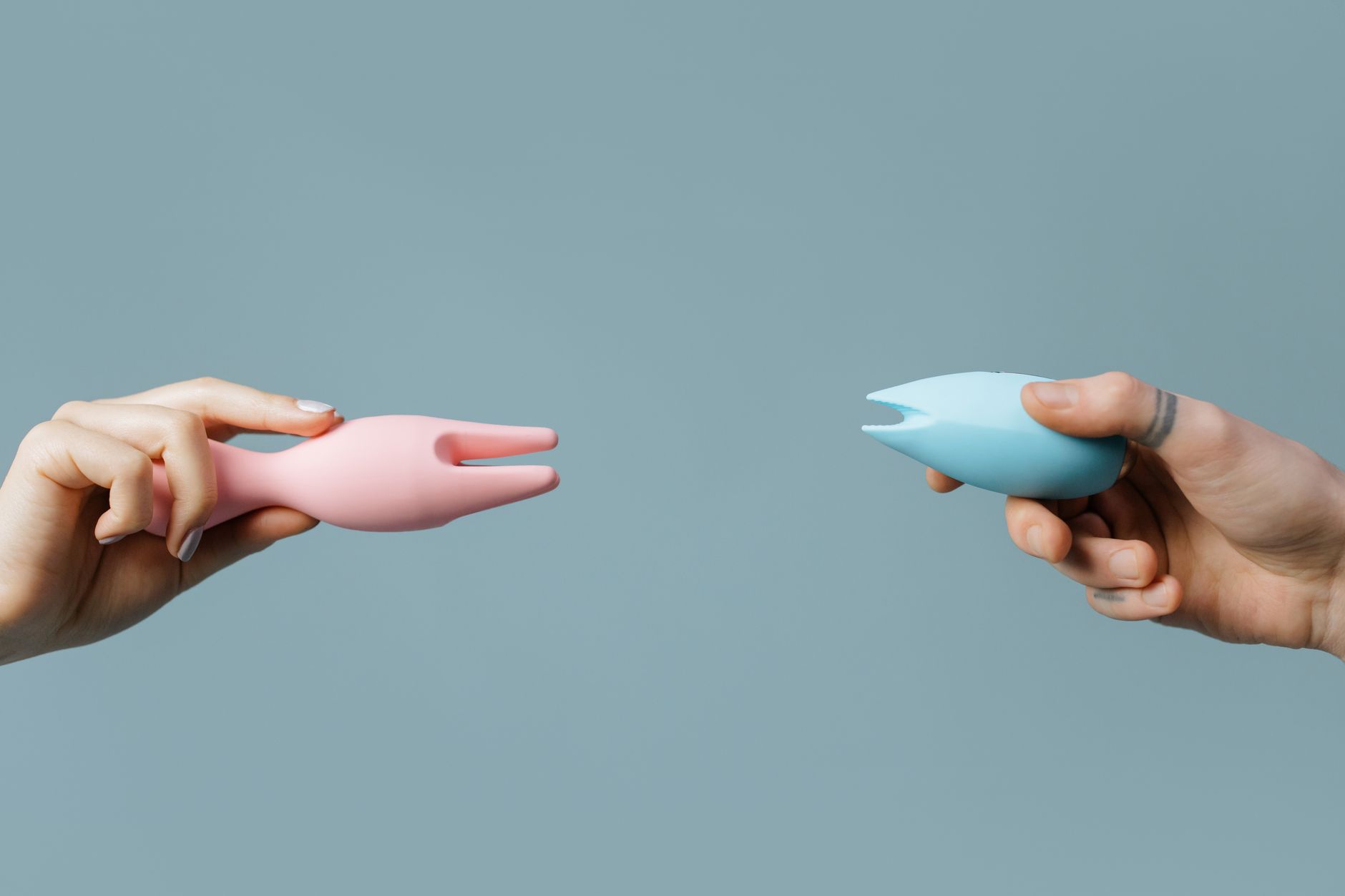
Photo by cottonbro studio on Pexels
The conversation you actually need to have
Before you introduce a lemon clitoral vibrator into couple's sex, the real work is the conversation. And it's not about the vibrator. It's about permission.
You need to tell your partner: "I finish faster, and I hate that it makes me feel weird. I want to figure out how to fix this together." Or the reverse: "I take longer, and I've been feeling rushed. I don't want to feel like I'm holding you up."
That's the opening. The vibrator is just the solution. Without the conversation, it's just a toy. With the conversation, it becomes a tool for deeper connection.
You also need to agree on what success looks like. Is it about both partners finishing at the same time? Not necessarily. Some couples find that staggered orgasms actually feel better because one partner gets to focus entirely on their sensation while the other focuses on their partner. There's no "right" timing. There's only what feels good to both of you.
Why the Lem specifically works for this
Not all lemon vibrators are built the same. The Lem's suction-based design is particularly good for couples because it delivers consistent, building sensation without the fatigue that comes with traditional vibration. If your partner is using a regular vibrator on themselves for ten minutes while you're inside them, arm fatigue becomes part of the equation. With a lemon sucker vibrator, they can hold it steady and let the technology do the work.
The intensity levels are also gradual, which means you're not dealing with an on-off switch. You can start low and build, which keeps arousal climbing instead of plateauing. And because it's quiet and relatively small, you can use it during penetration without either partner feeling awkward about the logistics.
The timing adjustment that happens naturally
What's wild is that couples who start using a lemon vibrator together often report that their timing actually does sync up eventually, but not for the reason they expect. It's not that the vibrator magically makes them finish at the same moment. It's that the pressure lifts. When both partners stop worrying about the timing gap and start focusing on their own sensation and each other's pleasure, the anxiety that was speeding up one partner's response actually decreases. Relaxation shifts rhythm.
You also start understanding your partner's body better. You see what speeds make them move, what pressure builds arousal, when they're getting close. That knowledge transfers to penetrative sex too. You become more attuned to each other.
Making it feel natural, not like a fix
One last thing: introducing a lemon clitoral vibrator should never feel like you're fixing something broken. Your partner's body isn't broken. Your body isn't broken. You're just expanding the toolkit.
The best couples I work with frame it this way: "I want us both to feel amazing. Let's try this together." Not "We have a timing problem." Not "You're taking too long." Just an invitation to explore something that feels good for both people.
Start with conversation. Move to the Lem when you're both ready. Notice what shifts. The timing gap might shrink. Your connection might deepen. Or you might just find that the pressure is gone and sex feels easier. Any of those outcomes is a win.
FAQ
Can we use a lemon vibrator during penetration without it feeling uncomfortable?
Absolutely. The Lem is designed to be small and versatile enough to use during penetration. The person with the vibrator controls placement and intensity. Some couples find it works best if the receiving partner holds it themselves, so they're in complete control of what they're experiencing. Other couples have the penetrating partner hold it. There's no one right way. The first time, go slow, communicate constantly, and adjust as you go.
What if my partner feels weird about using a lemon sucker vibrator?
Start with the conversation before the toy ever enters the bedroom. Some people worry that introducing a vibrator means their partner isn't satisfied with them. That's false, but the worry is real. Be specific: "I want us to both feel great, and this tool helps us do that. It's not about you. It's about us expanding what feels good." Many people come around when they experience how good it actually feels and see that it deepens intimacy instead of replacing it.
Do we both need our own lemon vibrators or can we share one?
You can absolutely share one Lem. The advantage of sharing is learning to take turns, which builds trust and attention. You watch your partner with the vibrator, you learn their rhythm, you become a student of their pleasure. Some couples prefer having their own for convenience. This is a personal choice. Either way works.
How do I know if my partner is using the lemon vibrator correctly during penetration?
Ask them. "Does that feel good? Do you want more pressure? Faster? Slower?" Your partner is the expert on their own sensation. You're not in charge of their pleasure. You're just creating space for it. Check in frequently, especially the first few times. Comfort builds with communication.
Does using a lemon clitoral vibrator during sex mean the relationship has a problem?
No. Using a lemon vibrator means you're both invested in feeling good. Many couples with perfectly healthy sex lives use vibrators because they expand what's possible. When partners heal on different timelines, trust and communication matter most. A vibrator is just evidence that you're both willing to experiment and listen to each other.
What if one of us likes the vibrator but the other doesn't?
Then you don't use it every time. Some couples use the Lem occasionally, some regularly, some only in specific situations. There's no rule that says if you buy a toy you have to use it constantly. Introduce it as an option, not a requirement. Your partner's comfort matters more than the tool.
Here's what actually changes
Introducing a lemon vibrator into your intimate life when you have timing mismatches doesn't fix the mismatch by forcing synchronization. It dissolves the pressure that comes from trying to be on the same timeline. Instead of fighting your bodies' natural rhythms, you're working with them.
One person gets to finish and stay engaged. The other person gets to take the time they need without feeling rushed. You're both present. You're both feeling good. That's not a compromise. That's an upgrade.
If you're ready to explore this, start with the conversation. Then, when you're both on board, bring in the tool. Your pleasure matters. Both of yours.