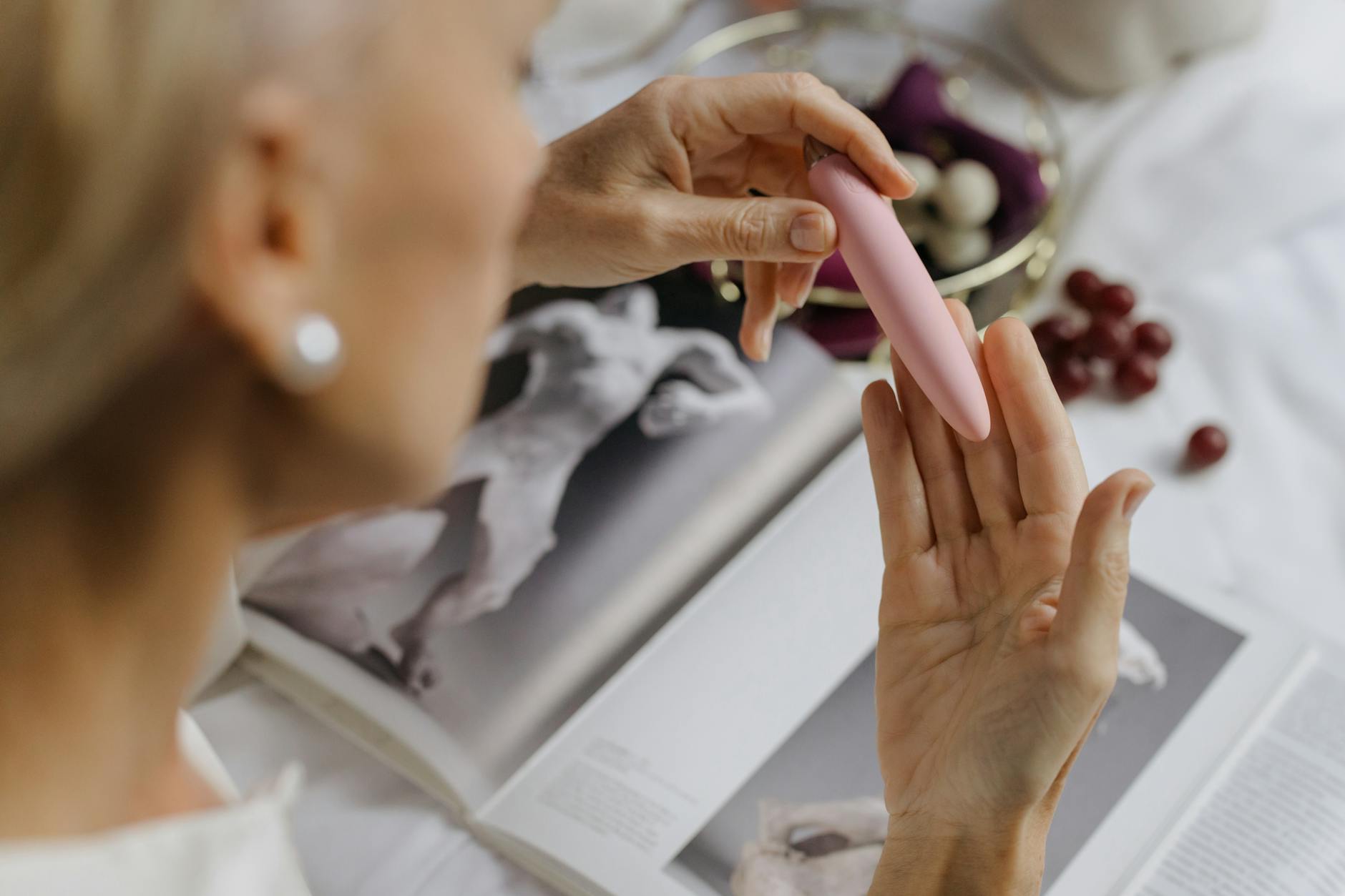
Vulvodynia isn't binary.
You can have it and still orgasm. You can have localized pain in one spot and full sensation everywhere else. You can have a flare-up on Tuesday and feel fine on Thursday. Most importantly, you can have mild vulvodynia and still use a lemon vibrator successfully, but you need to know exactly how to approach it. The difference between pain relief and pain irritation is often just technique and timing.
I work with clients who've spent years thinking their vulvodynia meant the end of pleasure. It doesn't. It means you need a different map.
What vulvodynia actually is.
Vulvodynia is persistent pain in the vulva without a clear infectious cause. It can be localized (one specific area), generalized (widespread), or provoked (triggered by pressure or touch). The sensations vary wildly: burning, stinging, rawness, hypersensitivity, or sometimes just a dull ache that gets worse with certain activities.
Here's the part nobody explains: vulvodynia and pleasure aren't mutually exclusive. The pain and the nerve pathways for arousal live in the same tissue but don't always activate together. This is why a lemon clitoral vibrator can work beautifully for some people with mild vulvodynia and feel completely wrong for others. It depends on your pain pattern, your trigger zones, and your nervous system's current state.
About 15% of people with vulvas experience some form of vulvodynia at some point. Most cases are mild and manageable with the right approach.
The lemon vibrator advantage for vulvodynia.
A lemon sucker like the Lem works differently than traditional vibrators. Instead of direct vibration, it uses gentle suction and pulsing patterns that stimulate from above the clitoral surface rather than directly on it. This matters enormously when you have localized pain.
Direct pressure on an inflamed or hypersensitive area can spike pain or create a stress response. Suction distributes pressure more evenly across a larger area and avoids the pinpoint intensity that sometimes aggravates vulvodynia.
The suction mechanism also means you're not relying on friction. Friction is often a vulvodynia trigger. If your pain flares with touch or movement, suction-based stimulation can bypass that entirely.
Mapping your pain before you start.
This is non-negotiable. Take 10 minutes when you're calm and not aroused. Gently touch different areas of your vulva and note where sensation is normal, hypersensitive, numb, or painful. Most people with vulvodynia have a mix.
Common pain zones: the opening (introitus), the perineum (area between vulva and anus), the inner labia, or sometimes the entire outer vulva. Some people have one small tender spot. Others have a larger sensitive region.
Once you know your map, you can position a lemon vibrator or adjust your angle to focus on comfortable zones while avoiding problem areas. This single step transforms the experience from "will this hurt" to "I know exactly what feels good."
How to use a lemon vibrator safely with mild vulvodynia.
Start with arousal, not the toy. Spend 15-20 minutes building arousal through fantasy, partner touch, or other stimulation before introducing the lemon vibrator. A slightly aroused clitoris is more forgiving and more responsive. A cold, unaroused vulva with vulvodynia is more likely to feel irritated.
Begin on the lowest setting. Every lemon clitoral vibrator has pattern options. Start on pattern 1 or the gentlest suction setting. Resist the urge to jump to higher intensity. Your nervous system needs time to register that this is safe.
Position it above the pain. If your pain is localized to one area, aim the lemon vibrator's opening at the clitoris itself, not the painful zone. The goal is stimulation without contact on inflamed tissue. You're using suction to draw blood flow and sensation to areas that feel good.
Test for 2-3 minutes. Don't go for a full session on day one. Two or three minutes at low intensity tells you what your body wants. If it feels okay, you can extend to 5-10 minutes next time.
Stop if you feel a sharp pain. A gentle warmth or mild ache is sometimes part of vulvodynia, and that's different from a spike of pain. If you feel a sharp, burning, or stinging sensation, turn it off immediately. Your body is sending a boundary signal.
The difference between discomfort and pain.
This is where a lot of people get confused. Mild vulvodynia might create a baseline sensitivity that feels slightly raw or tender. Using a lemon vibrator might increase that feeling temporarily as blood flows to the area. That's not necessarily bad. It's sensation, and it's different from pain signaling injury.
True pain (sharp, burning, stinging) means stop. A warm, full sensation means keep going. If you're unsure, pause for 30 seconds, breathe, and check in. Does it feel like your tissue is being irritated, or does it feel like arousal building?
With practice, you'll know the difference in your own body.
What to avoid.
Don't use a lemon sexual toy if you're in an active flare-up. Flare-ups are when pain is heightened across the board. That's a rest-and-recovery time. But between flares, when pain is mild or localized, using a gentle lemon vibrator can actually help condition your nervous system to associate the area with pleasure, not pain.
Avoid vibrators (traditional kinds) if your pain is provoked by direct vibration. The difference between a lemon vibrator and a standard vibrator is exactly this. If a regular vibrator made things worse, a lemon sucker's suction mechanism might not.
Don't skip lubrication. Even if you self-lubricate, adding water-based lube reduces any friction or drag sensation that could irritate tender tissue.
Don't rush arousal. Vulvodynia clients who try to jump straight to the toy often report disappointment. Your nervous system needs permission to relax. That takes time.
Partner communication when you have vulvodynia.
If you're exploring pleasure with a partner, they need to understand three things. One: vulvodynia is real and not psychological (though stress does make it worse). Two: pain fluctuates and isn't your fault or theirs. Three: using a lemon vibrator isn't a sign something is wrong with your relationship. It's a tool for pleasure that works specifically because of how your tissue responds.
Many partners actually feel relieved when they learn that a lemon clitoral vibrator can help you experience pleasure again. It shifts the dynamic from "I'm worried I'm hurting them" to "we have a strategy that works."
FAQ.
Can I use a lemon vibrator every day if I have vulvodynia?
Not necessarily. Most people with mild vulvodynia respond better to 2-4 sessions per week rather than daily use. Daily stimulation can create irritation even if individual sessions feel fine. Listen to your tissue. If you notice increased soreness the next day, pull back to fewer sessions.
Will using a lemon sexual toy make my vulvodynia worse?
It depends on your pain type and sensitivity. If you're in a baseline comfort zone and using gentle technique, lemon vibrators typically don't worsen vulvodynia. But if you're in a flare or have provoked vulvodynia (pain triggered by pressure), then yes, any vibration or pressure can spike pain temporarily. Wait for flares to settle before using any toy.
What if the pain comes back mid-session?
Stop. Turn off the lemon vibrator, remove it, and breathe. Your nervous system is asking for a break. It doesn't mean you've failed or that the toy is wrong for you. It just means that particular moment isn't right. Rest, hydrate, and try again another day. Vulvodynia pain is often tied to stress and hydration, so managing those helps.
Can I use a lemon clitoral vibrator if my pain is severe or generalized?
Mild, localized vulvodynia is the ideal scenario for lemon vibrators. If your pain is severe or covers the entire vulva, you need a pelvic pain specialist before exploring pleasure tools. Severe vulvodynia requires treatment. Once pain is more managed, a lemon sucker is often an excellent next step.
How do I know if it's vulvodynia or something else?
Vulvodynia is a diagnosis of exclusion, meaning doctors rule out infections, dermatitis, and other causes first. If you haven't seen a gynecologist or pelvic pain specialist, that's the first step. You need to know what you're working with before choosing a tool. A lemon vibrator is fantastic, but it's not a diagnosis.
Will a lemon vibrator help my nervous system desensitize to the pain?
Yes, with caveats. Repeated gentle, pleasurable stimulation can gradually teach your nervous system that the area is safe, not in danger. This is called neuromodulation. It's slow. It takes weeks or months. But many people with mild vulvodynia report that consistent use of a gentle lemon clitoral vibrator actually decreased their baseline pain over time. The key is keeping intensity low and stopping before pain spikes.
What happens next.
Vulvodynia is frustrating. It's also incredibly treatable. A combination of pelvic floor physical therapy, stress management, sometimes topical treatments, and pleasure tools like a lemon vibrator creates real change. If you haven't worked with a pelvic pain specialist yet, that's your first move. Once you have a baseline understanding of your pain and your patterns, tools like the Lem make pleasure accessible again in ways that feel sustainable and genuinely pleasurable.
You don't have to choose between comfort and pleasure. You just need the right approach. A lemon vibrator, when used thoughtfully, can be exactly that.