Let's talk about the gap between conflict and touch
After a real fight, or a long period of disconnection, the body remembers the rupture before the mind decides to move past it. You know logically that you've talked things through, but your nervous system is still guarded. Your partner might initiate, and you'll feel that familiar friction between wanting to reconnect and feeling a little unsafe. That hesitation is real. It's not about love. It's about how your body protects you when trust has been shaken.
Restarting intimacy after conflict is different from starting fresh. You're not exploring desire. You're rebuilding it while managing the residue of hurt.
Why restarting after conflict feels harder than you'd expect
Three things happen simultaneously when you try to pick up physical intimacy again.
Your nervous system is still dysregulated. After conflict, the vagus nerve, which controls your rest-and-digest response, stays a little activated. Your body thinks threat is possible. That makes arousal slower, sensation muted, and orgasm harder to reach. This is not laziness. This is physiology.
Shame gets tangled up in desire. Even in healthy relationships, conflict leaves residue. You might feel embarrassed about what was said, or anxious that touching will reopen the tension. That emotion doesn't disappear when you decide to have sex. It sits beside you in the room.
You're grieving the connection you lost. Physical distance after emotional distance isn't just a dry spell. It's a loss. Your body knows the difference between sex and reconnection, and right now you're asking it to do both at the same time.
What helps is separating those layers instead of trying to rush through them.
Start with pleasure that asks nothing of your partner
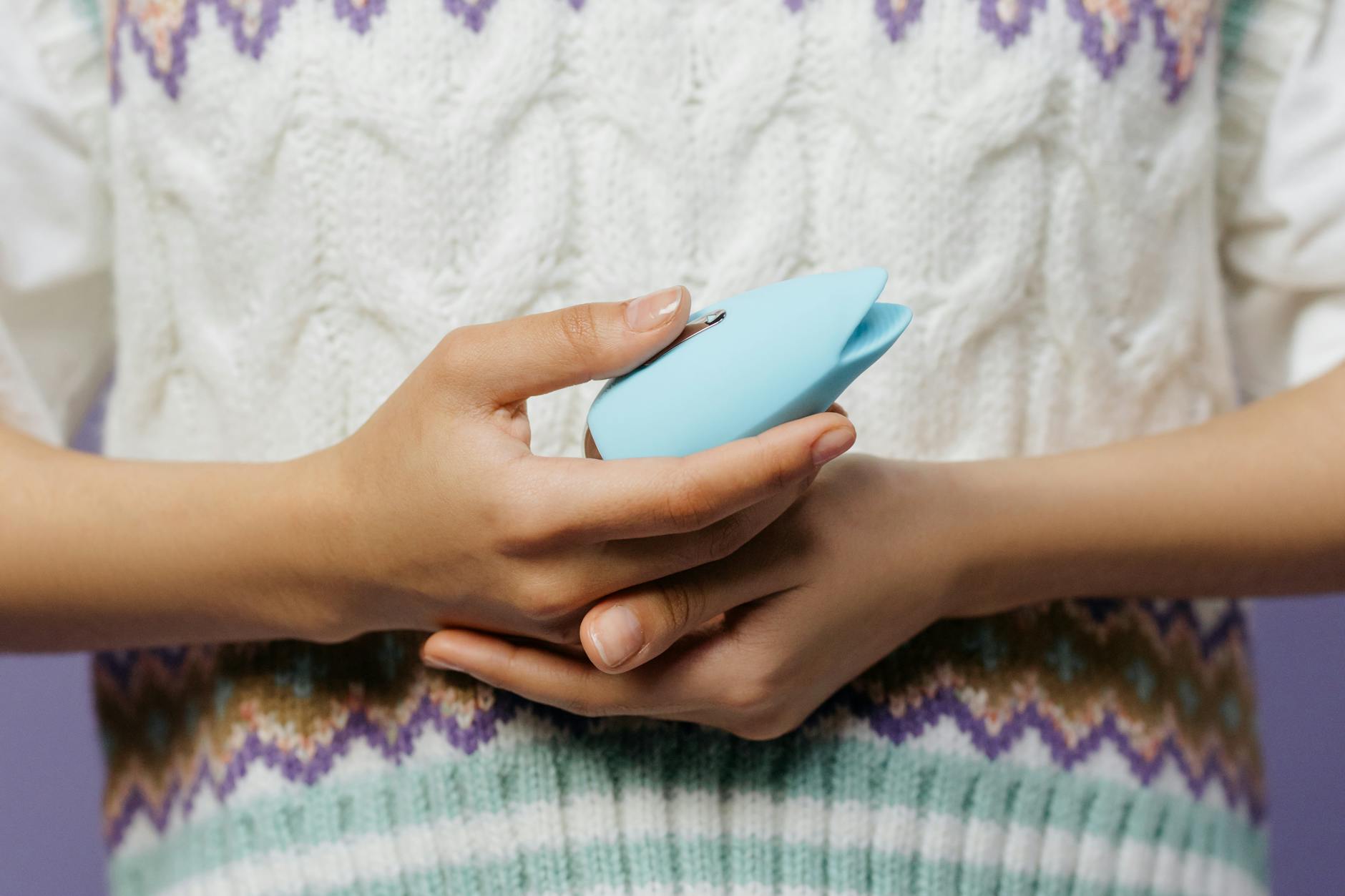
This is where the lemon vibrator becomes useful in a way that's different from regular use. When you've been disconnected, solo pleasure with the Lem is a way to tell your body that it's safe to feel good again. You're not performing. You're not managing anyone else's response. You're just recalibrating your own nervous system.
Use the lemon clitoral vibrator alone first. Not as foreplay to sex with your partner, but as a standalone practice for 7 to 10 days while you're still in that fragile reconciliation phase. Start at the lowest setting. Let sensation come back slowly. This does something counterintuitive. It signals to your body that pleasure is available again without the threat of conflict.
That sounds soft, but neurologically it's crucial. Your amygdala, the threat-detection center, starts to decouple pleasure from the memory of rupture.
The conversation before the body reconnects
Before you initiate with your partner, have one conversation that doesn't happen in bed. Sit on the couch. Say something direct like: "I want us to reconnect, and I'm also nervous. I need to go slowly. If something feels off, I'm going to pause without it being a rejection."
This is not sexy. It is wildly protective. Partners who are rebuilding trust need explicit permission to slow down. Otherwise, every pause feels like punishment.
Specify what "slow" means for you. Does it mean 15 minutes of touch without penetration? Does it mean keeping most of your clothes on? Does it mean starting with your partner outside the room while you use the Lem, then them joining after you've had one orgasm? There's no universal answer. Your answer is the only one that works.
Then say: "I'm going to need patience. My body might not respond the way it usually does, and that's okay."
Most partners will say yes immediately. The relief on their face is real.
How to use the lemon clitoral vibrator with your partner present
When you're ready to introduce them to the process, keep it collaborative, not performative. You're not putting on a show. You're showing them what helps you feel safe.
Let them watch you use the Lem alone for the first session. No pressure to do anything beyond that. Your partner can hold your hand, or sit nearby, or just be in the room. The goal is for their presence to become part of the pleasure again instead of something that triggers tension.
On the next attempt, ask them to touch somewhere else. Your arm. Your shoulder. Non-genital contact that's still intimate. The lemon vibrator stays on the clitoral area. You're creating a circuit of sensation that includes their hands and the toy. This matters because it gradually integrates them back into pleasure without overwhelming either of you.
Start at pattern one or two. The temptation is to go to what worked before, but before was when you felt safe. You're not there yet. Lower intensity. Longer timeline. This is not a performance.
When vulnerability feels like a liability
Something almost always happens around day three or four of reconnecting: you'll have a moment where touching feels tender and fragile, and your brain will say "This is not enough, I need to prove something." That thought is usually shame talking. It's trying to convince you that good sex will prove the conflict is truly resolved.
It won't. Only time and consistent actions prove that. Sex is just sex. Let it be.
If your partner pushes for more intensity before you're ready, that's information. In a relationship where trust is actually rebuilding, they will match your pace. If they pressure you, that's a different problem that a vibrator can't fix.
The role of the lemon vibrator specifically
Why the Lem, and not just hands or another toy? A few reasons. The suction-based design on the Lem creates stimulation that's diffuse and controlled. After conflict, you often feel hyperalert to touch. The Lem's pattern-based intensity means you can stay in one place mentally without your brain spiraling into worry. Your sensations stay predictable while your emotional state is still settling.
It's also less vulnerable-feeling than penetration. You can use it alone or with a partner present without it reading as a full sexual act. That in-between state is where most couples do their actual rebuilding.
How long before things feel normal
Three weeks to three months, depending on how severe the conflict was and how you're both showing up. If this is a pattern in your relationship, the timeline extends. If it's a one-time big fight that you've actually processed, it's usually faster.
Be realistic about what "normal" means. Most couples don't actually return to pre-conflict sex. They rebuild something slightly different. That can be better if you let it be.
When to get professional support
If you've been trying for six weeks and still can't touch without that shame feeling strong, talk to a couples therapist. Not because something is broken, but because that's what therapists are for. Rebuilding intimacy after conflict is hard. You don't have to do it alone.
If your partner is pressuring you to move faster than feels safe, that's not a bedroom problem. That's a relationship problem. Name it outside the bedroom first.
Restarting intimacy after relationship conflict isn't about proving anything. It's about remembering that your body and your partner's body can feel good together. The lemon vibrator is just a tool that makes that remembering a little easier while you're still rebuilding trust.
People also ask
How long should I wait after an argument before trying to be intimate again?
There's no universal timeline, but most relationship therapists suggest at least 48 hours. That gives the nervous system time to settle and the emotional charge time to diffuse. If the conflict was deep or the anger is still hot, waiting a week is smarter. You'll know you're ready when you can think about your partner without that twist of anger or shame in your stomach.
Can using a lemon vibrator alone damage my relationship if my partner finds out?
No. In fact, using a solo pleasure tool during the reconnection phase often helps couples rebuild. It signals that you're taking responsibility for your own pleasure instead of expecting your partner to fix your body's response. Many partners find that reassuring. If your partner would be upset about this, that's information about the relationship that deserves a conversation outside the bedroom.
What if I feel numb during sex after conflict?
Numbing is your nervous system protecting you. It's not a sign that the relationship is over. It's a sign that you need to go slower. Use the lemon clitoral vibrator at lower intensities. Build sensation gradually. If numbness persists beyond two weeks, it's worth checking in with a therapist to rule out dissociation as a trauma response.
Is it normal for orgasms to feel different after fighting?
Completely normal. Your nervous system is still in a slight state of alert. Orgasms might feel shallower, or take longer to build, or feel less intense. This usually resolves as trust rebuilds. If you're forcing yourself to orgasm to prove you're okay, stop. Let pleasure come at its own pace.
Should my partner use the lemon vibrator on me, or should I use it myself?
Start with yourself. That's less vulnerable and gives you more control over pacing. Once you feel safe with your partner present, they can learn to use it on you if you want. But the first few sessions should be all you. Your comfort comes first.
How do I know if we're really ready to try again, or if we're just avoiding another conflict?
You're ready when you can remember what you like about your partner without that memory being immediately followed by resentment. You're ready when you can imagine pleasure without it feeling like a performance. You're ready when you've actually talked about what caused the conflict, not just agreed to move on. If you're glossing over the fight to get back to normal, that's avoidance. Sit with the conflict a little longer first.