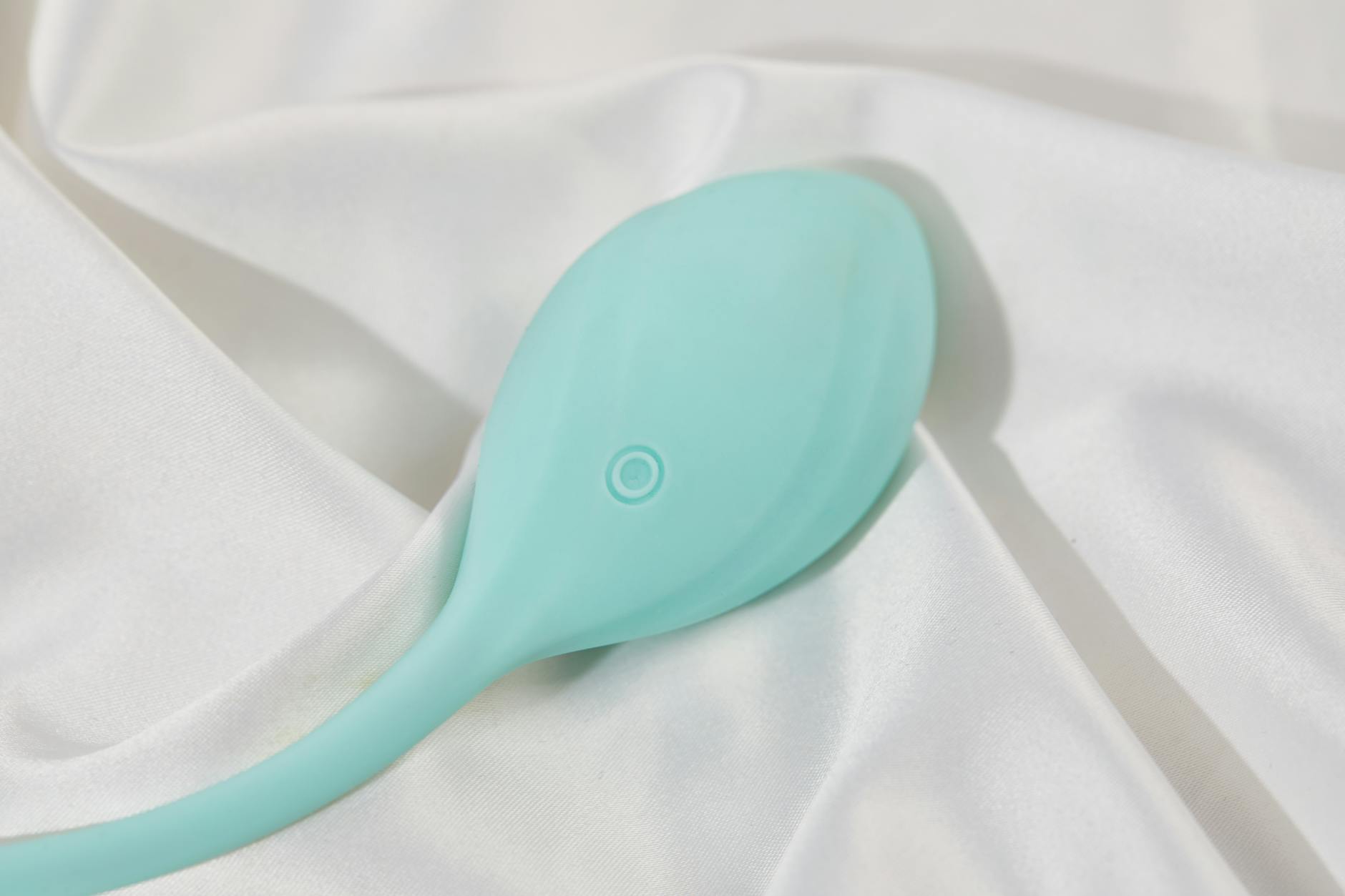
Here's what nobody tells you about vibrators and menopause
Your lemon vibrator didn't change. Your body did. And that's actually good news if you know what to expect.
Menopause reshapes how the clitoris responds to stimulation. The tissue thins. Sensitivity patterns shift. Arousal builds slower. But here's the part sex educators usually gloss over: a lemon clitoral vibrator (or any suction-based device) can feel wildly different after menopause, and that difference is neither permanent nor a reason to stop using one.
Why your lemon sucker feels different now
Three physiological things happen post-menopause that directly affect how suction toys feel.
First, the hood retracts slightly. Estrogen keeps the clitoral hood plump and mobile. When estrogen drops, that tissue loses volume. Your clitoris sits a little differently, which means a lemon vibrator makes contact in a subtly different way. Not worse. Just different. Some people find this actually makes sensation more direct.
Second, blood flow patterns change. The clitoris engorges less quickly during arousal. This means it takes longer to "fill out" and become fully responsive. A device like the Lem (our lemon clitoral vibrator) relies on good blood flow to create sensation. Pre-menopause, you might get full suction engagement in 2-3 minutes. Post-menopause, budget 8-12 minutes of warm-up.
Third, nerve sensitivity recalibrates. This one's the wildcard. For about 30 percent of people I work with, post-menopausal clitoral sensation actually intensifies. The nerves don't fire more often, but they fire more distinctly. Orgasms feel sharper, more concentrated. For others, the overall intensity dips slightly but precision improves. You feel exactly what's happening rather than a diffuse wave of sensation.
The suction mechanism of a lemon vibrator is actually brilliantly suited to post-menopausal bodies because it doesn't require the same direct friction that can feel too rough on thinner tissue.
What "too intense" actually means after menopause
If your lemon clitoral vibrator suddenly feels too strong, you're probably hitting one of three things.
Sensitivity to pressure, not vibration. The suction creates a seal and a gentle pulling sensation. If that pressure feels sharp or raw, it's often because the clitoral glans has less protective cushioning. The fix is simple: start at pattern 1 (or pattern 2 if you had been using 3-4), and give yourself permission to stay there. You're not losing power. You're finding precision.
Overstimulation from faster arousal cycles. Post-menopause, because arousal takes longer, some people try to shortcut the process by jumping straight to high intensity. Your nervous system hasn't caught up. The sensation reads as jarring instead of pleasurable. Slow your approach, not your device.
Drying during use. This one's real. If arousal is slower and you're using your lemon vibrator longer, natural lubrication might not keep pace. This creates friction, which creates rawness, which makes the toy feel too intense. A water-based lubricant solves this entirely. Not because you're broken, but because longer warm-up windows need sustained slip.
How to recalibrate your relationship with lemon vibrators
I recommend my clients work through these steps in order.
Start lower than you think you need. If you were using pattern 3 on your lemon sucker before menopause, begin with pattern 1 or 2. This isn't a permanent downgrade. It's data collection. You're learning your new baseline.
Extend your warm-up window. Spend 10-15 minutes on foreplay (with a partner or solo) before introducing your lemon clitoral vibrator. Let arousal build naturally. Blood flow should be engaged before the device touches down.
Use lubricant as a pleasure amplifier, not a corrective. I tell people this backward all the time. You use lube not because you're dry, but because it increases glide and sensation consistency. Apply a small amount (a dime-sized drop) before starting. Reapply every 5-8 minutes.
Move the toy slowly across patterns. Rather than jumping from pattern 1 to 3, spend 2-3 minutes on each setting. Notice what your body is telling you. You might find that pattern 2 with slower movement creates more pleasure than pattern 4 with rapid stimulation used to.
Track what works. Keep a simple note on your phone for a week. Pattern used. Warm-up time. Lubricant yes/no. Orgasm quality (scale of 1-5). After 5-7 sessions, patterns emerge. You'll see exactly what your post-menopausal body responds to.
Why suction changes differently than vibration
A lemon vibrator (suction-based) and a traditional vibrator affect the clitoris through different mechanisms. This matters post-menopause.
Traditional vibrators stimulate through rapid oscillation. Post-menopause, rapid oscillation can feel scattered if tissue sensitivity is shifting. You get sensation, but it might feel less focused.
Suction (like a lemon clitoral vibrator) creates a seal and a gentle pulling motion. This works brilliantly post-menopause because it engages the entire clitoral complex, not just the glans. The pressure itself becomes part of the sensation profile. For many people, this feels more complete, more integrated.
If you've been considering switching from traditional vibration to a lemon sucker, post-menopause is actually an ideal time. Your body is rewiring pleasure pathways anyway. A different stimulus pattern can feel like discovery instead of compromise.
Intensity versus sensation quality
Here's the reframe that changes everything: intensity and quality are not the same thing.
Pre-menopause, "intensity" often meant how much total sensation your nervous system could handle. Post-menopause, sensation actually becomes more nuanced. You might notice individual patterns within an orgasm. You might feel the difference between clitoral and vaginal pleasure more distinctly. The overall intensity might be lower, but the information density is higher.
I had a client describe it like this: "Before, it was like turning up the volume on a song. Now it's like I'm actually listening to the instruments." That's not a loss. That's sophistication.
Your lemon clitoral vibrator isn't less effective post-menopause. It's revealing a different kind of effectiveness.
When to worry, when to adjust
If sensation with your lemon vibrator is duller post-menopause and doesn't improve with warm-up, lubrication, and lower intensity, that's sometimes a sign of vaginal atrophy that's significant enough to warrant professional support. A gynecologist trained in menopause (ask specifically about genitourinary syndrome of menopause, or GSM) can assess whether topical estrogen cream makes sense for you. This isn't a failure of the device. It's just identifying when your body needs support beyond what technique can offer.
But in most cases, what feels "wrong" in the first month or two post-menopause settles into a new normal by month three. Your nervous system is recalibrating. Your expectations are shifting. Your lemon sucker is still brilliant. You're just learning a different dialect of your own pleasure.
Rebuilding intensity over time
If you're worried that post-menopausal orgasms will always be quieter, that's not how it works. Actually, the opposite often happens.
Many people find that they can rebuild and exceed pre-menopausal intensity once they understand their new operating parameters. It's like learning a new exercise form. The first few sessions feel awkward. By week four, you're stronger than you were doing the old thing.
For lemon vibrators specifically, this often means gradually increasing intensity as you move through months 3-6 post-menopause. Your tissue stabilizes. Your arousal efficiency improves. Your nervous system adapts. What felt too strong in month one feels perfectly calibrated in month four. That's not adaptation dulling you. That's sophistication kicking in.
Consider also that if you've been using lemon clitoral vibrators for years, your body may have learned optimal pressure and rhythm patterns. Post-menopause just means you're teaching it new patterns for the new tissue. The learning curve is real. But the destination is often richer than where you started.
The partner dimension
If you use your lemon vibrator with a partner, this is worth talking about directly. "My lemon sucker needs different settings now" is not the same conversation as "I'm less attracted to you." But they're easy to confuse.
I recommend saying exactly this: "My body has changed, and I want to explore it with you. I might need more warm-up time. I might want to try the toy differently. Can we be curious about this together instead of fixing it separately?" That one conversation prevents three months of mistranslation.
Your partner's role is not to make you feel the same way you felt at 35. It's to be interested in who you are at 55. A lemon clitoral vibrator is just a tool in that conversation.
FAQ: Lemon Vibrators After Menopause
Does menopause make lemon vibrators stop working?
No. Menopause changes how a lemon vibrator feels, not whether it works. The suction mechanism is actually well-suited to post-menopausal tissue because it doesn't rely on direct friction. You might need to adjust settings, warm-up time, or lubrication. But the device itself is still effective.
Why does my lemon clitoral vibrator feel numb after menopause?
Numbing usually means one of three things: insufficient warm-up (give arousal 10-15 minutes before introducing the toy), insufficient lubrication (apply water-based lubricant before and during use), or starting at too high an intensity (begin at pattern 1, even if you used higher before). If all three are optimized and numbness persists, that can signal vaginal atrophy that warrants a conversation with a menopause-trained gynecologist.
Should I switch from my lemon sucker to a different vibrator after menopause?
Not necessarily. Many people find that suction-based devices like a lemon clitoral vibrator actually work better post-menopause than traditional vibrators because the pressure and pull mechanism engages the whole clitoral complex. If you're considering a switch, experiment with different patterns on your current toy first. The answer often lives in recalibration, not replacement.
How long does it take for my lemon vibrator to feel good again?
Most people find their new baseline within 4-8 weeks post-menopause, assuming consistent use with proper warm-up and lubrication. Some take longer. Some find their sensitivity improves month by month. Track your experience rather than expecting a fixed timeline.
Can I use my lemon sexual toy if I have vaginal dryness?
Absolutely. In fact, a lemon sucker is gentler on dry tissue than many vibrators because suction doesn't create the same friction that direct vibration does. Always use water-based lubricant (not oil or silicone, which can degrade the silicone toy). If dryness is severe enough that even with lubricant the toy creates discomfort, mention it to your doctor. GSM is treatable.
Will my orgasms come back the same way with my lemon vibrator?
They'll come back different, often better. Post-menopausal orgasms are frequently more distinct and concentrated than pre-menopausal ones. Your lemon clitoral vibrator will help you access that new quality if you give yourself permission to explore rather than recreate what came before.
The bigger picture
Menopause is not the end of lemon vibrators or pleasure or intensity. It's a recalibration. Your body isn't broken. It's just operating on different chemistry, and that chemistry opens some doors even as it closes others.
A lemon clitoral vibrator remains one of the best tools for post-menopausal pleasure precisely because the suction mechanism works with your body's new parameters instead of against them. You're not adapting to the device. The device is already adapted to you.
Start lower. Warm up longer. Use lubricant without apology. Track what works. And remember that the orgasm you have at 55 with a lemon sucker might be the best one you've ever had. Not despite the changes. Because of them.
If you're navigating post-menopausal pleasure for the first time, our guide on lemon vibrators for first-time users over 30 walks through the fundamentals. And if you want to understand how lemon vibrators work differently than traditional clitoral vibrators, that explores the mechanism in depth.
Your pleasure matters. Your body matters. And your lemon vibrator is still your friend.