Let's be real about postpartum bodies
Postpartum intimacy doesn't have an instruction manual. Your partner wants things to feel normal again. You want to feel like yourself again. Your body has other ideas entirely. Most conversations about sex after birth stop at "wait six weeks" and then awkwardly skip to "it'll get better." That gap is where the actual problem lives.
Here's the thing: pleasure doesn't come roaring back on day 43 just because a doctor clears you for penetration. It arrives in smaller increments, on its own timeline, and almost always in ways nobody tells you to expect.
What actually happens to your body
Postpartum recovery isn't a single event. It's a cascade of changes happening at different speeds. Your pelvic floor is recovering from pregnancy and birth (or from the pregnancy itself, if you had a cesarean). Your hormones are doing a free fall. If you're breastfeeding, oxytocin is keeping you in a different neurochemical state. And your nervous system is running on a fraction of sleep while your brain is essentially hijacked by an infant.
All of this changes what pleasure feels like and what your body can access. Many people report that orgasms feel distant or impossible in the first months postpartum. Some experience pain where there was none before. Others find that their clitoris feels different, numb, or hypersensitive. This isn't permanent. This is normal.
The cervix and uterus take 6-8 weeks to fully shrink. Vaginal tissue regenerates, but that regeneration accelerates after 12 weeks. Pelvic floor function improves steadily over 6 months. Hormones stabilize over months or years, depending on whether you're breastfeeding and how long you plan to. You're not "cleared" at six weeks. You're just cleared to start trying if you want to, with the full knowledge that your body may not be ready.
Why pleasure matters more now, not less
I know this sounds counterintuitive when you're running on two hours of fragmented sleep and leaking from places you didn't know could leak. But reconnecting with your own pleasure during postpartum recovery is one of the most powerful things you can do for your mental health, your relationship, and your sense of self.
Postpartum mood disorders are real and common. Lack of physical pleasure and lack of physical autonomy both contribute. Reclaiming even small moments of sensation that are entirely yours—not nursing, not caretaking, not someone else's hands on your body—signals to your nervous system that you still exist as a person separate from the role of parent.
Your partner likely wants this for you too, though neither of you will say it directly. What often gets said is "I want things to go back to normal," which is actually code for "I want to feel connected to you again." Pleasure reconnects that wire.
When to use a lemon vibrator postpartum (and when to wait)
If you had a vaginal birth with tearing or an episiotomy, wait 4-6 weeks minimum before anything goes inside. If you had a cesarean, the same applies to anything that puts pressure on your core. If you had an uncomplicated vaginal birth with minimal tearing, you can start exploring external clitoral stimulation around week 3 or 4, depending on pain and bleeding.
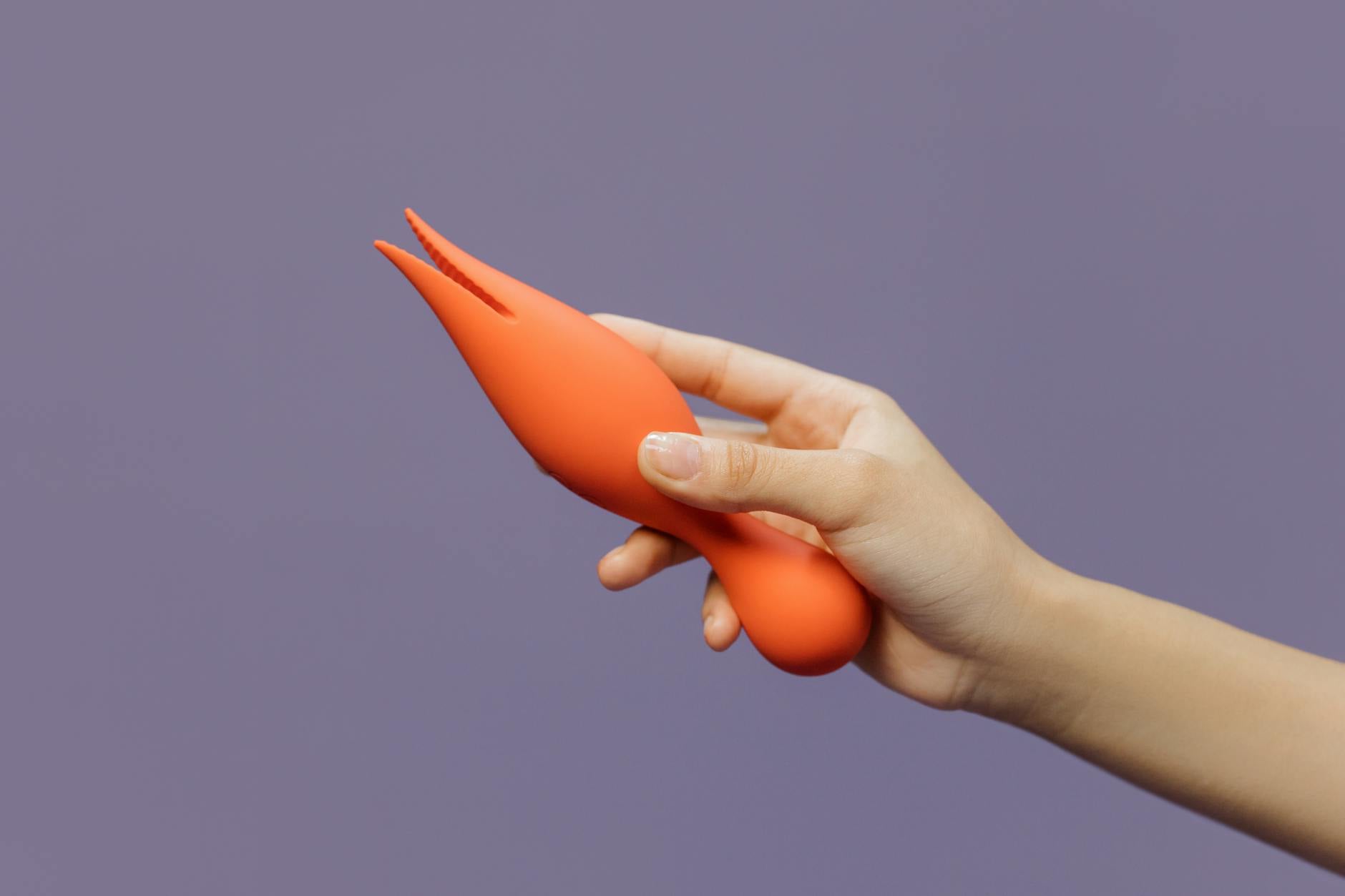
Here's where a lemon clitoral vibrator becomes genuinely useful. External clitoral stimulation doesn't require penetration, doesn't put pressure on healing tissue, and works beautifully for bodies that are still dealing with postpartum sensitivity. The suction pattern of a lemon vibrator is particularly gentle—it creates sensation without the mechanical pressure of a traditional vibrator, which can feel overwhelming on postpartum tissue.
Start with the lowest setting. Use it for short sessions, 5-10 minutes max. Your nervous system is already in overdrive. What you're looking for isn't necessarily orgasm. You're looking for the sensation of pleasure existing separately from pain, exhaustion, or obligation. That's the beginning.
Photo by cottonbro studio on Pexels
The conversation with your partner
Postpartum pleasure is not a couple's project. It's a personal project that happens to exist within a relationship. This distinction matters because it changes what you're actually trying to do together.
Your partner doesn't need to be present when you're rebuilding your own sensation threshold with a lemon vibrator. You don't need permission. You're not doing this to "spice things up" or solve a dead bedroom—you're doing this to remember what your own body feels like when it's not in crisis mode.
What you do need from your partner is space, privacy, and some degree of emotional understanding. That conversation looks like: "I need to spend time reconnecting with my own body right now. This is about me, not about us. I'll let you know when I'm ready to include you in that." Oddly specific couples who try to make postpartum pleasure collaborative before either person has actually reconnected with it alone tend to recreate exactly the pressure that killed pleasure in the first place.
Once you've spent a few weeks exploring on your own, once your body has started to remember what sensation feels like separate from pain, then you can talk about including your partner. That conversation is different. It's not about obligation or "getting back to normal." It's about curiosity. "Here's what I've learned about what my body needs right now."
The physical supports that actually help
Four things make an enormous difference.
One: pelvic floor physical therapy. If you have access to this, use it. A pelvic floor PT can assess whether your pelvic floor is actually tight (which it often is postpartum), help you learn to relax it, and identify any scar tissue that might be causing pain. This transforms the entire postpartum pleasure conversation from "my body is broken" to "my body needs specific support."
Two: lubrication. Even external stimulation benefits from lube postpartum. Your tissue is drier than usual, especially if you're breastfeeding. Water-based lube makes everything more comfortable and more pleasurable. You're not broken. Your body is just operating in different conditions.
Three: The right device. Traditional vibrators can feel too intense on postpartum tissue. The suction mechanism of a lemon vibrator works differently. It stimulates nerves through gentle suction rather than direct vibration, which means you get sensation without the mechanical pressure that can feel overwhelming. This is why so many people find they can access pleasure more easily with a lemon clitoral vibrator postpartum than they could with other toys.
Four: time without expectation. Set a time, close the door, tell your partner you need thirty minutes alone. Spend the first ten just lying down with no intention. Let your body settle. Then spend the next twenty exploring, without the goal of orgasm. Orgasm may or may not happen. That's genuinely not the point.
When to seek professional support
If sex is actively painful beyond the first six weeks, talk to your OB. If you're experiencing numbness or tingling that's not improving, mention it. If you're having intrusive thoughts about your body or sex, especially if you're also struggling with mood, talk to someone who specializes in postpartum mental health.
Do not white-knuckle your way through pain thinking it's normal. Some discomfort during recovery is normal. Ongoing pain is not, and it often responds really well to physical therapy or other targeted interventions.
The truth about postpartum pleasure
Your pleasure will return. It may look different. It may feel different. You may prefer different things than you did pre-birth. All of that is okay. You are not broken. Your body is not broken. You are recovering from a massive physical event while operating on sleep deprivation while managing a human being who depends entirely on you.
In that context, rebuilding pleasure is not a luxury. It's a form of self-care that your nervous system, your relationship, and your sense of self desperately need. A lemon vibrator is a tool that works particularly well for this phase because it respects what your body is actually dealing with right now.
Start small. Start solo. Start with no agenda beyond sensation. Everything else builds from there.
People Also Ask
How long after birth can you use a clitoral vibrator?
External clitoral stimulation with a lemon vibrator can typically start around 4-6 weeks postpartum if you're not experiencing pain and bleeding has mostly stopped. If you had significant tearing, episiotomy, or a cesarean, start closer to 6 weeks. The guideline isn't a magic number—it's about your specific healing. If touching the area is painful, wait longer. If it feels okay, you can start gently. Begin on the lowest setting and keep sessions short, 5-10 minutes.
Can you have an orgasm if you're breastfeeding?
Yes, absolutely. Breastfeeding doesn't prevent orgasms, though it does change the neurochemical landscape. Oxytocin from breastfeeding can sometimes make you feel less interested in other forms of stimulation. You might feel disconnected from your body or overstimulated by touch. This is temporary and typically improves as breastfeeding progresses or ends. Some people find that lemon vibrators work well because the sensation is gentle enough to feel good rather than overwhelming when your nervous system is already activated by nursing.
Is it normal to feel numb after giving birth?
Yes. Postpartum numbness in the pelvic area or genitals is surprisingly common, especially if you had an epidural, nerve stretching during birth, or significant swelling. The nerves are there—they're just irritated or inflamed. Numbness typically improves over weeks or months as swelling decreases and nerves settle. If numbness persists beyond 3-4 months, mention it to your OB or a pelvic floor PT. Most cases resolve fully without intervention, but some benefit from targeted physical therapy.
Should you tell your partner you're using a vibrator postpartum?
That's completely your choice. There's no obligation to disclose. Many people prefer to explore alone during this vulnerable recovery phase and only mention it later, when they've already reconnected with their own pleasure. Some people tell their partner from the start because honesty feels important. What matters is that you're reclaiming your own pleasure for yourself, not performing it for someone else. The conversation with your partner can happen later, when you're ready, and it will be stronger because you're coming from a place of self-knowledge rather than obligation.
Can using a lemon vibrator damage healing tissue postpartum?
Not if you're using it externally and starting gently, which is exactly how it's designed to be used postpartum. External clitoral stimulation with a suction vibrator puts no pressure on internal healing tissue, doesn't require penetration, and the gentle suction sensation is actually easier on sensitive postpartum tissue than traditional vibrators. The risk isn't from the vibrator itself—it's from using it on tissue that's actively painful, which is why pain is your signal to wait longer.
When does postpartum pleasure come back fully?
There's no single timeline, but meaningful improvement usually happens between 3-6 months postpartum for most people. By 6 months, hormone levels are starting to stabilize if you're not breastfeeding, or remaining steady if you are. Pelvic floor function has improved significantly. The sleep deprivation is usually slightly less apocalyptic. That said, some people don't feel fully themselves until 12-18 months, especially if they're breastfeeding long-term. Hormonal return to pre-pregnancy baseline can take a year or longer. The point is: patience with yourself isn't weakness. It's evidence-based.
You're not behind
Postpartum pleasure reconstruction feels slow because it is slow. That's not a bug. That's your body telling you exactly what it needs. Be patient with yourself. Use tools like a lemon vibrator that respect where you actually are right now. And know that reconnecting with your own pleasure during this phase is one of the most valuable things you can do for your recovery, your mental health, and your relationship.
Ready to explore what feels right for your postpartum body? Get in touch with Hello Nancy to talk through what might work best for you, or check out our complete guide to clitoral vibrators to understand your options.