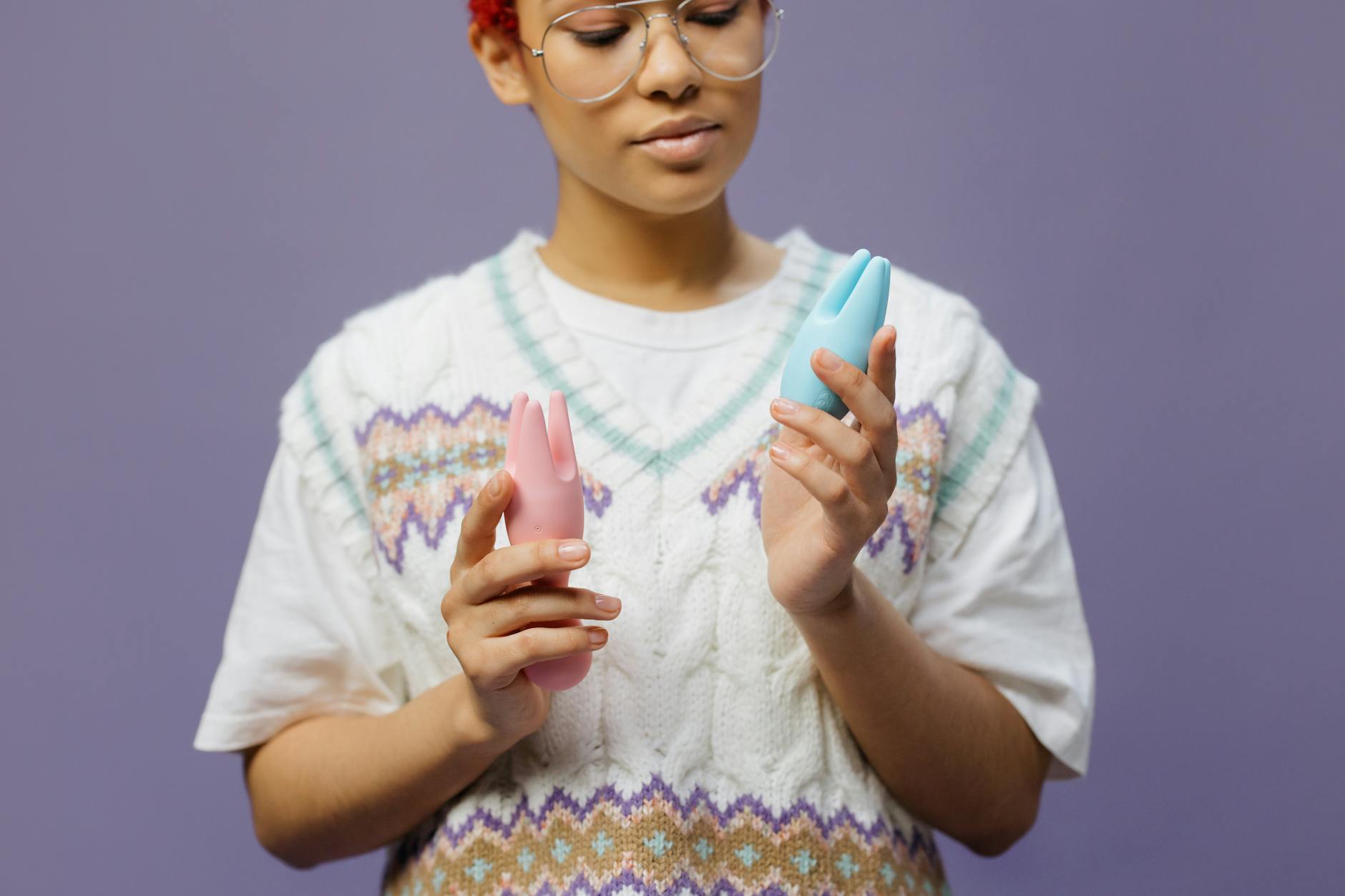
Let's talk about too much
You bought a lemon clitoral vibrator. You turned it on. And instead of the blissed-out experience you imagined, it felt like someone was sending an electric current directly into a nerve ending. Not good. Not sustainable. Definitely not what the reviews promised.
Here's the thing: intensity and pleasure are not the same thing. A lemon vibrator can deliver sensation that's technically powerful without actually feeling good. The gap between those two states is where most people get stuck. And if you're sitting there wondering whether you're broken or whether the device is wrong, the answer is usually neither. It's about pacing, positioning, and permission to dial it back.
Why more power doesn't equal more pleasure
Clitoral tissue is dense with nerve endings. Wildly dense. We're talking thousands of nerves clustered in a space smaller than a pea. Which means direct, maximum-intensity stimulation doesn't feel better. It feels like sensory overload. Your nervous system essentially hits a ceiling and stops processing pleasure. Instead, you get numbness, fatigue, or that jangling sensation where everything goes quiet.
There's also the issue of accommodation. When a nerve is exposed to constant high-level stimulation, it stops responding. The signal gets weaker. So the very strategy that feels necessary at first (cranking the intensity up) actually makes the problem worse over time. You end up chasing a feeling that keeps receding.
The lemon vibrator's power is a feature. The fact that it has multiple intensity levels, though, is the real gift. Most people never use them. They hit the button once, feel something, and assume that's the ceiling. It's not.
Starting lower than feels necessary
I tell almost every client this: if the first thing you feel is "that's a lot," you've started too high. Period. The sweet spot is usually patterns 1 through 3 on the lemon clitoral vibrator, not patterns 5 and up.
Here's what that actually looks like:
Turn the device on at the lowest setting before you even touch your body. Listen to it. Get comfortable with the sound. Then place it against your thigh, your inner arm, somewhere far from the clitoris. Feel how the vibration travels. Your body will start to acclimate to the sensation without the intensity of direct contact.
Wait three to five minutes. This isn't wasted time. This is your nervous system getting a heads-up that stimulation is coming. It primes the response without overwhelming it.
When you move the lemon vibrator to the clitoris, use it over underwear or a thin layer of fabric first. The fabric diffuses the sensation by maybe 40 percent. It also gives you a recovery layer if things get too much. You can stay there for the entire experience if you want to. There's no rule that says direct contact is required.
The position that changes everything
Most people point the lemon vibrator directly at the most sensitive part of the clitoris. That's often where the overwhelm happens. Instead, try angling it. Use the device along the side of the clitoral mound, or press it against the upper area where the clitoral hood sits. The sensation is still intense, but it's diffused across a broader area.
You can also experiment with a rocking motion instead of holding it still. Moving the lemon sucker side to side, or in tiny circles, distributes the stimulus in a way that feels more like a rhythm than a wall of sensation.
Another option: press it against the inner labia, slightly off to one side. That area has fewer nerve endings than the clitoral glans, but it's still highly sensitive. You might find that moving around the clitoris instead of staying directly on it creates more sustainable pleasure.
Building a rhythm that works
Once you've found a tolerable starting intensity and position, resist the urge to immediately crank it up. Instead, stay at that level for a few minutes. Let arousal build at that pace. This is genuinely important. Pleasure builds in layers. It doesn't jump from zero to 100. If you interrupt the process by escalating intensity too soon, you lose the layering effect entirely.
After three to five minutes, move up one intensity level. Just one. Use that for another two to three minutes. Then move up again if it feels right. The whole process might take fifteen to twenty minutes from start to finish. That sounds long, but the payoff is real. Your nervous system stays engaged instead of shutting down. Orgasms that build this way tend to be more intense and more satisfying, not less.
When numbness means stop
If you're using a lemon vibrator and sensation starts to fade, that's your signal to pause. Not push through. Not add more intensity. Pause. Sit with no stimulation for one to two minutes. Let the nerves reset.
This happens to almost everyone at some point. It doesn't mean anything is wrong with your body. It means you've temporarily overwhelmed your nervous system's ability to process that particular stimulus. A short break fixes it.
You can then either restart at a lower intensity, switch to a different pattern on the lem vibrator if you're using one with multiple settings, or move to a different area entirely. The point is: numbness is not the end of the experience. It's just information telling you to shift something.
The emotional piece that matters
Sometimes sensation feels overwhelming not because it's too powerful, but because you're not actually relaxed. Your pelvic floor is tense. Your breathing is shallow. You're halfway in your head wondering if you're doing this right instead of actually present with the sensation.
That's why warm-up matters so much. Not just physical warm-up through foreplay, but mental warm-up. Five minutes of deep breathing before you even touch a lemon clitoral vibrator can genuinely transform the experience. You're signaling to your nervous system that this is safe. That you're in control. That you can pause or stop whenever you want.
If you're using the lemon sucker with a partner, this is doubly important. You need to be able to say "slower," "lower intensity," or "take a break" without apology. Your partner needs to hear that as care, not rejection. The conversation before the experience often matters more than the technique during it.
Troubleshooting specific issues
If the vibration itself feels sharp or buzzy and unpleasant, try adding lubrication. Water-based lube creates a slight cushion between the toy and your skin. It softens the sensation without reducing power. Sometimes that's all it takes to go from overwhelming to exactly right.
If you're experiencing pain rather than discomfort, stop. Pain is different from intensity. Pain means something needs medical attention. That's a conversation for your doctor or a pelvic floor specialist, not something to work around with technique changes.
If you find that every vibrator feels too intense, you might be sensitive to a specific frequency rather than intensity per se. Some lemon vibrators pulse at a frequency that works beautifully for some people and feels jangling for others. It's not a flaw. It's a match issue. Trying a different brand or style might be worth exploring.
The permission piece
Here's what I notice: people often feel like they should be able to handle maximum intensity. Like needing to dial it back is somehow admitting weakness or insufficient arousal. It's not. The people who get the most out of their lemon vibrator are the ones willing to respect their own nervous system's actual capacity, not their imagined capacity.
You don't owe intensity to anyone. Not a partner, not a toy, not an idea of what pleasure should look like. Pleasure is the goal. If lower intensity gets you there, that's not compromise. That's strategy.
FAQ
Can I permanently damage my clitoris by using too much vibration?
Not with standard intensity levels. Temporary numbness from overstimulation will resolve with a break. The clitoral tissue is resilient. What high-frequency vibration over an extended period can do is create temporary desensitization, not permanent damage. If you experience persistent numbness that doesn't resolve after several days of not using the toy, that's worth mentioning to your doctor.
Is it normal to need less intensity as I get more aroused?
No. Usually it's the opposite. As arousal builds, tolerance for intensity increases. If you find yourself needing lower intensity the more aroused you become, that might signal that you're hitting overstimulation. Pull back to pacing rather than power.
How do I know if I'm using the right intensity level?
The right intensity is the one where you lose track of time. You're not thinking about technique or whether you're doing this right. You're just feeling. If you're constantly monitoring the sensation or second-guessing yourself, the intensity is probably still too high.
Can I use a lemon clitoral vibrator less frequently to avoid numbness?
Yes, spacing out sessions can help your nervous system stay responsive. But the real factor is intensity level during use, not frequency of use. If you use a lemon vibrator once a week at maximum intensity, you're more likely to experience accommodation than if you use it four times a week at moderate intensity with proper pacing.
What if my partner thinks I need higher intensity to finish?
That's a conversation worth having outside the bedroom. Pleasure isn't a performance metric. If lower intensity feels better and gets you where you want to go, that's the right tool. Partners who shame you into higher intensity are not being helpful. They're being selfish. You deserve someone who's invested in your actual experience, not your compliance with their fantasy of what it should look like.
Does the pattern matter more than the intensity level?
For some people, absolutely. A pulsing pattern at a moderate intensity often feels better than steady vibration at high intensity. The lem vibrator has multiple patterns for this reason. Spend time exploring patterns at your current comfort level before assuming you need to go higher.
The bottom line
A lemon vibrator is meant to feel good. If it doesn't, that's fixable. Start lower than seems necessary. Use position and pacing to your advantage. Respect your body's actual signals, not what you think they should be. And remember: the goal is pleasure, not power. Everything else is just technique.