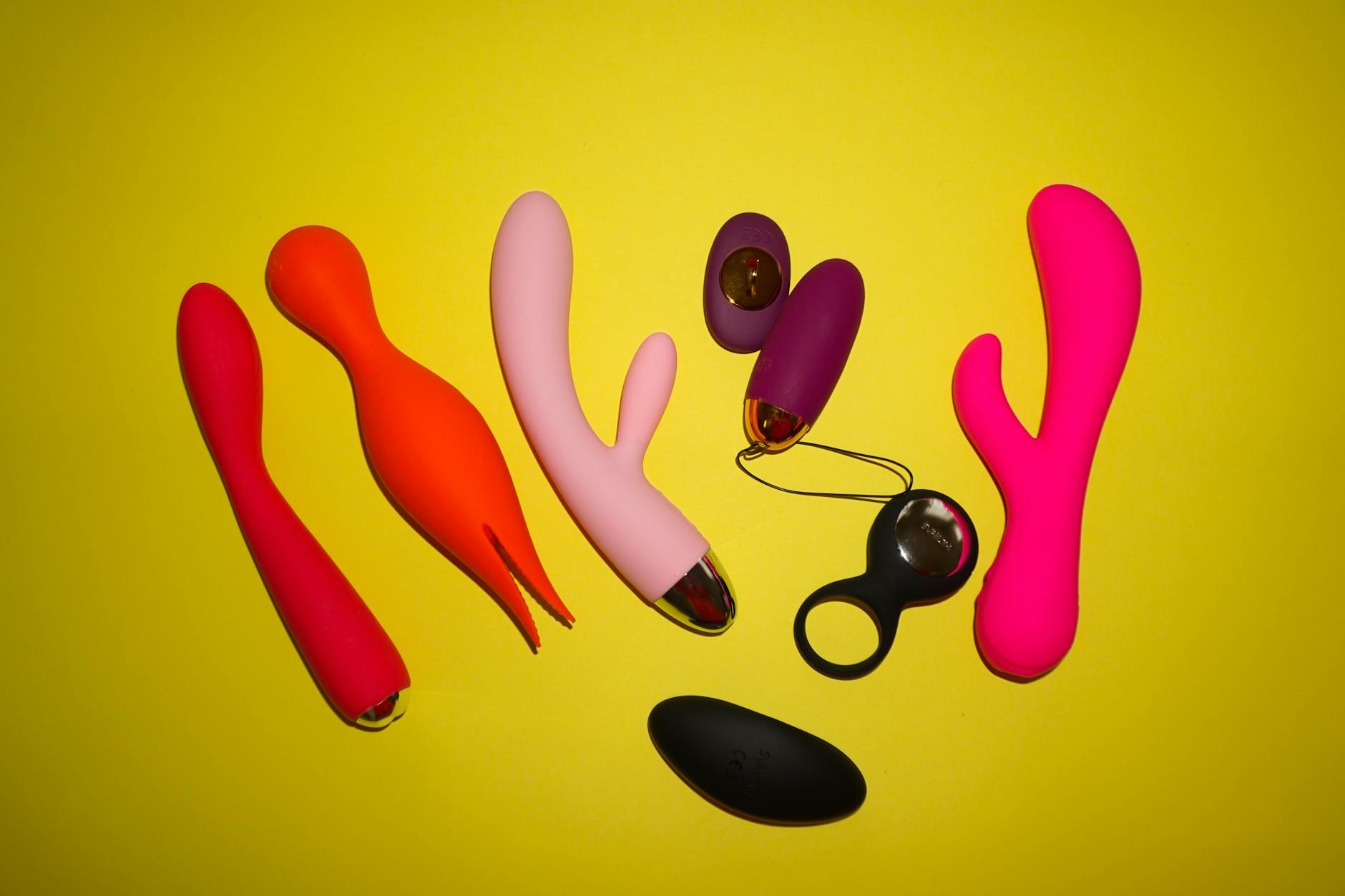
Let's talk about your clitoris as a living, changing organ
Here's the thing nobody explains: your clitoris doesn't feel the same all month. Not because something's wrong with you. Because your hormones are literally reshaping how sensitive it is, how quickly it responds to touch, and what kind of stimulation actually works.
Most of us were told that pleasure is static. Press button, get result, repeat. But if you've ever noticed that your lemon vibrator feels amazing one week and aggressively intense the next, you're not losing your mind. Your menstrual cycle is rewriting your sensitivity map every seven days.
Why clitoral sensitivity shifts with your hormones
Estrogen and progesterone don't just regulate your period. They actively change blood flow to your clitoris, nerve responsiveness, and how your vaginal tissue thickens or thins. During your follicular phase (first half of your cycle), estrogen is rising. Your clitoris engorges slightly, blood flow increases, and you're typically more responsive to direct stimulation.
Then ovulation hits, and there's this tiny window where sensitivity peaks. Your clitoris is at its most receptive, arousal builds faster, and even a lower intensity setting on your lemon vibrator might feel intense.
After ovulation, progesterone dominates. Blood flow to your clitoris actually decreases. Your tissues become less engorged. Direct stimulation can feel uncomfortable or too sharp. This is also when you're more likely to need longer warm-up time and gentler initial contact.
Then your period arrives, and sensitivity shifts again. Some people find that during menstruation, the clitoris is less responsive and needs stronger, more sustained pressure. Others find it's hypersensitive and any direct touch feels raw.
None of these variations are problems. They're features. Understanding them means you can use your lemon vibrator in a way that actually matches what your body can handle.
The follicular phase: when your clitoris wants direct intensity
Your follicular phase runs from the first day of your period through ovulation. If you have a standard 28-day cycle, that's roughly days 1 through 14.
During this window, especially the second week, estrogen levels are climbing. Your clitoris is fuller, more engorged, and frankly more interested in what's happening. This is when you can typically handle higher intensity settings on your lemon vibrator without feeling like the stimulation is too sharp or abrasive.
If you use a lemon vibrator like Hello Nancy's Lem, you might start at pattern 4 or 5 instead of pattern 1. The suction and pulsing feel satisfying rather than overwhelming. Warm-up time is shorter. You're more likely to reach orgasm in fewer minutes.
One thing to watch: just because you can handle intensity doesn't mean intensity alone is what feels good. A lot of people default to "go harder" during follicular phases and miss that what actually changes is responsiveness, not preference. Pay attention to what patterns feel right, not just how much intensity you can tolerate.
Ovulation: the peak sensitivity window
Ovulation typically happens around day 14 of your cycle. And honestly, this is when your body throws a small party.
For maybe 24 to 48 hours, clitoral sensitivity peaks. Blood flow is at its max. Arousal builds quickly. Some people describe this as feeling more "present" in their body, or like sensation is happening in high definition.
This is not the time to reach for maximum intensity. You don't need it. Lower settings feel incredible because your body is primed to respond. Pattern 2 or 3 on a lemon clitoral vibrator might hit differently during ovulation than it does any other week.
This window is also prime time for trying new sensations or techniques you've been curious about, because responsiveness is highest and your body is already in a more exploratory mood.
The luteal phase: when you need a different approach
After ovulation, progesterone rises. Your follicular phase is over. Welcome to the luteal phase, which runs from ovulation until your period starts (days 15 through 28, roughly).
Here's what changes: blood flow to your clitoris decreases. Tissue engorges less. The responsiveness you had during ovulation softens. Direct stimulation can feel sharp, almost uncomfortable. Some people describe it as their clitoris feeling "tender" rather than "turned on."
This doesn't mean pleasure isn't possible. It means you need different settings. With a lemon vibrator, you might drop back to patterns 1 through 3. You're likely to need longer warm-up time, maybe 15 to 25 minutes instead of five. Starting with gentler indirect stimulation around the clitoris (rather than direct contact) often feels better than jumping straight to the intensity.
You might also notice that during this phase, orgasm takes longer, or doesn't happen, or happens differently. This is normal. Your nervous system is in a different state. Productivity and focus aren't as sharp during the luteal phase, and neither is genital responsiveness. That's not a deficit. It's a shift.
Many people find that reframing the luteal phase as a time for slower, more exploratory pleasure actually opens up sensations that high-intensity stimulation was masking.
Your menstrual phase: responsiveness returns (differently)
When your period starts, progesterone drops steeply. Estrogen is low. Something unexpected happens: clitoral responsiveness starts coming back, but in a different flavor.
During menstruation, some people feel more sensitive, more present in their clitoris, but in a way that asks for firmness rather than intensity. The pattern matters more than the speed. The rhythm of a lemon vibrator's pulsation can feel more satisfying than the direct suction alone.
Others find menstrual bleeding makes direct clitoral contact feel uncomfortable or raw. In that case, focusing on external stimulation, gentler patterns, or partnered touch works better.
One underrated option: if direct stimulation feels too intense or uncomfortable during your period, try stimulating through your underwear or through a thin layer of fabric. It dulls sensation just enough to make contact feel good instead of irritating.
How to actually adjust your lemon vibrator technique week by week
Follicular phase (days 1 to 14):
Start at medium to higher intensity. Shorter warm-up. Direct clitoral contact feels good. You can probably use your lemon vibrator more frequently in the way you usually do, or even introduce positions and patterns you haven't tried.
Ovulation window (around day 14):
Lower intensity than you think. Your body is already activated. Start gently and build up only if you want more. This is when sensitive pressure or rhythmic patterns often feel better than maximum power.
Luteal phase (days 15 to 28):
Drop intensity. Extend warm-up. Consider indirect contact or stimulation through fabric. Focus on patterns and rhythm rather than raw power. Slower sessions that emphasize exploration over destination often feel more satisfying.
Menstrual phase (days 1 to 5, roughly):
Responsiveness is variable. Experiment week to week. Some cycles you'll want firmness and rhythm. Other cycles you'll want gentleness or external stimulation only. There's no "correct" way. Listen to what your body is asking for.
Tracking your own patterns
You don't have a standard 28-day cycle? Neither do most people. Apps can help you map when your ovulation actually happens and when your luteal phase begins. But honestly, the simplest tracker is your own body.
Spend one or two cycles paying attention: What day do you notice your clitoris feeling more responsive? When does direct stimulation start feeling too sharp? When does orgasm feel easiest? When does it feel distant?
You'll start seeing your own rhythm. It might not line up with the textbook phases I described. That's fine. Your body is the source of truth, not the calendar.
What about pain or significant changes?
If clitoral pain shows up during certain phases and doesn't resolve with sensitivity adjustments, talk to a gynecologist. Conditions like vulvodynia or dermatological issues can interact with hormonal cycles and create cyclical pain that's worth investigating.
Similarly, if your sensitivity pattern changes dramatically from one cycle to another, or if you notice that you're always in the "low sensitivity" state, it's worth checking in with a healthcare provider. Sometimes thyroid issues, hormonal birth control changes, or other medical shifts affect genital sensation in ways that go beyond normal cycle variation.
But if you're just noticing that your clitoris feels more or less responsive at different times in your month, and standard adjustments help, you're not broken. You're just listening to your body's actual rhythm.
Syncing pleasure with your cycle is a long game
One month of paying attention isn't enough to map your pattern. Two or three cycles will show you your real rhythm. Give yourself that time. Write notes if you want to. Notice what works. Let the lemon vibrator be a tool that adapts to you, not something you have to force yourself to adapt to.
If you're using a lemon vibrator with a partner, sharing what you're noticing can actually deepen intimacy. "This week I need gentler intensity" or "I'm in my peak sensitivity window, let's try that thing we talked about" are real conversations that bring you closer together. Many partners appreciate the clarity. It takes the guesswork out of whether something's wrong.
Your pleasure isn't a static thing. It's alive and moving and changing with your body. That's not complicated. That's biology. And once you start following it instead of fighting it, using tools like a lemon clitoral vibrator becomes less about forcing an outcome and more about actually meeting yourself where you are.
Frequently asked questions
When is the best time during my cycle to use a lemon vibrator?
There's no single "best" time. But ovulation and your follicular phase are when most people find pleasure easiest to access. If you're new to using a lemon vibrator or trying something you're nervous about, starting during your high-sensitivity window gives you better odds of a positive experience. That said, some people have their most interesting orgasms during their luteal phase because they're focused on sensation rather than performance. Experiment across your full cycle.
Why does my lemon vibrator feel painful sometimes but not other times?
Likely culprit: clitoral sensitivity shifts with your cycle. During your luteal phase, your clitoris is less engorged and direct stimulation can feel sharp rather than pleasurable. Try dropping the intensity, extending warm-up time, or stimulating indirectly through underwear. If pain persists across all phases of your cycle, see a gynecologist to rule out vulvodynia or other issues.
Can I use my lemon vibrator during my period?
Absolutely. Some people find it's the most pleasurable time. Others find it's uncomfortable. It depends on your individual sensitivity and flow. If you want to try it, use a lower intensity initially, focus on external stimulation rather than internal, and consider using it through underwear or a thin layer of fabric if direct contact feels raw. Menstrual bleeding itself isn't a barrier. Comfort is.
Does birth control change how my clitoris responds to my lemon vibrator?
Yes. Hormonal birth control suppresses ovulation and flattens your hormone cycle, so you lose the sensitivity peaks and valleys that naturally occur. Some people find this makes pleasure more consistent but less intense. Others prefer it. If you're on hormonal birth control and notice your lemon vibrator doesn't feel as good as it used to, you're not losing sensation permanently. Your cycle rhythm has just changed. Adjust your expectations and try patterns that work within a flatter hormonal landscape.
What if my cycle is irregular? How do I know when my sensitivity will peak?
Track your physical signs. When do you notice cervical mucus that's clear and stretchy? When does your clitoris feel noticeably fuller? When do you feel more aroused? These are better predictors of ovulation than calendar math. Cycle-tracking apps can help. But your body's signals are the most reliable guide. Some people ovulate on day 12, others on day 18. Once you know your own pattern, you can time lemon vibrator sessions accordingly.
Is it normal that I want more frequent pleasure during certain weeks?
Completely normal. During your follicular phase and around ovulation, dopamine and testosterone levels are higher, which increases desire and responsiveness. During your luteal phase, desire naturally quiets. This isn't a problem. It's your body communicating. If you honor that rhythm instead of fighting it, you'll feel less frustrated and more in sync with yourself. Your lemon vibrator can be a tool during high-desire weeks and a gentler companion during low-desire weeks.
Should I tell my partner about my sensitivity changes?
It can help a lot. Many partners appreciate the clarity. Instead of wondering why something that felt amazing last week feels uncomfortable this week, you can say: "I'm in my luteal phase, let's use a lower intensity" or "My sensitivity is peaking right now, I want to try something more intense." This removes pressure, increases communication, and often makes partnered pleasure more satisfying for both of you. Check out our post on how to use a lemon vibrator with partners who want different intensity levels for more on navigating mismatched needs.